Budget & Trade-Offs
Another Pair of Hands May Be the Best Thing You Buy
The next thousand dollars does not always belong in flowers, favors or tabletop. Sometimes the upgrade guests actually feel is another competent person keeping the evening moving.
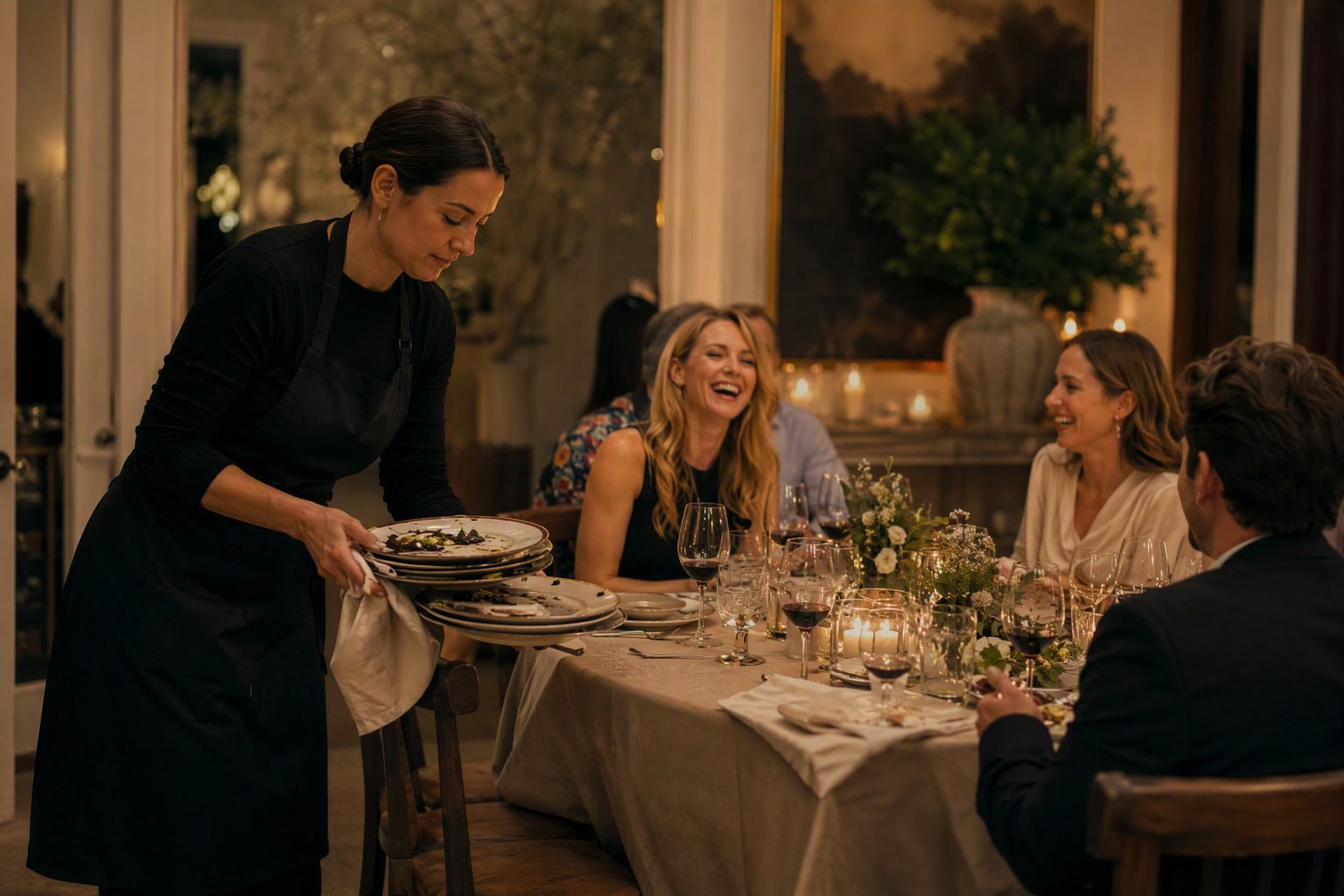
Event budgets are very good at producing objects.
Give the budget another increment and the flowers can become fuller. Give it another and the chairs get prettier. Keep going and the tabletop can acquire several new opinions.
Objects photograph well. Labor is harder to put on a mood board.
Which is unfortunate, because another competent pair of hands can change the guest experience more than another decorative layer.
Labor is visible even when the person is not
Guests notice empty glasses. They notice a line at the bar. They notice plates sitting too long. They notice when nobody knows where the extra chairs are. They notice when the host is carrying a trash bag through the room in formal clothes because the event has quietly run out of adults.
They may never identify the staffing problem by name.
They simply experience the event as slightly harder than it needed to be.
Good labor often feels invisible because the problem disappears before the guest has to manage it.
Ask what the host is currently scheduled to do
This is one of the fastest ways to find the real budget gap.
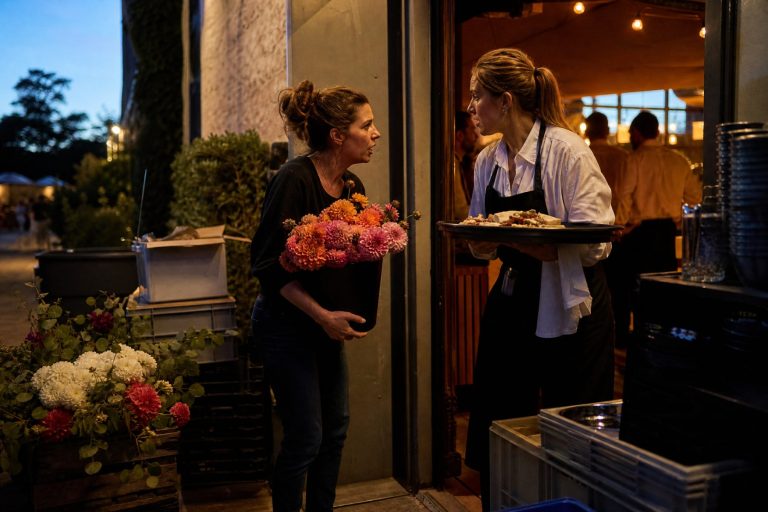
Who is greeting the late guest while dinner is being served? Who notices the bathroom needs attention? Who restocks ice? Who moves the ceremony flowers if they are meant to have a second life? Who receives the cake? Who answers the vendor question while the host is in a photograph? Who puts out coffee? Who gathers gifts? Who keeps an eye on the entrance after the first arrival window?
If the answer is the host for six of those, the budget has assigned one person multiple simultaneous jobs and called it savings.
It will technically happen. It will not happen well.
Decor cannot compensate for an event that feels unattended
A room can be spectacular and still feel strangely unmanaged.
The candles are lit. The flowers are abundant. The menus have beautiful paper stock. But guests are standing with coats because nobody knows where they go, the water station is empty, and the person who was supposed to direct seating is trying to find a missing extension cord.
I would cut a decorative line before I knowingly built that version of the evening.
Labor shouldn’t swallow the design budget. But the design only survives if someone is keeping the conditions around it intact.
Spend on the handoff that has no owner
Extra labor is most valuable when it has a defined job.
A vague instruction to help out creates another person waiting to be told what to do. Give the role an area, sequence or responsibility.
One person owns arrival and coats. Another owns bar support and glassware. Someone else takes clearing and resetting, vendor receiving, dessert and coffee, restroom checks, or breakdown staging.
The exact role depends on the event. What matters is ownership.
If three people assume someone else is watching the candle table, nobody is watching the candle table.
Family help is still labor
Sometimes the right answer is absolutely a willing family member or friend. Not every gathering needs paid staff.
But call the work what it is.
If someone is assigned to arrive early, move furniture, refill drinks, manage food, direct guests and stay late to clean, they are not simply attending with a cute little task. Their experience of the event is different.
That may be completely acceptable if they volunteered and the scope is reasonable. It should not be hidden inside the budget as free labor simply because the person loves you.
Hospitality includes the people helping produce the hospitality.
Look at the busiest twenty minutes
Average workload is misleading.
An event can be calm for most of the evening and impossible for twenty minutes.
Arrival overlaps with coat collection and welcome drinks. Ceremony transition overlaps with chair movement and cocktail service. Dinner call overlaps with final table checks. Dessert overlaps with clearing. Departure overlaps with rides, gifts, coats and the first wave of breakdown.
Map the busiest twenty minutes and count the jobs that have to happen at once.
That is where another person earns the money.
What should you cut to pay for it?
Start with the decorative upgrade that guests are least likely to experience as a meaningful difference.
Maybe the napkin does not need a specialty knot and individual floral sprig. Maybe the favor can leave. Maybe one floral moment can become smaller while the entrance or dining room stays strong. Maybe upgraded glassware matters less than keeping the glassware you already rented circulating cleanly.
Protect the concept. Cut repetition before impact.
I’m not trying to make the event plain so a staffing spreadsheet can feel virtuous. I want the money where guests can feel it.
What breaks when the host disappears?
Imagine the host leaves the room for thirty minutes at the busiest point.
Not because anything is wrong. Maybe they are taking photographs. Maybe they are changing. Maybe they simply deserve to sit down and eat.
What stops working?
If the answer is drinks, directions, vendor decisions, clearing and the next transition, you have found a staffing dependency.
Fix that before buying the fifth decorative layer.
I love extra. I am not going to pretend otherwise. More flowers can be worth it. The beautiful chair can be worth it. The ridiculous custom bar can absolutely be worth it when it carries the room.
But every dollar should be able to say what it is doing.
Sometimes the most luxurious thing the budget can buy is an evening in which nobody you invited has to become staff by accident.
Related reading: How Many Event Staff Do You Actually Need? · Staff as Atmosphere · The Banquet Captain Is Running the Room’s Clock
Atmosphere OS · Budget-to-Atmosphere
Cutting a budget is a design decision, not an accounting one.
Budget-to-Atmosphere shows what leaves the room when the number moves, so the cut gets chosen rather than discovered on the night. Costs are bands and not quotes, and that limit sits at the top of the page.
The rulebook is public. Every formula it runs on is written down where you can disagree with it.
Field notes and corrections
When a number here turns out to be wrong, you hear about it.
Three things arrive and nothing else. The new field note — bar rates, cover widths, service clearances, the arithmetic worked through on one real evening. A line when a new World or Mini Occasion opens, because a night only goes up once it can actually be thrown. And a correction whenever a rule in the published rulebook changes, or a number the tools rely on turns out to have been wrong. There is no weekly slot, because there is nothing weekly to put in it.
One email per field note or opening, plus corrections when a published figure moves. Unsubscribe from any of them.
Continue through the system
Pretty is still not a plan.
A party gets planned in roughly this order. Pick the chapter where your next problem lives.
What you have to decide next
One decision constrains the next. This is the order they actually happen in.
More in this chapter
See the complete five-chapter Event Design Intelligence map →