Tangled Thistle
The Turn: How an Event Changes
Give the evening somewhere to go. Design the change in meaning, hospitality and possibility that carries guests into the next part of the occasion.
Give the evening somewhere to go. You have chosen the room, the flowers and the good glass. Now give all that beauty a future.
The Turn is the designed moment, or unfolding passage, when an occasion changes meaning, purpose or possibility for its guests. Something becomes available that was not available before. The change carries into the rest of the gathering.
A dinner can become a place to linger. A room people have been admiring can become something they help shape. A celebration can settle into an intimacy that would have felt premature at the door. Tangled Thistle designs that movement through the room, the hospitality and the things guests discover along the way.
A supper that becomes a listening room
Imagine a supper for twelve. This is an invented planning example you can adapt, rather than an account of an event we have produced.
Before: everyone has something to bring
Over dinner, the host invites guests to suggest one song with a story attached. Suggestions can be spoken privately, written down or left entirely to the host. The room is already complete and welcoming. Nobody owes the party a contribution.
The change: the table begins to listen
Once every guest has finished eating and the main dishes are cleared, the host introduces a short selection from those suggestions. Someone who wishes to can explain their choice. The first song plays at a level agreed for comfortable listening. The table that held twelve separate conversations now offers a shared subject, with room for a guest to listen without speaking.
Afterward: give the new evening time to exist
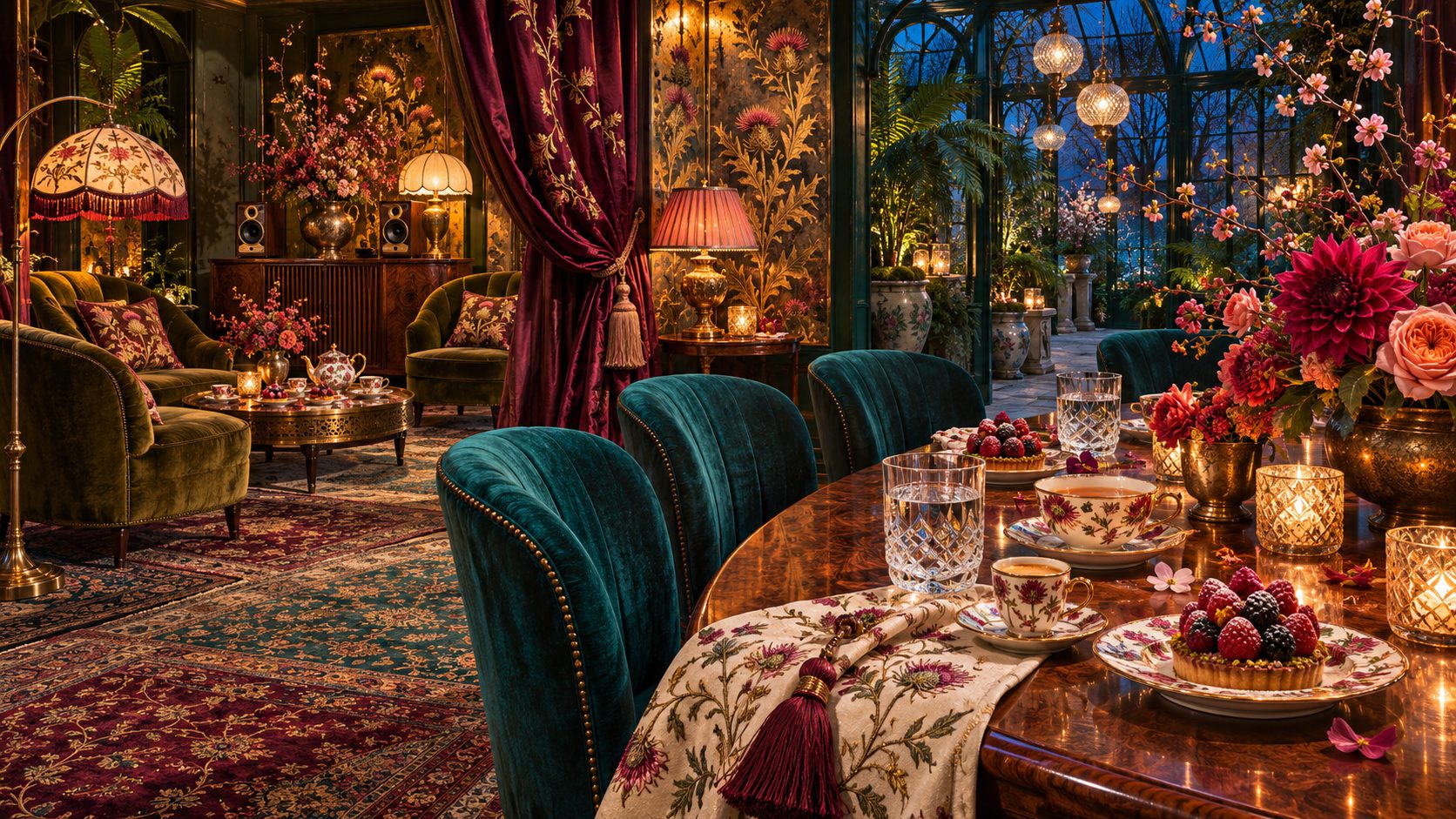
Dessert, coffee, tea and water come to the seats. There is no queue to join and no instruction to move into another room. The selection is short enough to leave time for the conversation it starts. A quieter seat stays equally served; anyone can step away or leave without interrupting a performance. Later, guests can choose to receive the song list, with contributors’ permission and without private stories attached.
The Turn happens because the purpose of gathering changes. Every choice around it supports that change: the pause in clearing, the way songs are invited, the service that reaches a seated guest and the time left afterward. A new playlist alone would not explain the whole idea.
Find what changes for your guests
Begin with what the occasion promises. Perhaps it offers escape, affectionate mischief, discovery, generosity or the pleasure of staying longer than planned. Then ask how that promise develops. What can guests understand, do or enjoy after the Turn that they could not before?
Try completing this sentence: “Guests begin by ____. When ____, they can now ____. That changes the rest of the occasion by ____.” Specific verbs help. “The atmosphere becomes magical” leaves the host with considerable work. “The guests’ drawings become the map used to choose the next story” tells you what must actually happen.
The Turn can be quiet
A sudden reveal is one possible expression. A gradual change can be just as deliberate: daylight recedes, the meal softens into conversation, or contributions accumulate until guests recognize something they made together. Choose a shape that belongs to the people and the occasion.
The most meaningful change may lower the volume. It may happen before the busiest part of the night or after it. An energy curve is a planning interpretation; it cannot tell you what the gathering means to someone.
Make hospitality part of the change
Work out what is being eaten and poured on both sides of the Turn. A reveal loses its charm when half the guests are still waiting for dinner. A new room has to offer a place to sit, somewhere to put a drink and a way to join without standing in a bottleneck.
Give the person who prefers to observe a complete evening. Offer the same welcome, service and meaningful view from a seated position. Make spoken information available another way where needed, and allow someone arriving late to understand the new state without replaying the whole occasion for them. Participation is an invitation.
Keep the purpose when the circumstances change
Name who initiates the change and what must be ready first. Decide how long it remains useful and what simpler expression preserves its purpose. In the listening supper, a failed speaker need not cancel the shared moment: guests who wish to can tell the stories, and the music can be shared later. If nobody contributes, the host already has a short selection ready.
For a larger gathering, work through sightlines, service timing and the number of people who can experience the change together. Increasing the headcount does not mean multiplying the same intimate interaction into a very long queue.
Design the part they stay for
Allow the changed occasion to breathe. Decide what guests do next, who keeps serving, what remains available and how departure works. A small callback can carry the idea home, provided it has meaning beyond another object to put in a bag.
Write down the complete experience before spending on the mechanism. The useful question is whether the evening has somewhere worth going once the surprise is over.
Plan the Turn in Arc Studio to connect its meaning, trigger, hospitality, alternatives and timing. Start with Design Atelier when the larger idea is still forming, or explore Guest Experience to consider the people moving through it.
You must be logged in to post a comment.