Occasions & Formats
Celebration of Life for Ninety: Sound, Seating and Space for Different Kinds of Grief
At ninety guests, a celebration of life needs visible production without feeling produced. Sound, seating, family privacy, food, memory, accessibility and departures all need room to work at once.
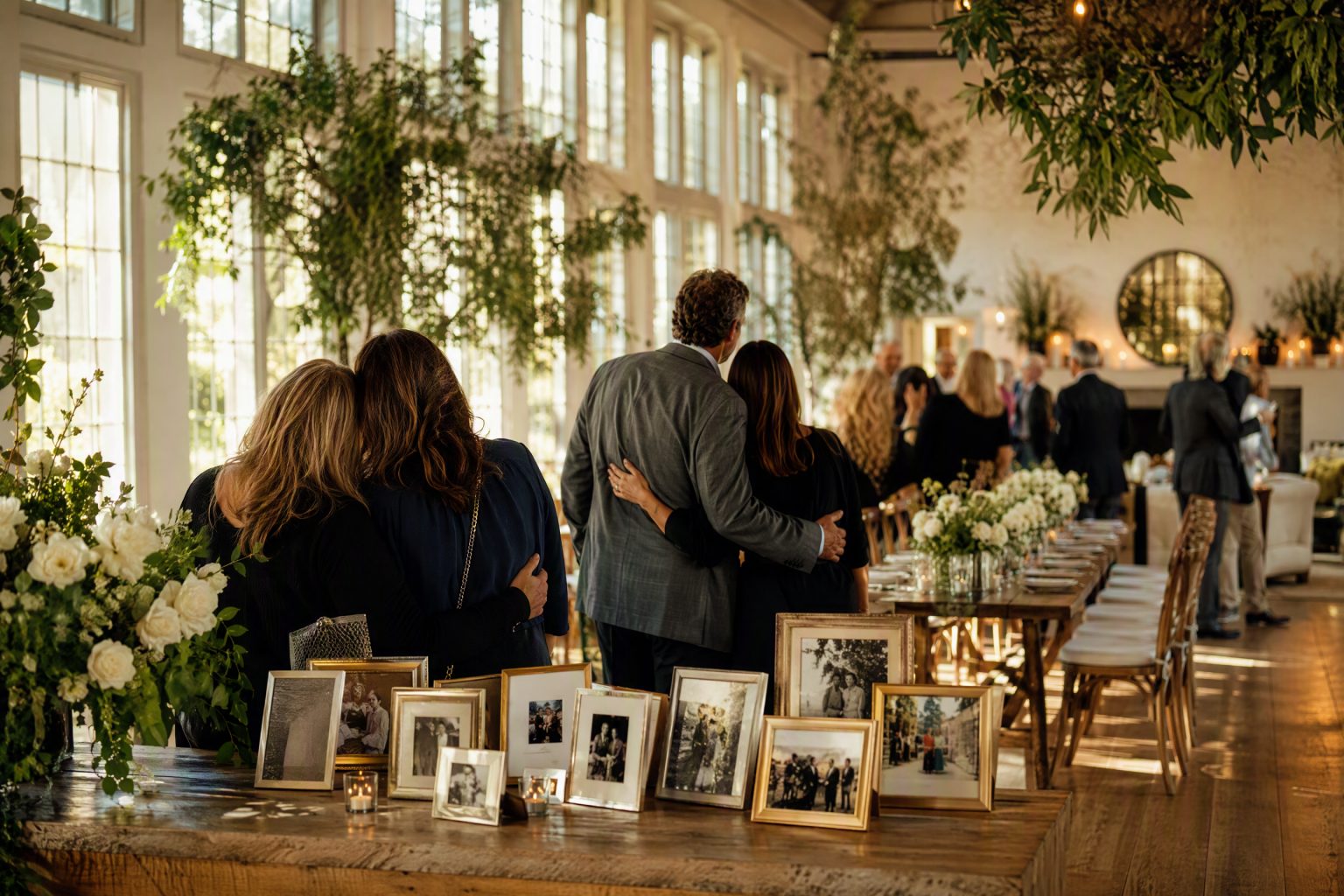
Ninety people can arrive carrying ninety different relationships to the person who died. Some will want to sit near family. Some will need a quiet edge. Some will want to tell a story immediately. Some will stay twenty minutes because staying longer is too difficult. A useful celebration of life does not force those people into one emotional choreography.
At this scale, production becomes visible because it has to. Nobody wants the gathering to feel theatrical. It does need sound, seating, memory, food and movement reliable enough that nobody has to manage logistics while grieving.
Separate the family’s arrival from the public arrival
If close family needs time in the room before everyone else enters, protect it. Build that into the venue access schedule rather than hoping the doors somehow stay quiet for ten minutes. The family may need to see the memory table, test the microphone, choose where to sit or simply stand together before becoming available to ninety people.
Once public arrival begins, someone other than the immediate family should be ready to answer practical questions. Everything in the piece on welcome moments applies here: a calm greeter, visible coat and bag logic, an obvious place for cards or flowers and a clear path into the room can remove dozens of small demands.
Sound is not optional at ninety
If there will be any formal remarks, use amplification. Ninety people absorb sound. HVAC makes noise. Older guests may have difficulty hearing. A speaker who is emotional will not reliably project to the back of the room.
Use a microphone that can be handed between speakers without becoming a technical puzzle. Test it with the actual room occupied if possible, or at least with the doors, music and HVAC behaving as they will during the event. Have one person own the microphone and know how to mute it.
A second microphone can be useful if guests will share stories, but open-mic spontaneity should still have boundaries. Someone should know how to close the story period before it becomes an hour of increasingly remote anecdotes.
Seating needs more than rows
Ninety chairs facing forward may be appropriate for the formal portion, but the entire event should not remain in auditorium mode if food and conversation follow. If the room allows it, create a clear program zone and a secondary social zone rather than making guests flip the same ninety chairs after the remarks.
Reserve genuinely accessible seating without isolating it. Keep aisle widths real. Make sure people using mobility devices can reach the family, food and restrooms without navigating decorative obstacles. The Guest Comfort Audit is especially relevant when the guest list spans generations.
Memory displays need editing and traffic space
A ninety-person gathering can support a richer memory display than a small one, but more photographs are not automatically more meaningful. Choose a few strong groupings or chapters. Give people enough space to pause without blocking an entrance.
Do not put the most emotionally loaded material where guests must encounter it before they have even taken off a coat. A display can be discovered after arrival. The entry should first answer: where do I go, where is the family, where can I sit?
Create a quiet edge without labeling it as a grief zone
A small side lounge, terrace, library or adjacent room can be invaluable. It gives someone somewhere to breathe without leaving the event entirely. It also helps caregivers, children, older guests and anyone who needs a lower-volume space.
This area does not need signage announcing its emotional purpose. A pair of chairs, water, softer light and distance from the speakers may be enough.
Food should support the gathering, not create another line
If food follows the program, do not open one narrow buffet to ninety guests at once. Use two access points where the venue allows it, or release sections naturally. Separate coffee and water from the main line. If people will arrive across a wide window, choose food that can hold and replenish gracefully rather than dishes that look tired after fifteen minutes.
Protect the service route. Caterers carrying hot pans should not pass through the family receiving line. Service Routes Are Part of the Guest Experience becomes literal at this size.
The family should not have to receive everyone in one line
A formal receiving line can work if the family wants one. It can also become exhausting. Consider a room layout where guests can greet family naturally across the gathering rather than queuing for an emotional exchange.
If certain relatives need protection from being cornered, seat or position them where another trusted person can help manage conversations. Hospitality includes protecting people’s capacity.
Assign technical and practical ownership
At ninety guests, a vague group of helpers is less useful than named ownership. One person manages sound. One coordinates the venue or caterer. One watches arrival. One knows where extra chairs, tissues, water and mobility assistance live. One is authorized to make a timing decision if a speaker runs long.
The plan can be small. It simply cannot be imaginary.
Photographs need consent and restraint
Families vary enormously in how they feel about photography at memorial gatherings. Decide before the event whether there is a designated photographer, whether the formal portion should be photographed at all and whether guests should be asked to avoid phones during remarks.
If there is a group photograph, make it optional and do not interrupt the emotional center of the event to manufacture one.
Departure is part of the design
Some people will leave immediately after the program. Others will stay through food. Some will linger because leaving feels difficult. Build an exit path that does not force everyone through one final family checkpoint.
Coats, umbrellas, cards and takeaway items should be easy to retrieve. If older guests need rides, decide who is coordinating them. If the venue has a hard end time, begin the taper early enough that the family is not suddenly being asked to clear a room full of flowers and photographs.
At ninety guests, production is not a contradiction of intimacy. Done well, it is what protects intimacy. The microphones work, the aisles remain clear, the food arrives, the family gets a private ten minutes, and nobody has to turn grief into an event-management shift.
Ninety is large enough to need the machinery and small enough to keep it out of sight. Above roughly a hundred and fifty, keeping it out of sight takes a second of almost everything.
Atmosphere OS · Continue this scenario
Do not type the same event twice.
This article already settled a few facts about the event. Carry those facts into the planner, see the receipt before anything is applied, and answer only what the article could not honestly know.
Only facts explicitly attached to this article travel. Venue, date, budget and people stay unknown unless the article actually established them.
Field notes and corrections
When a number here turns out to be wrong, you hear about it.
Three things arrive and nothing else. The new field note — bar rates, cover widths, service clearances, the arithmetic worked through on one real evening. And a correction whenever a rule in the published rulebook changes, or a number the tools rely on turns out to have been wrong. There is no weekly slot, because there is nothing weekly to put in it.
One email per field note, plus corrections when a published figure moves. Unsubscribe from any of them.
Continue through the system
Pretty is still not a plan.
A party gets planned in roughly this order. Pick the chapter where your next problem lives.
What you have to decide next
One decision constrains the next. This is the order they actually happen in.
More in this chapter

See the complete five-chapter Event Design Intelligence map →