Guest Journey
Field Note: The First Seven Minutes: Design the Guest Arrival Before the Table
A guest-journey framework for orientation, permission, reveal, and service during the first minutes of an event.
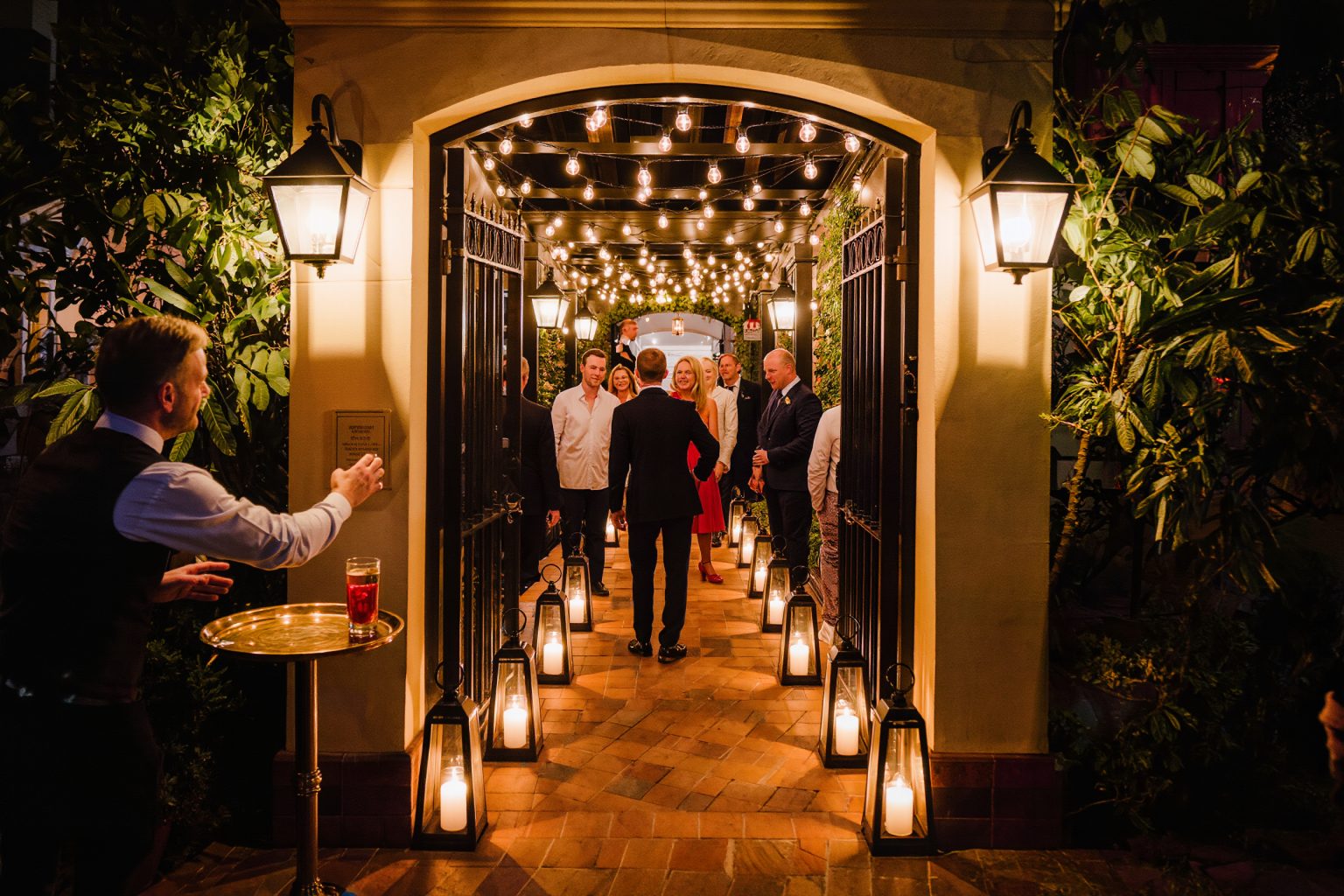
Generated image Made to show what this article describes. Nothing in it was photographed at an event.
Guests start judging an event before they’ve seen the centerpiece. Whether the entrance is obvious. Whether their coat has somewhere to go. Whether they’re blocking a doorway and nobody’s noticed. The first seven minutes quietly set every social rule the rest of the room will follow.

Orientation comes first, always
The threshold has to answer three questions without anyone announcing anything: where do I enter, where do my things go, where do I move next. Light, sound, furniture placement, one visible human cue, that’s what makes a route legible. A gorgeous entrance that creates a traffic jam has already failed its one job.
Guests are looking for permission, whether they admit it or not
Nobody wants to ask if they can sit, whether the drink station is self-serve, or what’s behind the one closed door. I answer before anyone has to ask, with small cues that lower the friction: a tray already circulating, chairs angled toward each other, a host positioned away from the kitchen so they’re actually available to greet.
Let the room reveal itself instead of dumping everything at once
A memorable event unfolds. The entry can offer color and sound, the gathering space can introduce scent and texture, and the dining room can stay partially concealed until service. Controlled revelation builds anticipation. The drama doesn’t have to land all at once at the door — spend it in sequence, and it hits harder by the time guests reach the table.
Service is part of the guest journey, not a backstage afterthought
Drinks need ice and glass return. Food needs a holding point. Staff need routes that don’t cut straight through the welcome zone. Lighting needs to let people actually read faces and see the stairs. I treat service as visible design, because guests experience it whether anyone planned for that or not.
Run the seven-minute test yourself
I walk the arrival as a guest, coat, phone, maybe a gift in hand. Start at the curb. Time the route. Every hesitation, every dark patch, every unanswered question, I fix those before I let anyone add one more decorative layer on top.
The table might be the visual destination, but the event actually begins at the threshold. The occasion-design framework is where I choreograph the whole sequence, not just the parts that photograph well.
Atmosphere OS · Guest Journey
Somebody is holding a drink, a plate and a bag.
Guest Journey walks arrival, waiting, seating, service and departure, then shows you where the plan asks too much of a person with two hands. None of it is a safety assessment, and it does not pretend to be one.
The rulebook is public. Every formula it runs on is written down where you can disagree with it.
Continue through the system
Pretty is still not a plan.
This field note belongs to a larger event-design system. Follow the chapter that explains the next pressure point instead of falling back into an undifferentiated archive.
What you have to decide next
One decision constrains the next. This is the order they actually happen in.
- Production How does it get built and run? Ask It Twice: Why the Same Evening Comes Back With Five Different Answers
- Vendors Who owns each handoff? When Prismm Goes Dark: The Deadline Is September, Not December
- Contingency What happens if the weather turns? The Storm Wasn’t the First Failure
- Budget What does this trade off against? The Dance Floor Wrap Is Not the Whole Dance Floor
More in this chapter


See the complete five-chapter Event Design Intelligence map →