Occasions & Formats
Supper Club at Home: Repeatable Without Restaurant Cosplay
A home supper club works when the structure is repeatable and the host stays human. Build a ten-person format around one menu logic, one table rhythm and a reset you can actually do again.
It is eleven the next morning. Six borrowed chairs are still in the hallway, the rented plate set has to go back by two, and there is wax on a tablecloth that belonged to somebody’s grandmother.
The dinner was a triumph. Everyone said so. Nobody has proposed a date for the next one, and privately the host is relieved, because the first one cost custom menus, three days of prep and the emotional recovery period normally associated with a small renovation. That is not a supper club. That is a pilot episode with no second season.
Ten people is a useful size: enough energy to feel like a recurring thing, small enough for one room, one table and a host who still intends to eat.
Design the format before the theme
The repeatable structure matters more than a new aesthetic every month.
Decide what stays consistent: arrival window, seating time, number of courses, whether drinks are self-serve, whether guests bring anything, whether the menu has a recurring constraint, and how the evening ends.
That consistency becomes the identity.
Maybe every dinner has one regional idea. Maybe the host cooks one main dish and guests bring wine. Maybe dessert is always bought from a different bakery. Maybe the table always includes one ingredient everyone has to try.
A format gives people something to recognize. A theme gives you more things to buy. Other formats worth stealing from are under occasion formats.
Do not imitate restaurant service you cannot staff
Ten individual plated courses sound elegant until the host is standing under kitchen light arranging microgreens while nine people wonder whether they should keep talking or offer help.
Use service that fits a home.
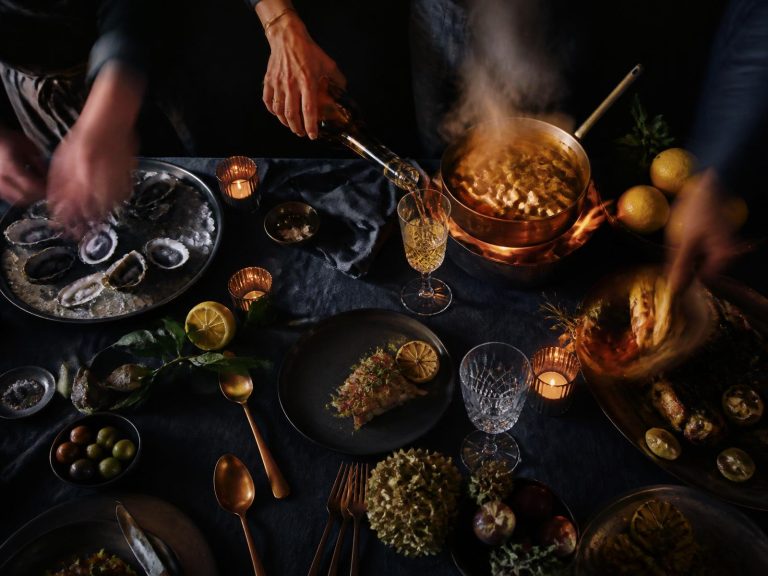
Serve the main family-style and have the first course already on the table when people sit. Plate dessert before dinner if it needs plating at all. Put water within reach and leave the wine where guests can refill it themselves. Offer coffee after dinner only if the machine can handle ten people without becoming the evening’s final queue.
The event can be polished without pretending the kitchen has a brigade.
Ten covers, one kitchen and no brigade is a service ratio, and the ratio is the part worth settling before the menu is.
Set the service model for ten (opens in a new tab)
Let the table carry continuity
You do not need a different tablescape identity every time.
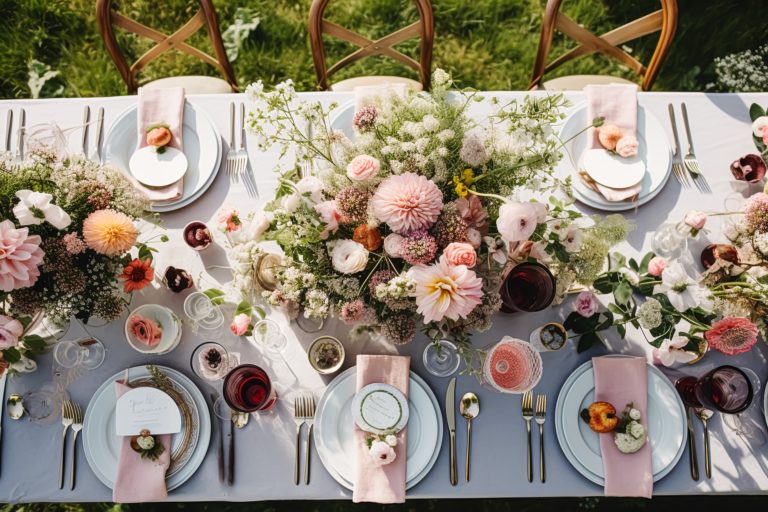
In fact, repetition is part of the charm. Same linen, different flowers. Same candleholders, different produce. Same mismatched plates, different menu. One stable table language makes each dinner feel related without making the host reinvent the dining room.
A collected table is especially useful for a recurring format because it can grow instead of being replaced.
Build a menu with one point of risk
Every dinner can have one ambitious thing.
One handmade pasta. One roast requiring precision. One elaborate dessert. One new technique.
Everything else should be dependable.
If the main is uncertain, serve a familiar first course. If dessert is experimental, let dinner be forgiving. If the whole menu is new, the host is not hosting; the host is conducting field research with witnesses.
A repeatable supper club needs confidence more than novelty. Occasion OS is a good place to keep the menu that worked, so next month starts from evidence.
Seating can rotate without becoming a chart
If the same group attends repeatedly, change who sits beside whom. Ten people can form habits quickly, and recurring dinners become more interesting when the room does not split into the same conversational territories every time.
Printed place cards are optional and, for ten people in a house, faintly comic unless you genuinely enjoy them. A decision made in the hallway three minutes before the first arrival does the same work.
Put newer guests beside strong social bridges. Keep couples from automatically occupying the same two-seat unit. And if two guests share one consuming interest, seat them apart, unless you have already made peace with losing that end of the table for forty minutes to a subject nobody else can enter.
Give the evening a recognizable opening
Recurring events become rituals through repetition.
I would pick one or two things and never change them: the first drink, say, or the record that plays while people arrive, or a toast short enough that nobody reaches for their phone. The ritual tells returning guests where they are in the evening and makes newcomers feel as though they have entered something with history.
Use ritual cues deliberately. They are cheap, memorable and require almost no storage.
Do not turn attendance into a loyalty program
A supper club should survive imperfect attendance.
People will miss dinners. Guests will change. Someone will bring a new partner. Another person will stop coming because Wednesday is impossible now.
Do not make the format so dependent on a fixed cast that absence becomes a crisis. The event should have enough identity to continue and enough flexibility to absorb new people.
This is a gathering, not a board seat.
Build the reset into the format
The best test of repeatability happens after the door closes.
How long does it take to get the room back? Can serving pieces go in the dishwasher? Where do extra chairs live? Did one decorative decision create an hour of cleanup? Did the host buy objects with no storage plan?
Storage is the afterlife of event design.
If the supper club is monthly, every recurring object should have a home and every cleanup job should be tolerable enough that the host does not begin resenting the next date while scraping wax.
Could you do it again in six weeks?
- Is the format recognizable without requiring a new theme?
- Can the meal be served without restaurant-style plating?
- Does the table language reuse what the host already owns?
- Is only one part of the menu genuinely risky?
- Can the guest mix change without breaking the night?
- Can the room be reset without a second event called cleanup?
If yes, you have something worth repeating.
For how recurring formats scale, use Occasions & Formats and the rest of the hosting guides. Repetition makes small operational problems unusually visible, which is useful if you let it. Supper clubs rarely die of a bad dinner. They die on the third one, when the host opens the cupboard, finds nowhere to put the extra chairs, and quietly stops proposing dates.
For a dinner built around what the kitchen can actually carry, Kitchen Has Opinions is the whole night worked through: the first menu loses the argument, and the evening is better for it.
Field notes and corrections
When a number here turns out to be wrong, you hear about it.
Three things arrive and nothing else. The new field note — bar rates, cover widths, service clearances, the arithmetic worked through on one real evening. A line when a World opens, because a night only goes up once it can actually be thrown. And a correction whenever a rule in the published rulebook changes, or a number the tools rely on turns out to have been wrong. There is no weekly slot, because there is nothing weekly to put in it.
One email per field note or opening, plus corrections when a published figure moves. Unsubscribe from any of them.
Continue through the system
Pretty is still not a plan.
A party gets planned in roughly this order. Pick the chapter where your next problem lives.
What you have to decide next
One decision constrains the next. This is the order they actually happen in.
More in this chapter
See the complete five-chapter Event Design Intelligence map →