Occasion Formats
Milestone Birthday for Twenty: Make the Room Know Who It Is For
A twenty-person milestone birthday needs more than a cake and less than a production spectacle. Build the room around the person, protect circulation, and give the night one real focal moment.
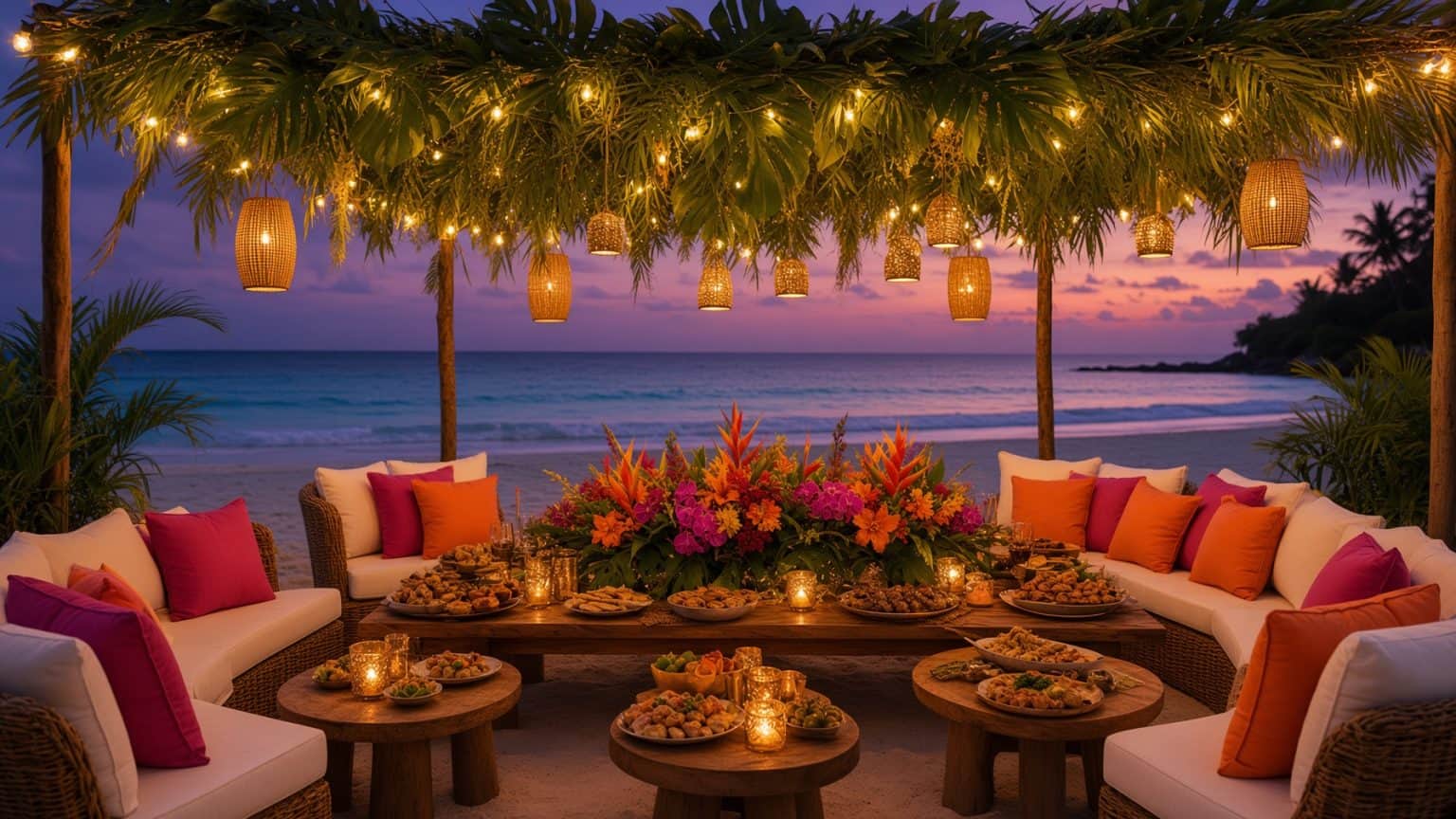
Generated image Made with Grok to show what this article describes. Nothing in it was photographed at an event.
At twenty guests the conversation splits, and after that it never comes back together.
Everything else follows from that one fact. Drinks need somewhere of their own to live. Coats arrive in volume. The birthday person can no longer carry every social connection personally, and the cake, still welcome, has been quietly demoted from operating system to dessert.
Twenty is a useful scale for a milestone birthday because the room can feel full without going anonymous. The difficulty is making it know who it is for without converting one person’s life into a branded environment.
Choose one personal idea with enough strength to travel
The milestone number is not the concept.
Start with something that belongs to the person: a place, era, habit, color, food, collection, obsession, story or social behavior. Then let that idea appear in two or three places.
A favorite bar becomes the drink logic and the lighting mood. A love of records becomes the music and one visual detail, rather than vinyl glued to every available surface. A gardening obsession becomes abundant cut branches and a menu built around whatever is genuinely in season, which is a better tribute than forty small shovel-shaped favors destined for a landfill by Thursday.
Personalization beyond the theme is especially important at twenty people because there is enough space for an idea to repeat and enough intimacy for guests to notice when it is generic.
The birthday person needs a social route
At eight, the guest of honor can speak to everybody from one seat. At twenty, people arrive in waves and form clusters.
Design the room so the birthday person can move without being trapped in a doorway or pinned to a head seat all night.
Put the bar or first drink away from the entrance so arriving guests move inward. Keep one open circulation lane. Avoid placing the cake, gift table and guest of honor in the same corner where three forms of attention will collide.
If dinner is seated, build fifteen or twenty minutes of standing social time first. It gives the birthday person a chance to greet people before the seating structure takes over.
One focal moment is enough
Twenty guests can support a toast or short sequence of stories beautifully.
They can also support a forty-minute open microphone nobody requested.
Choose the focal moment in advance. One primary toast plus two short voices. A five-minute story round with prompts. A single video under five minutes. Cake and one group photograph.
The more emotional the event, the more useful a boundary becomes. Meaning does not improve linearly with duration.
Drinks need a system now
Twenty people can empty one refrigerator shelf and create a bar line with alarming efficiency.
Move drinks out of the cooking zone. Use one self-service station for water, wine, beer and nonalcoholic options. If there is a featured cocktail, batch it or assign one person to it before the event begins.
Ice deserves more attention than it receives in most planning documents.
Put glassware where refills happen. Keep water obvious. Give nonalcoholic drinks the same visual legitimacy as everything else.
At this scale, the host cannot be the bartender without leaving the party. Atmosphere OS counts drink service against the guest list, so that trade-off shows up early.
Twenty people, one station and a host who would like to remain a guest is a ratio worth checking rather than guessing at.
Count the drink service for twenty (opens in a new tab)
Feed the room, not twenty individuals
Unless professional service is involved, choose food that can be produced and replenished in zones.
A buffet can work. Large platters can work. A restaurant private room can work extremely well. Passed food can work if somebody other than the host is passing it.
The risk is building a menu that looks elegant on paper and requires one person to perform twenty repetitions.
Service routes matter even in a house. Food should be able to move from prep to guests without crossing the main conversation cluster every three minutes.
Give coats, gifts and bags a real address
Twenty winter coats can fill a bedroom faster than expected. Twenty gifts can take over the table where dessert was supposed to go.
Assign locations.
Coats in one room with a clear path. Gifts on one surface that will not be moved mid-event. Bags somewhere safer than the floor beside the door.
This is invisible design. Guests remember it only when it fails.
Make the room feel full without filling every surface
Twenty people add their own atmosphere. Bodies, glasses, coats, chairs and movement will make the room visually denser than the empty setup.
Decorate for the occupied room. That is most of the argument in the atmosphere work.
Use light first. One strong floral gesture or material idea second. Keep tables and side surfaces available for actual guest behavior.
If the concept only looks good before twenty phones, glasses and handbags enter the room, it is not finished.
Build an exit that does not become a receiving line
At twenty, departures can happen over forty-five minutes.
Put coats where guests can retrieve them without finding the host. Make rides and parking easy to understand. If favors exist, place them on the departure route rather than making the birthday person distribute them individually.
Departure is part of guest experience, even when the venue is home.
The milestone-birthday-for-twenty test
- Does the room express the person through an actual idea, not only the milestone number?
- Can the guest of honor move and greet people naturally?
- Is there one bounded focal moment?
- Can guests refill drinks without requiring the host?
- Do coats and gifts have destinations?
- Can people leave without creating a second event at the front door?
If yes, twenty people can feel substantial and still unmistakably personal.
Use Occasion Design to see what changes at smaller and larger scales. One thing will not change, at twenty or at two hundred: the guest of honor cannot properly speak to everyone. Twenty is simply the last size at which they get close enough to notice they did not manage it.
Continue through the system
Pretty is still not a plan.
This field note belongs to a larger event-design system. Follow the chapter that explains the next pressure point instead of falling back into an undifferentiated archive.
What you have to decide next
One decision constrains the next. This is the order they actually happen in.
- Venue Will this room hold it? When Prismm Goes Dark: The Deadline Is September, Not December
- Vendors Who owns each handoff? Ask It Twice: Why the Same Evening Comes Back With Five Different Answers
- Contingency What happens if the weather turns? The Storm Wasn’t the First Failure
- Budget What does this trade off against? The Dance Floor Wrap Is Not the Whole Dance Floor
More in this chapter


See the complete five-chapter Event Design Intelligence map →