Atmosphere
When an Event Actually Belongs to Someone: Personalization Beyond the Theme
Personalization can mean a celebration that reflects the people at its center. It can also mean initials on six surfaces and a cocktail named for the dog.
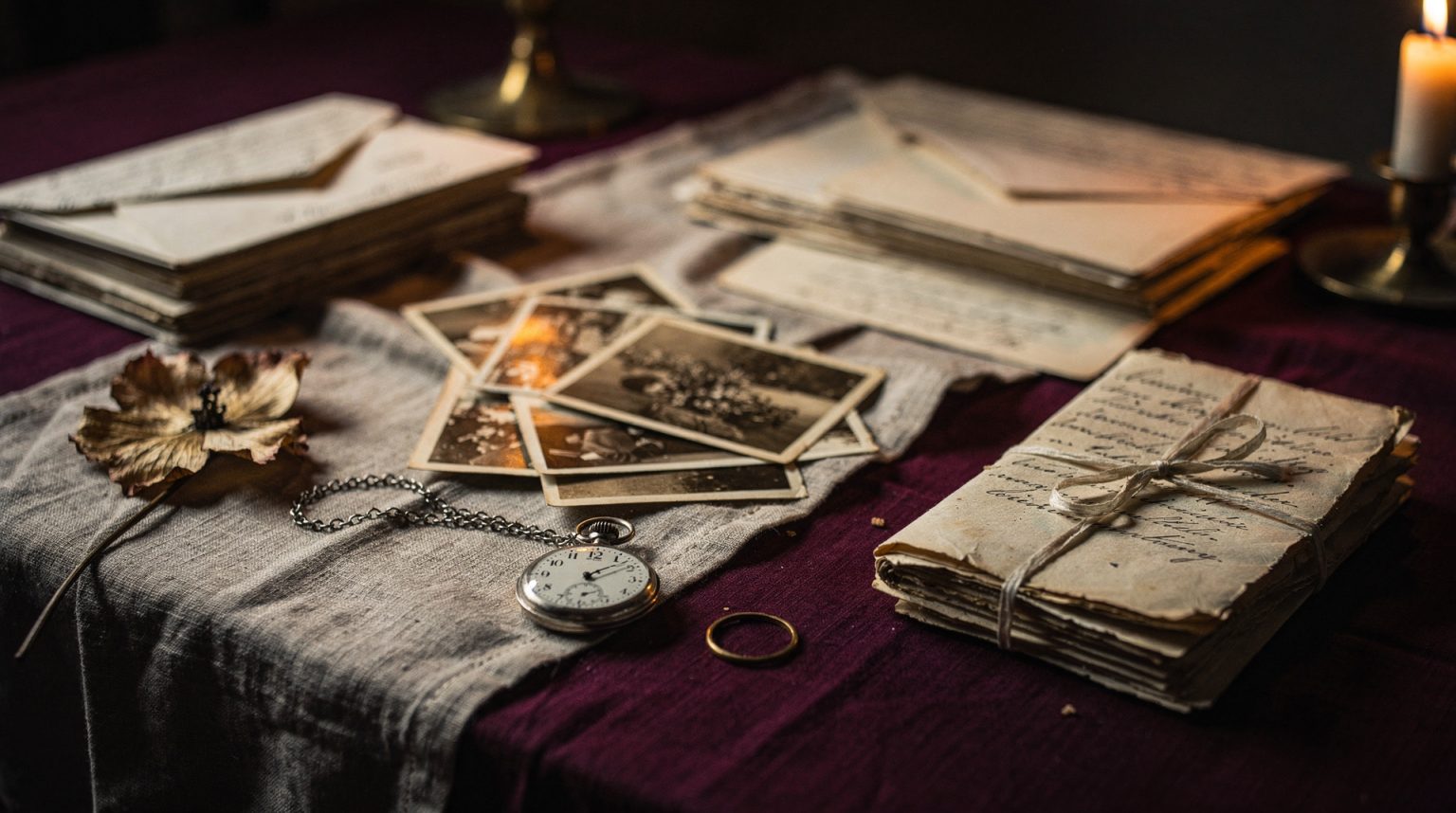
Personalization is one of the most abused words in event design.
It can mean something genuinely specific: a celebration that reflects the people, place, relationships, rituals, and priorities at its center. It can also mean initials on six surfaces and a cocktail named after the dog.
The designers in this group matter because their work points toward a more intelligent version of personalization. Bryan Rafanelli, Mindy Weiss, Jung Lee, Yifat Oren, David Stark, and Jove Meyer all treat identity as something the event should express rather than label.
Theme, concept, personalization, and story are not the same thing
Event planning becomes clearer when these words stop being interchangeable.
A theme is a recognizable visual or cultural category: garden party, jazz club, celestial, western, modernist, masquerade.
A concept is the organizing idea that determines how the event behaves. A jazz-club concept might be less about saxophone graphics and more about low light, tight seating, music as the center of gravity, late-night pacing, and a sense of discovery.
Personalization is evidence of the actual people or purpose: how they gather, what they value, what they avoid, what they remember, what their community understands.
Storytelling is how those ideas unfold over time and space.
A good event can use all four. It does not need to confuse them.
Bryan Rafanelli: specificity without the scrapbook
Rafanelli is useful because his work demonstrates client-specific storytelling at large and complex scales.
The trap with personalization is assuming the room needs to contain more biographical information. It usually does not. It needs better choices.
A host’s love of travel does not automatically require luggage-tag escort cards. It might influence how guests move through spaces, how food changes over the evening, or how a particular destination informs material and music. A family tradition does not need explanatory signage if it can be embedded naturally into the ceremony, dinner, or welcome.
The goal is not to prove that research happened. It is to make the event feel owned.
Mindy Weiss: personalization needs hierarchy
Mindy Weiss’s long-running client-centered approach reinforces another important idea: personal details need editing.
Too many references create noise. If every table, cocktail, favor, sign, napkin, menu, and song contains a different private fact, the event becomes an annotated autobiography.
Hierarchy solves that problem.
The goal is not to prove that research happened. It is to make the event feel owned.
Choose a few references with enough emotional or social weight to carry the room. Put them where guests already pay attention: arrival, ceremony, food, music, seating, or departure. Let the rest of the event support those moments instead of competing with them.
Jung Lee: integration makes personalization feel natural
Jung Lee and FÊTE are useful because personalization can run through food, music and service rather than being confined to decor.
If the host values food, that can shape service style, menu pacing, furniture, and the time allotted to dinner. If music matters, it may affect room transitions and how the evening builds. If hospitality is central, the “personal” gesture may be how guests are welcomed, seated, or surprised.
This is a more mature form of customization because the event does not need to announce what it knows about the host. The knowledge is visible in the decisions.
Yifat Oren: authenticity requires research
Yifat Oren’s work is especially important when personalization involves culture, religion, location, or family ritual.
Those elements carry meaning beyond aesthetics. A tradition cannot be treated as a motif library. A regional reference cannot be flattened into a tourist shorthand. A cultural ritual should not be modified casually because a photograph looked better a certain way.
Research is therefore part of design.
Nobody needs the event to become a history lecture. The planner does need to know which parts can flex, which parts matter deeply, and which visual choices would quietly turn something significant into costume.
It is the same rule I apply everywhere else: specificity is only worth having when it is accurate enough to deserve confidence.
David Stark: the story should be experienced, not explained
David Stark’s work offers one of the best tests for event storytelling.
If guests need a paragraph to understand the concept, the room probably has not done enough work.
Narrative can live in material, repetition, scale, sequence, and interaction. An ordinary material used unexpectedly can express an idea more effectively than a literal prop. A repeated shape can create a visual language. A transition from one room to another can create a plot point without anyone calling it one.
Concept vs. Theme: How to Keep the Event From Looking Like a Costume goes further into this. The stronger the concept, the less explanation it usually needs.
Jove Meyer: identity can be visually unapologetic
Jove Meyer adds a different and necessary perspective: personalization does not have to be subtle to be intelligent.
Color can communicate character. Scale can communicate energy. A celebration can reject the default visual language of its category if that language does not fit the people in the room.
If guests need a paragraph to understand the concept, the room probably has not done enough work.
That permission matters because “timeless” is often treated as though it means neutral, restrained, and broadly acceptable. Some hosts are not broadly acceptable, and their event should not be required to impersonate a tasteful stranger.
The editing principle still applies. Boldness becomes clearer when colors, patterns, and gestures have defined roles rather than equal volume.
The personalization test
Before approving a personalized detail, ask:
- Does it reveal something meaningful? Or is it merely biographical trivia?
- Can guests experience it? Or can they only read it?
- Does it improve atmosphere, ritual, hospitality, or memory?
- Is it culturally or contextually accurate?
- Would the event still make sense if this detail disappeared? If not, it may be carrying too much explanatory weight.
Personal is not the same as autobiographical. Guests came for the occasion, not the exhibition.
Personalization should scale without losing its point
A large event may express identity through custom scenic work, entertainment, multiple environments, or complex programming.
A small event can do it with a menu, a playlist and one deeply appropriate gesture, and I would argue it often lands harder that way.
I treat personalization as a set of decisions rather than a shopping category. The host should remain visible even when the budget is modest and even when the event is not a wedding.
Let the host be the source material
The best personalized event does not require guests to know every reference. It simply feels like it belongs to someone.
That feeling comes from choices with a point of view, and a surprising number of them are about what got left out. The monogram that did not go on the napkins. The tradition that was protected instead of restyled. The one loud color that was allowed to be loud.
Use the host as source material. Just do not turn them into the decor.
Start with the full field guide: 20 Event Designers Who Shaped the Modern Event — and Why Their Work Matters.
The Hospitality School of Event Design · The New Rules of Event Design
Atmosphere OS · Theme Atelier
Where the feeling stops being a photograph.
Theme Atelier converts a direction into a documented design system with the lighting and material consequences attached. It runs in your browser and stays there until you decide the project is worth saving.
The rulebook is public. Every formula it runs on is written down where you can disagree with it.
Field notes and corrections
When a number here turns out to be wrong, you hear about it.
Three things arrive and nothing else. The new field note — bar rates, cover widths, service clearances, the arithmetic worked through on one real evening. A line when a new World or Mini Occasion opens, because a night only goes up once it can actually be thrown. And a correction whenever a rule in the published rulebook changes, or a number the tools rely on turns out to have been wrong. There is no weekly slot, because there is nothing weekly to put in it.
One email per field note or opening, plus corrections when a published figure moves. Unsubscribe from any of them.
Continue through the system
Pretty is still not a plan.
A party gets planned in roughly this order. Pick the chapter where your next problem lives.
What you have to decide next
One decision constrains the next. This is the order they actually happen in.
More in this chapter
See the complete five-chapter Event Design Intelligence map →