Guest Experience
The Party Is for the Guests: The Hospitality School of Event Design
What Colin Cowie, Marcy Blum, Bronson van Wyck, Mindy Weiss, Fallon Carter and Todd Fiscus teach about designing the guest experience rather than just the room.
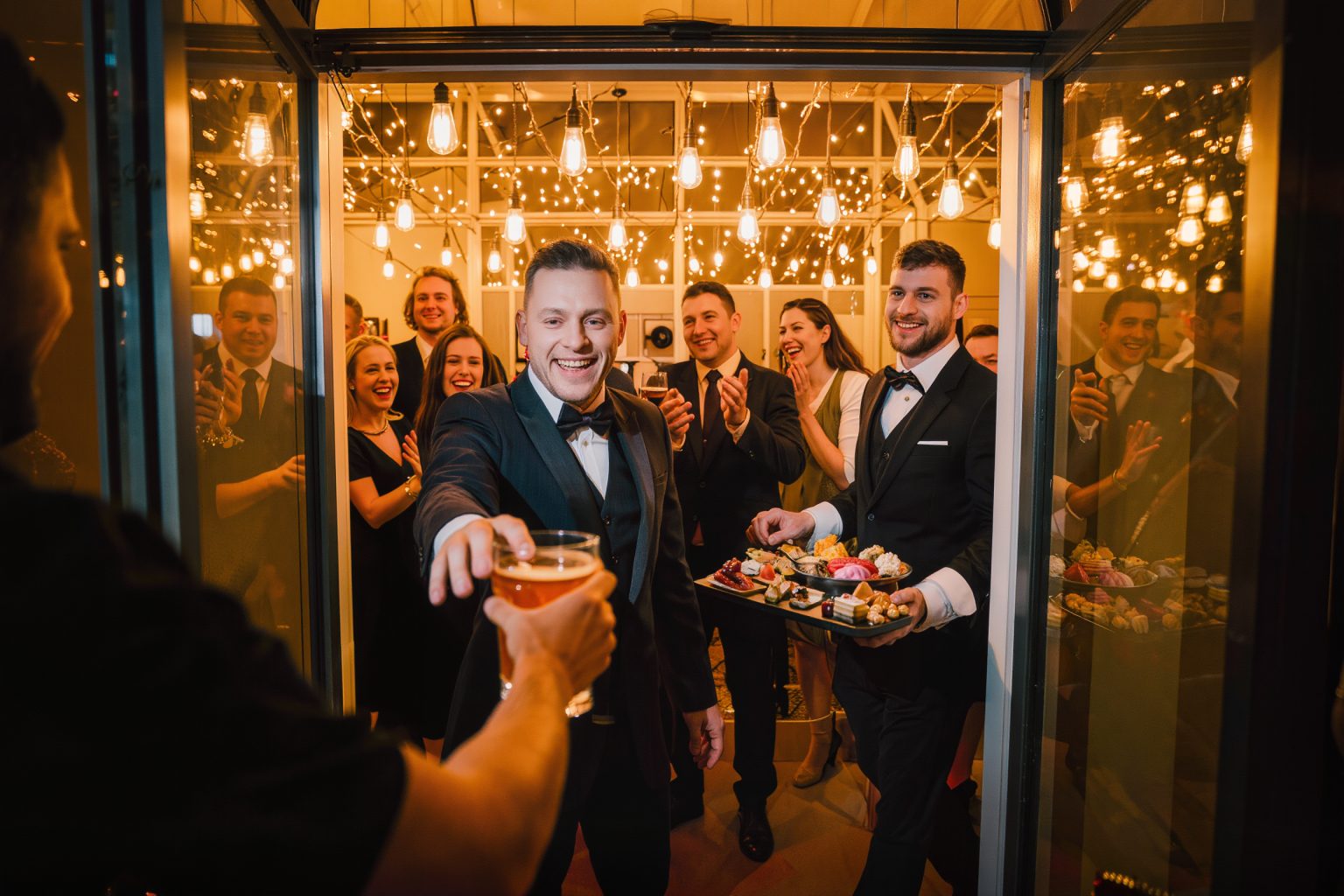
A beautifully designed event can still be a miserable party.
The room can be extraordinary while the bar is impossible to reach, the sound is punishing, dinner is late, the chairs are uncomfortable, the entrance is confusing, and the hosts spend the evening apologizing for things guests were never supposed to notice.
The designers in this group matter because they treat hospitality as part of the design itself. Colin Cowie, Marcy Blum, Bronson van Wyck, Mindy Weiss, Fallon Carter, and Todd Fiscus all approach events from different visual directions, but the useful overlap is clear: the guest is not an accessory to the photograph.
Every vendor’s work lands on the same guest
Guests rarely know which vendor caused a problem or which team solved it. They experience the result as one continuous evening.
That means temperature is part of hospitality. So is lighting. So is the distance to the restroom, the wait for a drink, the pace of dinner, the volume of the music, the availability of seating, the clarity of transportation, and whether anyone had to ask three staff members where to put a coat.
Colin Cowie’s hospitality lens sharpens that standard. His work bridges events and hospitality, making the sensory and service layers part of the same design conversation. Visual style matters, but it is one touchpoint among many.
The practical standard is simple: if the visual plan contradicts comfort, service, or movement, the plan is not finished.
Marcy Blum: the party starts before the room reveal
Marcy Blum is useful because she pays attention to the details glamorous coverage often edits out.
Guests have been having an experience before they see the centerpieces. They found the venue. They parked or exited a car. They located the entrance. They checked a coat. They tried to understand where they were supposed to stand. They formed an opinion about the event before the first dramatic photograph would ever be taken.
That first fifteen minutes deserves design attention.
This is also why a coat check can matter more than another decorative object. Hospitality begins where friction begins.
The practical standard is simple: if the visual plan contradicts comfort, service, or movement, the plan is not finished.
Bronson van Wyck: spectacle is more generous when it serves the room
Van Wyck demonstrates that hospitality does not require visual restraint. A party can be theatrical, lavish, witty, or intentionally excessive and still be hospitable.
The useful test is whether the theatrical choices support the social rhythm.
A dramatic entrance can heighten anticipation. A lighting shift can move people from cocktails into dinner without an announcement. A surprising late-night reveal can revive energy. But spectacle becomes self-indulgent when it blocks circulation, slows service, creates confusion, or forces guests to admire the event rather than inhabit it.
For the record, I am not anti-drama. I am anti-drama with no job.
Mindy Weiss: personalization can be an act of care
Mindy Weiss helps connect personalization to hospitality.
Personalization can do a lot more than sprinkle references to the host around the room. It can anticipate what these particular guests will need to enjoy themselves.
A family with several generations may need different seating zones. A celebration built around food may need pacing that protects the meal rather than rushing through it to get to dancing. A group with many out-of-town guests may need more guidance than a local dinner. A host who values conversation may need quieter music and a floor plan that supports it.
Specificity is hospitable when it makes people feel considered.
Fallon Carter: destination hospitality begins in transit
Destination events expose the limits of venue-centered planning.
For a destination celebration, the guest journey may begin days earlier with booking, packing, flights, driving, hotel check-in, weather uncertainty, unfamiliar transportation, and time-zone fatigue. By the time guests reach the venue, they may already have done significant work on behalf of the event.
Fallon Carter’s approach is especially useful because travel logistics are treated as part of guest care rather than an administrative side channel.
The lesson travels well beyond destination weddings. Every event asks something of guests, whether it is a flight and a hotel room or just a Saturday night, a new outfit and three hours of being sociable. I think good hosting starts by admitting what you are already asking before you add anything to the bill.
Todd Fiscus: ease is engineered
Todd Fiscus helps explain why hospitality only looks easy after considerable structure has been built underneath it.
A host can relax because someone else already made the decisions that should not be made in the room. Staffing is planned. Rentals are confirmed. Service timing is known. The power exists. The weather backup is viable. The transportation plan has names and numbers attached to it.
Guests never see any of that, and it is the reason their evening works.
My field note The Hosting System Guests Never See—and Absolutely Feel lives in exactly this territory: guests should feel the benefit without having to see the machinery.
Hospitality has five practical layers
For planning purposes, it helps to break hospitality into layers:
- Arrival. Can guests find the event, understand where to go, enter comfortably, and orient themselves without intervention?
- Physical comfort. Temperature, seating, accessibility, lighting, acoustics, restrooms, shade, shelter, and personal space.
- Service. Drinks, food, clearing, refills, timing, staffing, special dietary needs, and the speed at which friction is resolved.
- Social rhythm. Conversation, transitions, music, speeches, downtime, seating, and whether guests are constantly being moved or instructed.
- Departure. Transportation, coat retrieval, favors or belongings, lighting, wayfinding, and whether the event ends gracefully rather than collapsing.
Every one of these is hospitality before it is design. Guests feel all five and will only be able to name the last one.
The guest journey is the better design brief
One reason event planning gets fragmented is that vendors organize the work by discipline. Guests do not.
A host can relax because someone else already made the decisions that should not be made in the room.
A better design brief follows the person through time.
At 5:30, where are they? What do they need?
At 6:15, what are they hearing? Where is their drink? Can they sit?
At 8:00, can they see the person across the table? Is dinner moving? Is the room too warm?
At 10:30, is there somewhere to rest without leaving the party entirely?
At midnight, can they leave without entering a transportation puzzle?
That is the whole argument of The Guest Journey Scales Better Than the Decor, and it pairs well with these designer profiles. Guest experience is one of the few design principles that becomes more important, not less, as scale increases.
What to borrow from the hospitality school
Do not begin with “What will guests see?” Begin with “What will guests have to do?”
Map the arrival, the waits, the transitions and the hour when the room gets too warm. Then pile on the atmosphere, as much as you like, onto a plan that already respects the people inside it.
I would still go extravagant. I would still want the surprise and the big visual swing. The difference is that nobody has to apologize for any of it at 10:30.
Start with the full field guide: 20 Event Designers Who Shaped the Modern Event — and Why Their Work Matters.
Personalization Beyond the Theme · The New Rules of Event Design
Atmosphere OS · Theme Atelier
Where the feeling stops being a photograph.
Theme Atelier converts a direction into a documented design system with the lighting and material consequences attached. It runs in your browser and stays there until you decide the project is worth saving.
Costs come back as indicative bands rather than quotes, and seasonal notes are filters rather than promises.
Field notes and corrections
When a number here turns out to be wrong, you hear about it.
Three things arrive and nothing else. The new field note — bar rates, cover widths, service clearances, the arithmetic worked through on one real evening. A line when a new World or Mini Occasion opens, because a night only goes up once it can actually be thrown. And a correction whenever a rule in the published rulebook changes, or a number the tools rely on turns out to have been wrong. There is no weekly slot, because there is nothing weekly to put in it.
One email per field note or opening, plus corrections when a published figure moves. Unsubscribe from any of them.
Continue through the system
Pretty is still not a plan.
A party gets planned in roughly this order. Pick the chapter where your next problem lives.
What you have to decide next
One decision constrains the next. This is the order they actually happen in.
More in this chapter


See the complete five-chapter Event Design Intelligence map →