Design & Florals
What to Put on the Table When the Food Is Already Doing the Most
Sometimes the meal is already the main event. When the food is loud, everything else on the table should get quieter and let the plate keep its stage.
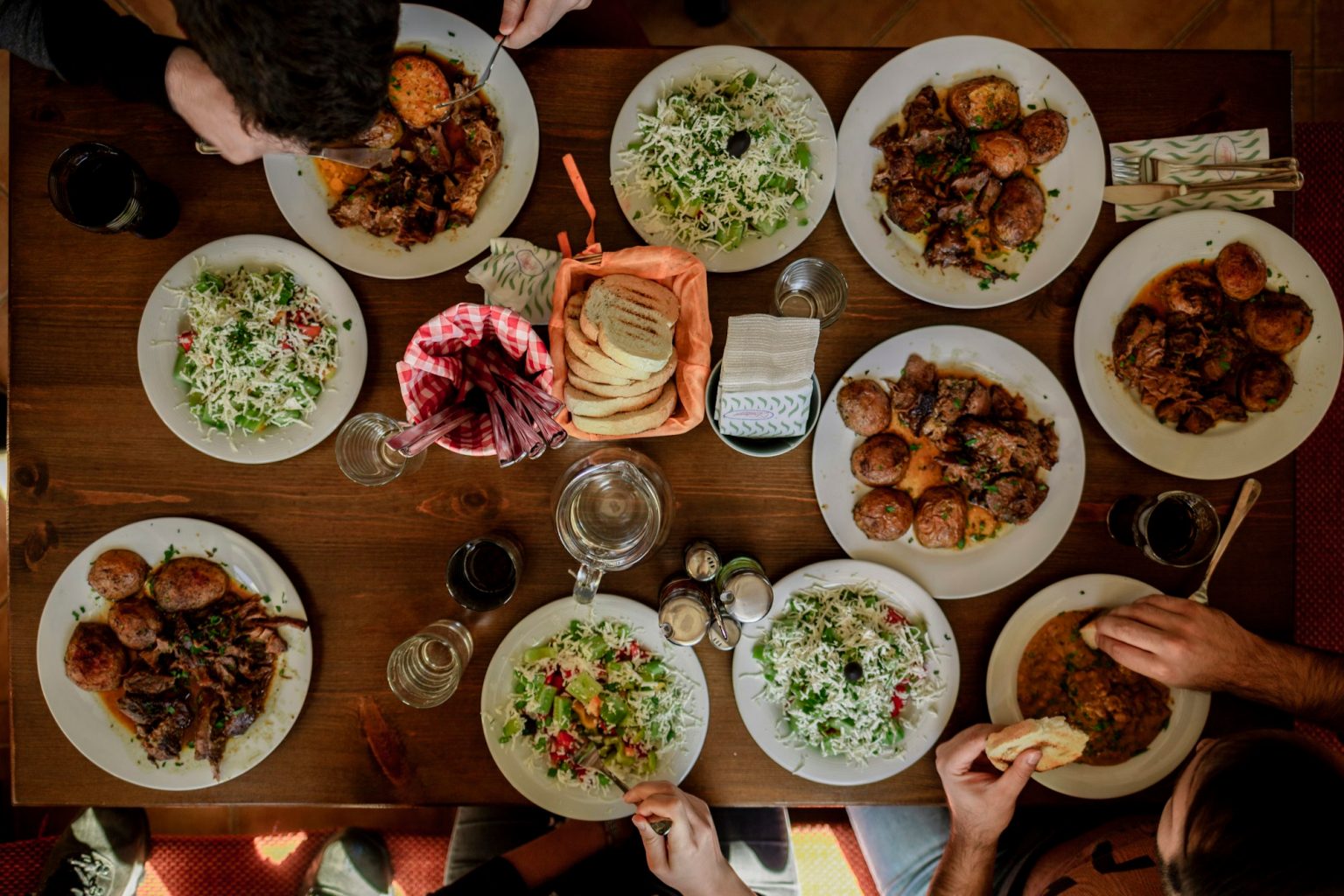
Sometimes the meal is already the main event. The color, the height, the steam, the sheer abundance, it’s doing all the visual work on its own.
Adding more decoration at that point is usually a mistake. The table starts to feel crowded, the food loses its stage, and everything ends up competing for the same attention.
I count that as good news. The food has already made the loudest decision, so everything else at the table gets to lower its voice.
Choose quiet materials on purpose
Linen, wood, stone, low-sheen ceramics, all of it lets the food stay in the foreground. High-pattern or highly reflective surfaces pull attention straight off the plate. I keep the supporting cast calm and good to touch, and let the platter have the drama.
Control the height so nothing competes with the food’s own volume
If the food has real vertical presence, tall roasts, layered platters, I keep the non-food elements low. A few small vessels, one low runner, that’s usually plenty. Anything rising to the same height as the food is going to fight it. The same rule that keeps a centerpiece from blocking the person across the table applies here, with the roast standing in for the guest.
Use repetition instead of variety
One material or shape repeated across the table reads as calm. Multiple competing objects read as noise. Most tables are better off with one gesture doing the work of five. When the food is already complex, the table setting should feel like a single decision, not a collection someone assembled in a panic.
Protect the negative space, don’t apologize for it
Leave open surface. Guests need somewhere to set a glass or see the plate without visual interruption. When the food is the star, that empty linen is the frame around it.
Let the light do some of the work you’d otherwise ask objects to do
Good light on good food usually outperforms another object every time, which is one more argument for choosing the light before the objects. I make sure the lighting flatters the meal’s actual colors and textures. A well-lit plate needs far less decoration than a poorly lit one.
The hard skill here is restraint, which is slightly irritating advice coming from someone who goes all in on nearly everything. Step back before the last object goes down. If the food still looks like the main character, that object stays in the box.
Atmosphere OS · Theme Atelier
Where the feeling stops being a photograph.
Theme Atelier converts a direction into a documented design system with the lighting and material consequences attached. It runs in your browser and stays there until you decide the project is worth saving.
Costs come back as indicative bands rather than quotes, and seasonal notes are filters rather than promises.
Field notes and corrections
When a number here turns out to be wrong, you hear about it.
Two things arrive and nothing else. The new field note — bar rates, cover widths, service clearances, the arithmetic worked through on one real evening. And a correction whenever a rule in the published rulebook changes, or a number the tools rely on turns out to have been wrong. There is no weekly slot, because there is nothing weekly to put in it.
One email per field note, plus corrections when a published figure moves. Unsubscribe from any of them.
Continue through the system
Pretty is still not a plan.
This field note belongs to a larger event-design system. Follow the chapter that explains the next pressure point instead of falling back into an undifferentiated archive.
What you have to decide next
One decision constrains the next. This is the order they actually happen in.
- Venue Will this room hold it? The Serpentine Table Is Eleven Percent Longer Than the Spec Sheet Says
- Guest experience How will guests move through it? Your Guest Room Fails at the One Moment It Has a Job
- Production How does it get built and run? The Side Yard Is Wasted Square Footage With a Secret Talent
- Vendors Who owns each handoff?
More in this chapter


See the complete five-chapter Event Design Intelligence map →