Budget & Trade-Offs
The Flower Meadow Is One Hundred Linear Feet, Not One Arrangement
A 50-foot ceremony aisle with continuous flowers on both sides is not a 50-foot floral idea. It is 100 linear feet of design. Current public pricing puts that ambition roughly in the five-figure range before you even decide how dense, seasonal, movable or labor-heavy it should be.
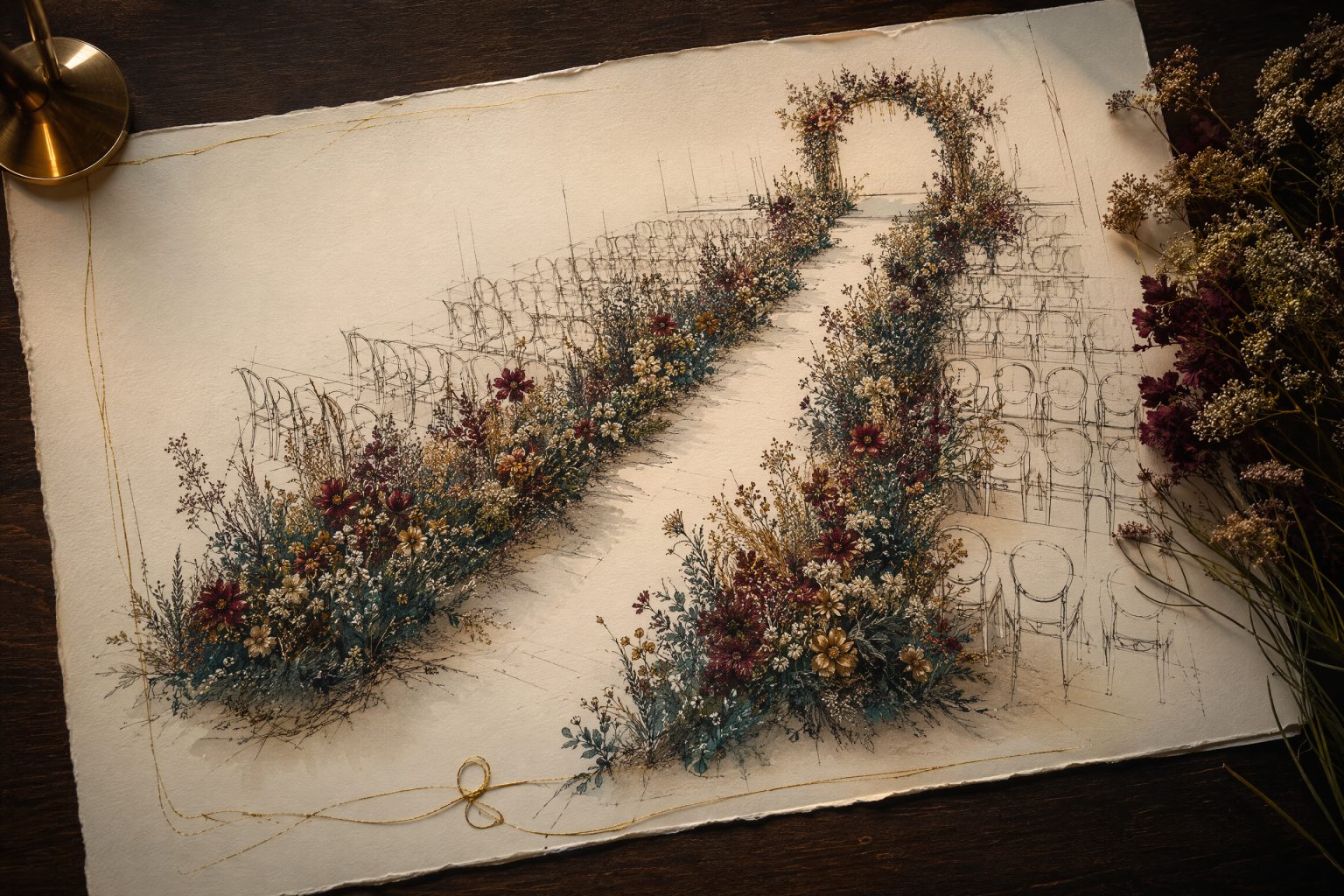
COST OF AMBITION · CEREMONY FLOWERS
A 50-foot aisle with flowers running continuously down both sides is not a 50-foot floral idea. It is one hundred linear feet of flowers. That arithmetic is why the inspiration image looks like a meadow and the proposal starts behaving like a small landscape project.
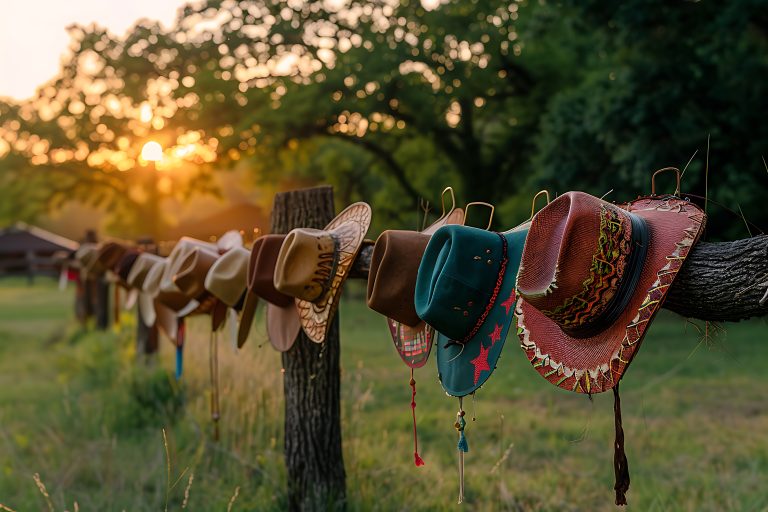
The phrase flower meadow aisle sounds suspiciously innocent. It suggests loose garden flowers, maybe a little movement, a few stems leaning into the path as if the whole thing simply wandered in from a field and happened to stop beside the ceremony chairs.
The invoice has had a less pastoral afternoon.
Continuous aisle flowers are a particularly good case to price because the expensive variable is easy to hide in a photograph and easy to expose with a tape measure. One long aisle has two edges. Once both edges are treated continuously, every foot of procession creates two feet of floral coverage.
For a reference ceremony aisle that is 50 feet long:
THE NUMBER UNDER THE PICTURE
50 feet of aisle × 2 sides = 100 linear feet of floral edge
That is the billable design problem. Whether the final look is airy, abundant, seasonal, monochrome or gloriously unbothered by restraint comes after the geometry.
This is a reference model, not a vendor quote. Flower pricing changes by market, season, bloom selection, mechanic, labor, delivery distance, setup window, strike requirement and whether the installation is fresh, dried, artificial, potted, modular or some combination of all five. I am not going to pretend a Montana meadow, a Manhattan ballroom and a California estate share one universal number.
What I can do is make the ambition legible.
The five-figure version is not hard to reach
Holly Yee Floral Architecture publishes aisle-meadow pricing of $150–$250 per linear foot. Apply that public range to the reference 100 linear feet and the floral line becomes:
LOW END OF PUBLISHED RANGE
100 ft × $150
$15,000
HIGH END OF PUBLISHED RANGE
100 ft × $250
$25,000
That does not mean every 50-foot flower aisle costs $15,000 to $25,000. It means one current florist’s published pricing makes the hidden multiplier visible. “Flower meadows are expensive” explains nothing and changes no decision. “Continuous coverage creates one hundred priced feet before we discuss the rest of the wedding” does both.
A second public check comes from much closer to home. Habitat Floral Studio in Missoula currently lists an individual floral-meadow ground arrangement at $257.50, with each piece approximately 24 to 36 inches wide and built in a wooden box for stability.
If I use 30 inches—2.5 feet—as a transparent midpoint for planning arithmetic, continuous 100-foot coverage would require about 40 modules.
40 × $257.50 = $10,300.
Again: not a quote. Not a promise that forty modules would make a visually continuous 100-foot aisle in a specific room. Density, depth and plant material change the result. But it is a useful second model because it proves the same thing from a different pricing structure. Once the design asks for repetition over distance, the multiplication becomes the story.
| Model | Published unit | What it buys across the reference aisle | Modeled floral line |
|---|---|---|---|
| Holly Yee Floral Architecture, published per-foot range — low | $150 per linear foot | Continuous, 100 linear feet | $15,000 |
| Holly Yee Floral Architecture, published per-foot range — high | $250 per linear foot | Continuous, 100 linear feet | $25,000 |
| Habitat Floral Studio module, continuous coverage | $257.50 per arrangement | About 40 modules at a 30-inch midpoint | $10,300 |
| Habitat Floral Studio module, five-foot rhythm | $257.50 per arrangement | 20 modules, ten per side | $5,150 |
THE RULE
Price the repeated unit before you fall in love with the total field.
One meadow arrangement can feel manageable. Forty is a different event decision. One linear foot can feel manageable. One hundred is the concept.
Continuity is the luxury
This is the part worth understanding before anyone starts trying to “find cheaper flowers.”
The expensive visual effect is not necessarily a peony, a garden rose or a branch with an impeccable résumé. The expensive effect is that the flowers do not stop.
A continuous floral edge asks the eye to believe the entire aisle belongs to one planted world. If there is a six-foot bare gap, the spell changes. If every third chair has a small arrangement, it can still be beautiful, but it is no longer the same visual promise.
It matters because budget conversations go bad when two designs with different jobs are compared as though they are cheaper and more expensive versions of the same thing.
CONTINUOUS FIELD
100 priced feet
The job is immersion. The eye reads one landscape from entrance to ceremony focal point.
MODULAR RHYTHM
20–24 substantial moments
The job is cadence. Flowers appear often enough to establish a repeated edge without pretending the aisle is planted solid.
ENTRY + FOCAL
Protect the first and last view
The job is framing. Spend on the threshold, the ceremony end and perhaps two or four intermediate punctuation points.
PETALS + FEWER MEADOWS
Keep the ground language
The job is softness and direction rather than continuous floral volume.
Those are not compromises in descending order of virtue. They are different compositions. A good budget edit changes the composition on purpose instead of taking a continuous meadow and starving it until it looks apologetic.
The local modular model shows where the middle can live
Use Habitat’s current $257.50 meadow piece only as a visible unit for arithmetic. A 50-foot aisle with ten modules per side—twenty total—would create an average five-foot center-to-center rhythm if evenly distributed.
20 × $257.50 = $5,150.
That is not continuous meadow coverage. It should not be sold as continuous meadow coverage. But it could still create a strong planted procession if the pieces are wide, the negative space is deliberate and the entrance and ceremony end receive enough visual weight.
The important thing is that the budget cut has become visible in the design grammar. Nobody quietly told the florist to “make it look full” for half the money and hope nobody notices the missing half of the material.
Flowers are only one job inside the number
Public floral menus vary in what they include. Some list the floral object and price delivery, installation, teardown or repurposing separately. Lush Fleuriste, for example, publishes aisle-meadow arrangements at $125–$200 each and explicitly notes that delivery, setup, strike and New Jersey sales tax are not included in those displayed arrangement ranges. Wildly Rooted Floral similarly notes that delivery, installation, teardown and repurposing are not included in its ceremony-installation estimator.
That is not a trick. Those services are separate work.
Someone has to receive the flowers, condition them, build the mechanics, pack the pieces, transport them without destroying the edges, unload them, place them in sequence, refine them in the room, keep them out of the walking path, remove or move them after the ceremony and eventually retrieve the mechanics or rental containers.
A flower meadow is a floral product and a logistics exercise wearing the same dress.
The aisle still has to remain an aisle
Beautiful photograph, meet hostile floor plan.
Ground flowers have depth. Guests have feet. Dresses have hems. Mobility devices need usable routes. Processional groups may walk two or three abreast. Parents may escort someone. Photographers may work backward for a few seconds whether anyone loves that behavior or not. Musicians, officiants and staff still need to enter and exit.
Do not measure the aisle before the flowers and call the problem solved.
Measure the clear route after the deepest floral material is in place. The accessibility route audit makes the same point at venue scale: the route that existed in an empty room can disappear under the event you install into it.
If the floral meadow has to creep inward to look lush because the aisle is too narrow to support an outside edge, the design is telling you something useful. Listen before the ceremony starts walking through it.
Repurposing can save value. It does not erase labor.
Floral meadows are especially tempting because many are modular enough to move after the ceremony. Habitat’s current pieces are built in boxes. Holly Yee notes that aisle meadows can be repurposed at locations such as a sweetheart table, bar or cake area. Several other public florist menus make the same suggestion.
This can be smart. It is not teleportation.
If twenty or forty floral modules have to move during cocktail hour, the run of show needs a path, crew, carts or carrying strategy, destination plan and enough time to place them without sending wet mechanics through the middle of the guest flow.
Repurposing works best when the second life was designed before the first one was installed.
Before approving “we’ll move the aisle flowers to dinner”
Count the pieces. “Aisle flowers” is not a quantity.
Know the second address. Sweetheart table, stage edge, bar, escort display and dance-floor perimeter are different footprints.
Check the route. Can the modules move without crossing guest arrivals, food service or the ceremony recessional?
Assign the hands. Florist crew, planner team and catering staff are not interchangeable labor pools.
Protect the mechanics. Water, wet foam, soil, boxes and fragile stems need a transport method that does not become a housekeeping emergency.
Budget the reset. The second installation is still installation.
The flower choice matters, but later than people think
Of course stem selection changes cost. Seasonal availability, premium varieties, fragile materials, imported product, color specificity and the sheer number of bloom heads matter enormously.
But those questions can distract from the earlier driver: how much visual territory are you asking the flowers to occupy?
A designer can substitute a less expensive bloom and still face one hundred feet of mechanics, foliage, labor and transport. Conversely, a shorter, more concentrated installation can sometimes support more luxurious product because the expensive flower is not being asked to populate a botanical interstate.
This is why I treat florals as spatial design, not shopping. When Flowers Stopped Sitting Politely on Tables covers the larger shift. Once flowers define edges, thresholds and architecture, you have to budget the geometry along with the stems.
The ceremony should not consume the whole floral budget by accident
A full meadow aisle has one spectacular job: turn the procession itself into landscape.
That may be exactly where the money belongs. If the ceremony is the emotional and visual center of the event, a five-figure floral aisle can be a deliberate hierarchy decision rather than excess for excess’s sake.
But it should compete honestly with the rest of the event.
At $15,000, what else could that money be doing? Reception centerpieces? Lighting? Guest comfort? Better seating? A weather backup that does not feel punitive? More service staff? A band? A second bar? Transportation? Nothing about those alternatives automatically makes them wiser. The useful question is which guest effect the budget is supposed to buy.
I have argued that a budget is a hierarchy of guest effects. The continuous flower meadow is simply a very photogenic way to find out whether I meant it.
THE BETTER QUOTE REQUEST
Do not ask, “How much for aisle flowers?”
Ask for the aisle length, number of treated sides, desired continuity, approximate width/depth, floral density, season and palette, mechanics, installation window, strike, second-use plan, delivery conditions and whether the ceremony surface or weather changes the build.
Where I would spend, and where I would edit
If the meadow is the entire point, protect continuity at the entrance and the final third of the aisle. Those are the places the procession enters the composition and the ceremony focal point pulls the eye forward.
If the budget cannot support the full field, I would rather see eight to twenty substantial, confidently spaced meadow modules than one hundred feet of thin floral anxiety. Let the negative space be part of the pattern. Give the clusters width. Repeat enough to establish a rhythm. Use petals, low foliage or another material transition only if it strengthens the line rather than pretending to be missing flowers.
And if the venue already has a real garden, do not pay a florist to imitate what is blooming three feet away. Frame the existing landscape. Make the aisle legible. Put the concentrated floral spend where the architecture or season actually needs help. Plan the ground before the flowers for exactly this reason.
The photograph is one second. Price the whole life of the meadow.
The flower aisle exists before the guests arrive. It has to survive the processional. It has to keep the route usable. It may have to move. It may have to become dinner décor. Then it has to leave.
That is what the ambition actually costs.
Do not reduce the dream until it is cheap enough to say yes to. First make the dream measurable enough to choose on purpose.
Fifty feet. Two sides. One hundred linear feet.
Now we can actually talk about flowers.
SOURCE NOTE
The calculations above are transparent reference models, not vendor quotes. Public price checks include Holly Yee Floral Architecture’s published aisle-meadow range of $150–$250 per linear foot, Habitat Floral Studio’s current $257.50 modular meadow arrangement in Missoula, Lush Fleuriste’s published arrangement pricing and explicit service-fee exclusions, and Wildly Rooted Floral’s ceremony-installation estimator. Real project pricing requires a florist’s proposal based on actual market, season, product, labor and site conditions.
Atmosphere OS · Budget-to-Atmosphere
Cutting a budget is a design decision, not an accounting one.
Budget-to-Atmosphere shows what leaves the room when the number moves, so the cut gets chosen rather than discovered on the night. Costs are bands and not quotes, and that limit sits at the top of the page.
The rulebook is public. Every formula it runs on is written down where you can disagree with it.
The column
What It Costs
The money question answered structurally: what you are actually buying, what drives the number up, and what can be cut without losing the idea. Cost models, not price lists.
If this is your mood
More garden party

Field notes and corrections
When a number here turns out to be wrong, you hear about it.
Three things arrive and nothing else. The new field note — bar rates, cover widths, service clearances, the arithmetic worked through on one real evening. And a correction whenever a rule in the published rulebook changes, or a number the tools rely on turns out to have been wrong. There is no weekly slot, because there is nothing weekly to put in it.
One email per field note, plus corrections when a published figure moves. Unsubscribe from any of them.
Continue through the system
Pretty is still not a plan.
A party gets planned in roughly this order. Pick the chapter where your next problem lives.
What you have to decide next
One decision constrains the next. This is the order they actually happen in.
More in this chapter
See the complete five-chapter Event Design Intelligence map →