Guest Experience
Children Change the Event Flow
Children don't attend as scaled-down adults with shorter chairs. They keep different clocks and have very little respect for the printed program.
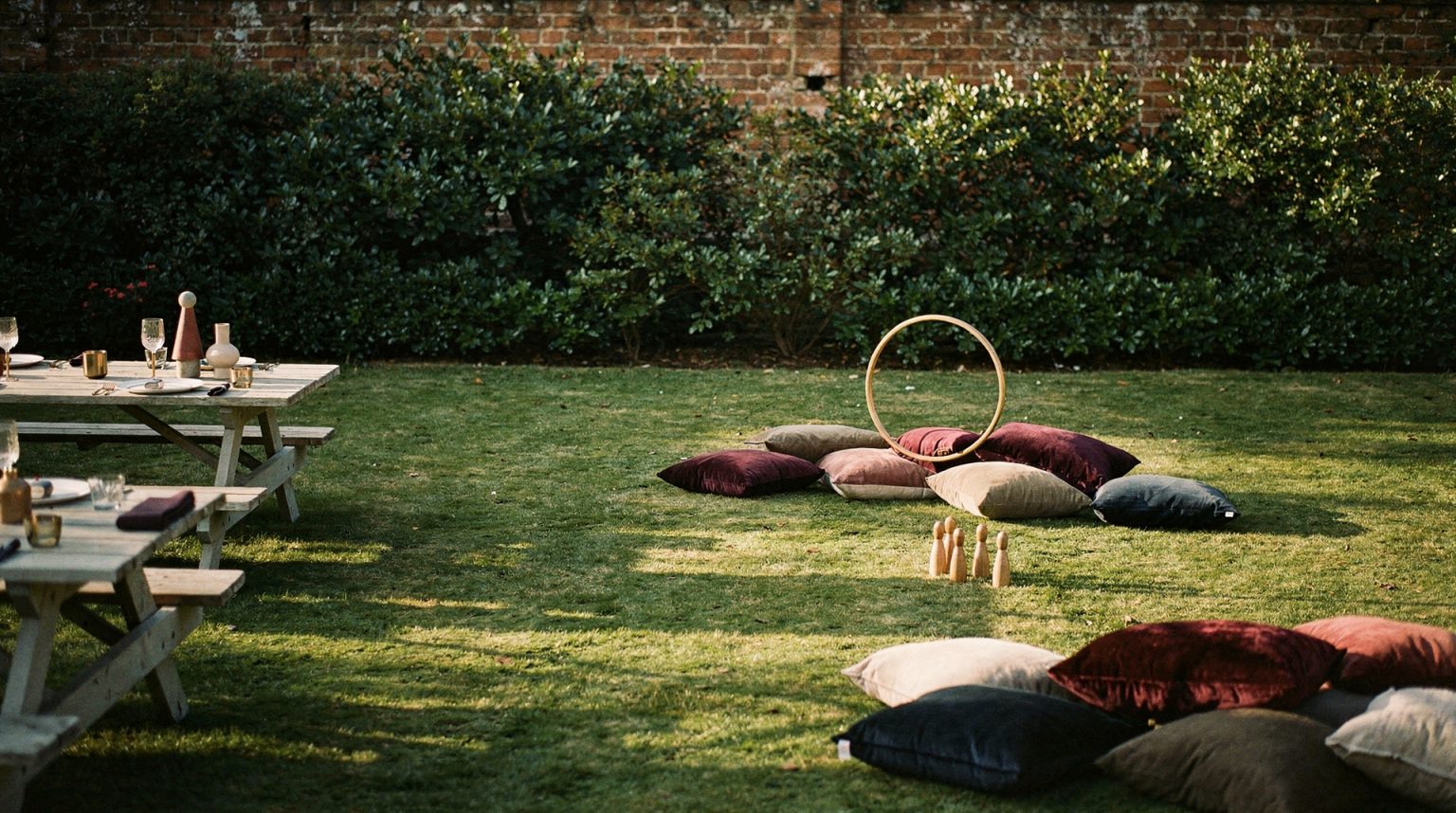
Children do not attend an event as scaled-down adults with shorter chairs.
They move differently, eat on different clocks, notice different hazards, need different forms of rest, and may abandon the official sequence with very little respect for the printed program.
A child-inclusive occasion works when those realities are designed into the guest experience. It fails when the entire plan is built for adults and a small table is added near the dance floor as evidence of consideration.
Decide what invitation you are actually extending
“Children welcome” can describe several very different events.
Are all ages invited throughout? Are certain portions adult-only? Is professional childcare provided? Are parents or guardians expected to remain responsible at all times? Is there a quiet room, an early meal, or a separate activity space?
State the arrangement clearly before guests make travel, childcare, feeding, and departure plans. Warmth and precision can coexist. Ambiguity merely relocates the difficult conversation to the event.
Walk the family arrival
Families may arrive with car seats, strollers, diaper bags, coats, gifts, feeding supplies, medication, and a child who has reconsidered formalwear.
Check the route from parking or drop-off to the event:
- Is there a safe place to unload without crossing active vehicle traffic?
- Can a stroller or mobility device use the same welcome route?
- Where are bulky items stored without blocking coat check or circulation?
- Are changing facilities and restrooms easy to locate?
- Can a family step aside during check-in without holding the entire entrance?
The first five minutes tell parents whether the event expects real families or only well-rested children from a stationery illustration. Families arrive on the same guest route as everyone else, carrying more.
Map the hazards at child height
View the room from lower eye level and assume curiosity.
Look for open water, stairs, balconies, traffic, unsecured doors, flame, hot service equipment, cords, unstable decor, glass, small detachable objects, sharp floral mechanics, toxic plants, pools, animals, and service routes.
Venue staff and qualified vendors should address consequential safety conditions and local requirements. Decorative supervision is not supervision. A sign asking children not to touch an unstable object does not stabilize it.
Protect necessary handrails and routes. Keep fragile, thorned, strongly scented, pollen-heavy, or potentially toxic plant material outside easy reach. Confirm barriers and access controls around water or other high-risk areas rather than assuming adults will notice every movement instantly.
A kids’ table is seating, not childcare
Placing children together does not transfer responsibility from their parents or guardians. It may create a pleasant social table for older children who can dine independently, or it may create a remote supervision problem with crayons.
Decorative supervision is not supervision. A sign asking children not to touch an unstable object does not stabilize it.
If childcare is offered, use an appropriately qualified and insured provider, comply with applicable local requirements, and define:
- the ages accepted;
- staffing and supervision plan;
- sign-in, authorized pickup, and guardian contact;
- the physical boundaries of the care area;
- food, allergy, medication, toileting, and emergency procedures;
- what happens if a child wants or needs to return to their adult.
If childcare is not provided, say so plainly. Parents can make informed plans when the event does not disguise hospitality as a service it is not actually offering.
Give families permission to move
Seat families where they can step out without crossing a stage, squeezing behind a speaker, or becoming the evening’s most visible interruption. That is a circulation decision made on the floor plan, not a seating-chart afterthought.
Provide a clear route to a quiet area, restroom, feeding space, or exterior break. Communicate that leaving and returning is acceptable during ceremonies, speeches, or dinner when the venue and program allow it.
A distressed child and an anxious adult do not become quieter because the seating chart placed them in the center for symmetry.
Plan food on the child’s clock
A formal dinner may begin later than many children usually eat. Ask the caterer how child meals can be timed, served, and identified without creating a second chaotic service.
Collect relevant allergy and dietary information through the same careful process used for adult guests. Consider choking hazards, age-appropriate portions, high chairs or booster seats, cup stability, and whether families need space for bottles or feeding supplies.
Do not assume every child wants a reduced version of the adult entrée, and do not assume “kid food” is automatically appropriate for every age or dietary need.
Design a decompression space
A quiet room or lower-stimulation area can support children, parents, nursing guests, neurodivergent guests, and anyone who needs a pause from sound and crowd density.
It should be accessible, supervised according to its use, comfortably lit, temperature controlled, and away from service storage. Provide seating, water, and clear information about whether children may be left there or must remain with an adult. Sound, temperature, and somewhere to sit are the part of comfort that never reaches the moodboard.
Do not place the quiet space beside the speakers and rename the contradiction.
Give play a boundary
When the event includes activities or open play, choose a location where children can be seen, where materials do not migrate into food or walking paths, and where the activity does not require every child to participate.
Match the setup to the ages invited. Small loose objects, complicated crafts, fragile decor, and unsupervised equipment may create more operational work than pleasure.
Do not place the quiet space beside the speakers and rename the contradiction.
One generous, well-contained option can be more useful than a table crowded with activities that need constant explanation and cleanup.
Plan the early departure
Families may leave before the final program moment. Make that exit easy.
Keep the route to coats, strollers, transportation, and parking open. Avoid placing essential belongings in a room that closes during dinner. Provide information about shuttle timing or reentry where relevant.
An early departure is not a failure of enthusiasm. It may be what allows the family to attend at all.
Adult-only moments can still be clear and warm
A host may reasonably choose an adult-only ceremony, late-night segment, bar area, or entire event. The design responsibility is clarity and consistency, not an elaborate defense.
When children are invited to some parts but not others, explain the transition, location, supervision, and timing before the event. Do not rely on parents discovering the boundary when a door closes.
Children add life and operational truth
Children can make an occasion more candid, affectionate, funny, and alive. They also change timing, circulation, sound, seating, food, supervision, and exits.
All of that belongs in the design. A warm welcome is not the absence of rules. It is a plan sturdy enough that families do not have to invent the event around themselves after they arrive.
Atmosphere OS · Arc Studio
Give the evening a shape it can hold.
Arc Studio builds the energy curve, marks the turn, and produces the run sheet and production brief from it. The timings come out of published rules, and the rulebook is explicit about which parts are judgment rather than arithmetic.
Costs come back as indicative bands rather than quotes, and seasonal notes are filters rather than promises.
Field notes and corrections
When a number here turns out to be wrong, you hear about it.
Three things arrive and nothing else. The new field note — bar rates, cover widths, service clearances, the arithmetic worked through on one real evening. A line when a World opens, because a night only goes up once it can actually be thrown. And a correction whenever a rule in the published rulebook changes, or a number the tools rely on turns out to have been wrong. There is no weekly slot, because there is nothing weekly to put in it.
One email per field note or opening, plus corrections when a published figure moves. Unsubscribe from any of them.
Continue through the system
Pretty is still not a plan.
A party gets planned in roughly this order. Pick the chapter where your next problem lives.
What you have to decide next
One decision constrains the next. This is the order they actually happen in.
More in this chapter

See the complete five-chapter Event Design Intelligence map →