Occasion Formats
The Event Content Creator Needs a Lane, Not Another Camera in the Room
Content creators can add fast, candid coverage to an event. The useful question is how to define scope, access, privacy and camera choreography before another lens joins the room.
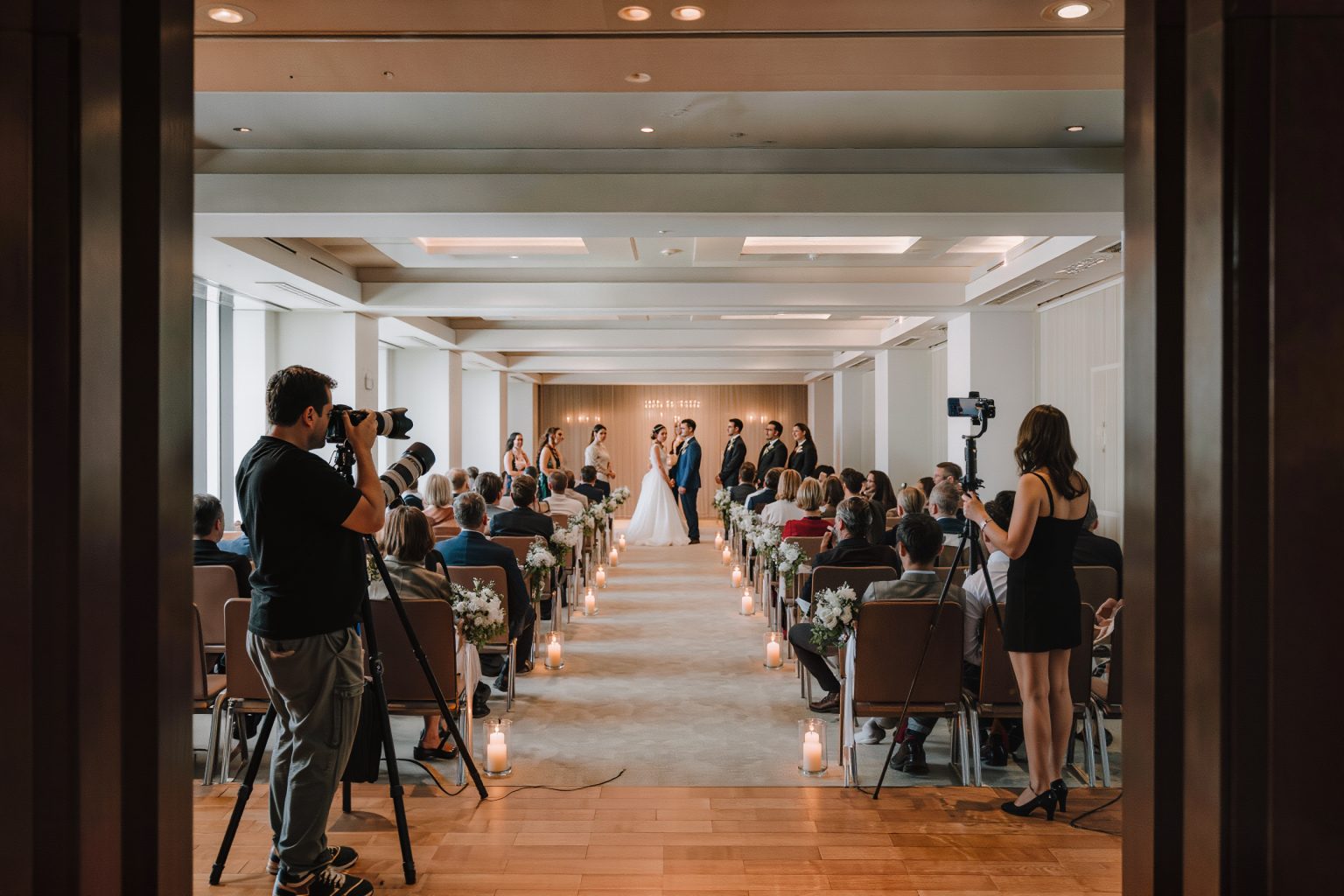
Generated image Made to show what this article describes. Nothing in it was photographed at an event.
The event content creator is no longer confined to weddings or a strange extra person holding a phone near the cake. Quick-turn vertical video, candid footage and same-day social assets now show up at launches, galas, awards, brand activations, milestone parties, fundraisers, conferences and weddings.
Fine. New roles are not the problem.
Undefined roles are.
If a photographer, videographer, planner, social content creator, venue marketing person, client communications lead and three enthusiastic guests all believe they have priority access to the same six feet of floor, you do not have more coverage. You have a small media scrum wearing event clothes.
The content creator can be useful. They can also become production friction with excellent phone storage. The difference is the brief.
Start by deciding what this person is actually for
“Capture content” is not a scope.
Do you want raw vertical clips delivered the next morning? Edited short-form videos? Behind-the-scenes footage while the primary photographer concentrates on archival coverage? Guest reactions? Design details before the room opens? Live social updates? Sponsor assets? Internal recap footage? A private archive that is never posted? Those are different jobs.
The more precisely the purpose is defined, the less likely the content creator is to chase every visually interesting thing in the room. Someone hired to document candid transitions works differently from someone hired to produce eight edited Reels before breakfast.
Decide what the deliverable is before deciding where the person stands.
The primary camera team needs a clear lane
This is not hierarchy for hierarchy’s sake. It is lens geometry.
A professional photographer or filmmaker may be working from a fixed position because light, focal length and movement have already been planned around that angle. A phone stepping two feet into the aisle can enter the frame. Someone backing into a videographer’s path can ruin a continuous shot. A content creator leaning over a shoulder during an unrepeated moment can become the thing the primary team has to edit around forever.
Put the media team in the same pre-event conversation. Decide who owns the central axis during a ceremony, award presentation, keynote, launch reveal or other focal moment; who gets close during private or sensitive moments; when a second angle is welcome; and when everyone except the primary camera team stays out.
The best content creator is not invisible. They are predictable.
Build a camera map for moments that cannot be repeated
You do not need to diagram the entire event like a televised awards show. You do need a plan for moments with no second take.
That may be a ceremony entrance, vows or first kiss. It may be an honoree walking onstage, a founder revealing a product, a surprise performance, a keynote entrance, a scholarship announcement, a retirement toast, the first look at a transformed room or a spontaneous reaction the host specifically cares about.
For each one, decide whether quick-turn content matters enough to justify another camera and where that camera can live without changing the moment. Sometimes the answer is beside the videographer. Sometimes it is behind guests. Sometimes the best content is the reaction happening away from the official shot.
The best content creator is not invisible. They are predictable.
Not every angle needs to be collected simply because storage is cheap.

Private moments should remain private by design, not by hope
A content creator is often hired precisely because they can get close. That makes privacy boundaries more important, not less.
Decide what cannot be filmed. Children should not automatically become social content because they wandered into a charming frame. A private letter exchange may be intended only for the people involved. An employee may be comfortable attending a company celebration and deeply uninterested in appearing on the brand’s social account the next morning. A grieving family may want a memorial documented without wanting any public posting at all.
Separate capture permission from posting permission. Those are different decisions.
If vendors, sponsors or venues want footage for their own marketing, address that in contracts and permissions rather than treating it as the ambient price of standing near something photogenic.
Do not let content creation redesign the guest journey
The danger is subtle. Once quick-turn content becomes important, the event can start developing around “moments” that exist mainly because they will cut well into vertical video.
Guests are asked to repeat an entrance. An honoree is pulled away from the room for a trend. A table waits while someone captures an untouched place setting. A launch pauses because the phone angle is not ready. People stop having the event so the event can prove online that it happened.
Content should document the event. It should not quietly become the event director.
If a planned content moment genuinely adds playfulness or value for the people doing it, fine. If everybody has to stop having a good time to prove they are having a good time, the brief has eaten the party.
Design-detail capture needs a production window
Room footage creates its own collision. The photographer wants the space untouched. The planner needs to finish details. Catering needs to set service pieces. Florals are still being adjusted. Sponsors want assets. The venue wants doors open. The content creator wants a clean sweep before guests enter.
Give that work a real window.
Put room capture on the production timeline with a start and end time. Decide which teams need finished-room assets and whether one person can gather them for several stakeholders. Do not create six parallel “five-minute” requests that add up to half an hour the room does not have.
Content should document the event. It should not quietly become the event director.
The room is finished when guests can enter it, not when the final phone has completed a slow pan.
Fast delivery is useful. It is not the same product as archival work.
One reason content creators are attractive is speed. Phone footage can arrive quickly and feel immediate in a way edited photography and film are not designed to.
That is a feature. Keep the distinction clean.
The content creator is usually producing a different layer: fast, social-shaped, candid and deliberately less polished. If the event needs archival portraiture, documentary audio, color-managed film, sponsor deliverables, broadcast-quality recording or a complete visual record, those expectations belong with vendors whose scopes are built for them.
“More cameras” is not a substitute for knowing which record matters ten years from now and which one matters tomorrow morning.
Give the content creator somewhere to be when nothing is happening
Every vendor occupies physical space even when their tool fits in a pocket.
Where do extra bags go? Where can batteries charge? Where can footage transfer? Is there a vendor meal? Does the person need Wi-Fi for rapid delivery? Are there rooms where guests, speakers, staff or honorees are changing, eating, decompressing or meeting privately that should not also become production zones?
Why this belongs in the production plan now
Wedding content creators helped make the role conspicuous in 2026, with The Knot describing the category as a fast-growing newer vendor role. The operational logic has already escaped weddings: brands, organizations and private hosts increasingly want fast, candid material alongside traditional photography and film.
The Knot: Gen Z Wedding Trends for 2026 · The Knot: The Future of Weddings
The content creator needs a purpose, a scope, a privacy rule and a physical lane. Give them those things and they can collect the loose, funny, fast-moving edges of an event beautifully.
Skip that work and the event may still be extremely well documented. Mostly from footage of other people documenting it.
Atmosphere OS · Vendor Pack
Load-in is where beautiful plans go to argue.
Vendor Pack puts access, timings and priorities in one place before anyone drives anywhere. Every figure in it traces to a rule published at the rulebook, which you can read before you trust a single one of them.
Free to use, local-first in your browser, and there is no account until you ask for one.
Continue through the system
Pretty is still not a plan.
This field note belongs to a larger event-design system. Follow the chapter that explains the next pressure point instead of falling back into an undifferentiated archive.
What you have to decide next
One decision constrains the next. This is the order they actually happen in.
More in this chapter
See the complete five-chapter Event Design Intelligence map →