Atmosphere
The Event Projector Without Turning Dinner Into a Conference
Projection works when you decide whether it is content or atmosphere, then solve brightness, sightlines, sound, timing and failure before the screen starts demanding the room.
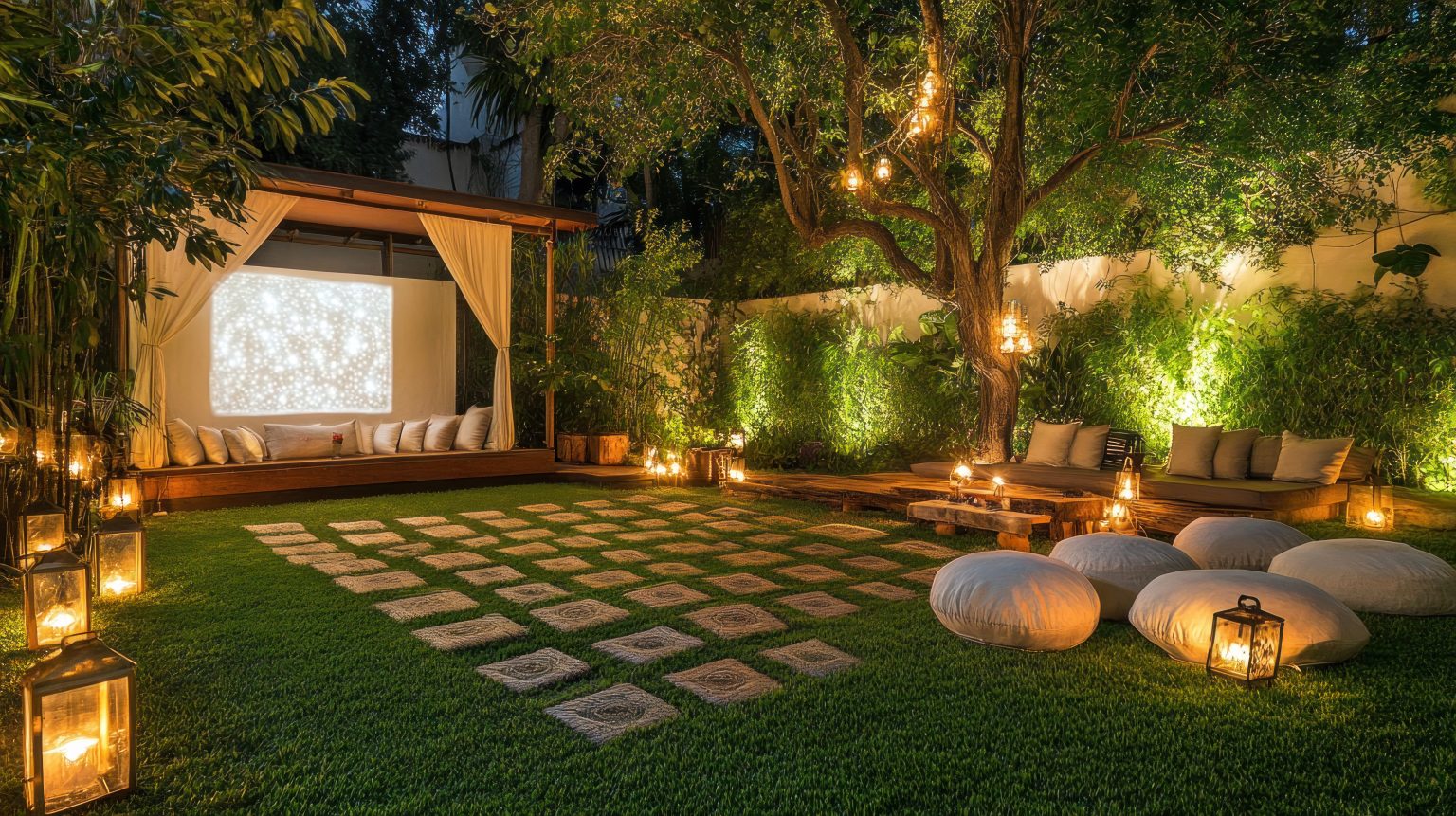
Projectors can carry home movies, archival photographs, art, text, live feeds and moving atmosphere through a room. The problem is that projectors are designed to demand attention. Dinner is not always improved by a twelve-foot rectangle insisting everyone look at it right now.
Projection works best once you decide honestly whether it is content or atmosphere.
Choose the actual job before you choose equipment
If guests are meant to watch a real film, toast video, award package or presentation, treat it like a scheduled moment with a clear start and stop time. If it is atmospheric, use slow-moving texture or imagery that does not require constant reading. A scheduled moment needs room in the timeline on both sides of it, or it eats the course after it.
Test brightness in the real room, not the spec sheet
The useful question is whether the image survives the room’s actual ambient light. Test at the event hour with decorative lighting turned on, and never darken stairways or service zones just to rescue a weak image. Guest safety outranks contrast ratio.
Protect sightlines like they actually matter
Map who can see the image and who is staring at the back of someone’s head instead. If the projection matters, seating and screen placement get oriented intentionally from the start rather than fixed with a chair rotation mid-dinner. Where the screen goes is a floor-plan decision with traffic consequences.
Hide the technology without hiding the ventilation
Cables and equipment stay out of guest traffic, but do not cover ventilation or create a trip hazard to make that happen. Anything mounted overhead needs qualified vendors and venue approval.
Build a real content edit, not just a slideshow
More photographs do not create more meaning. Choose a short sequence with an actual beginning, middle and end. If the projection is decorative, remove anything that makes guests feel obligated to stop and watch.
Coordinate the sound deliberately
A silent image can sit underneath conversation. A film with dialogue needs a real listening environment. Do not run narration while a band and dinner service are competing for the same acoustic space. Sound belongs in the comfort audit nobody puts on the moodboard.
Have a real failure plan, because equipment fails
Keep local copies of files, backup playback hardware where appropriate, tested adapters and an operator who actually knows the system. The best failure plan is one where the event still feels complete if the screen goes black.
Turning it off is also an option
Does the moving image add memory, information or atmosphere that another format could not do better? If it is just filling a wall, turn it off and see whether the room improves. Sometimes it does.
The same timing, sightline and sound questions apply whether the room holds a birthday, a gala, a memorial or a wedding. A screen with a job earns its wall. A screen without one is a very large, very bright guest who will not stop talking.
Atmosphere OS · Theme Atelier
A palette is not yet a decision.
Atmosphere OS holds the color, the material, the light and the room in one object, so moving any of them shows you what it does to the rest. Costs come back as indicative bands and never as quotes, which is the difference between planning and pretending.
The rulebook is public. Every formula it runs on is written down where you can disagree with it.
Field notes and corrections
When a number here turns out to be wrong, you hear about it.
Three things arrive and nothing else. The new field note — bar rates, cover widths, service clearances, the arithmetic worked through on one real evening. A line when a new World or Mini Occasion opens, because a night only goes up once it can actually be thrown. And a correction whenever a rule in the published rulebook changes, or a number the tools rely on turns out to have been wrong. There is no weekly slot, because there is nothing weekly to put in it.
One email per field note or opening, plus corrections when a published figure moves. Unsubscribe from any of them.
Continue through the system
Pretty is still not a plan.
A party gets planned in roughly this order. Pick the chapter where your next problem lives.
What you have to decide next
One decision constrains the next. This is the order they actually happen in.
- Venue Will this room hold it? The Serpentine Table Is Eleven Percent Longer Than the Spec Sheet Says
- Guest experience How will guests move through it? The Place Setting Fits. The Person Does Not.
- Production How does it get built and run? The Event Needs a Failure Mode That Still Looks Intentional
- Vendors Who owns each handoff?
More in this chapter

See the complete five-chapter Event Design Intelligence map →