Design & Florals
Personalization Works Better as a Ritual Than a Monogram
A ritual carries more weight when it existed before the event. The habit people already share usually says more than another customized object.
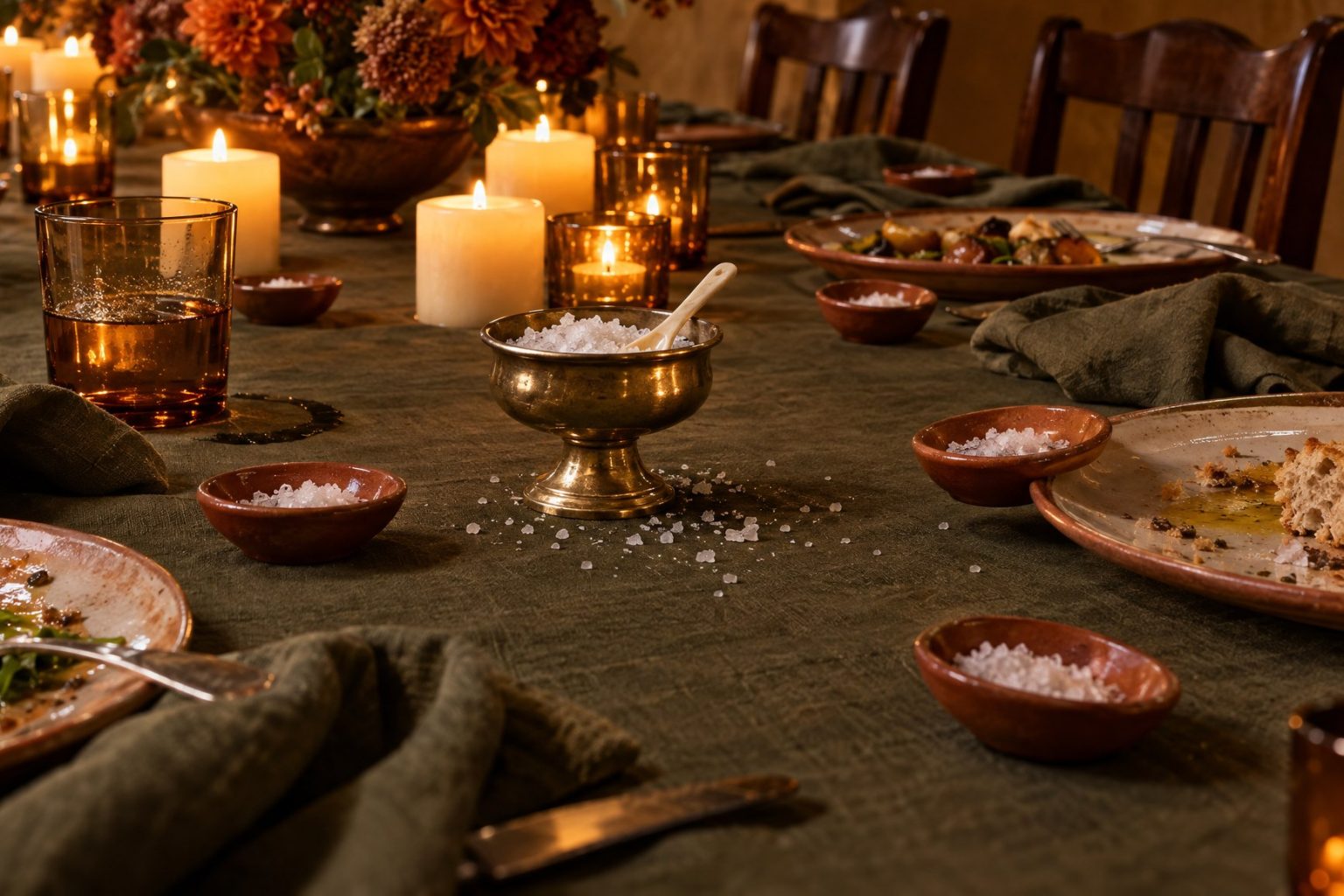
Event personalization is often sold as a surface treatment. Put the name on it. Print the date. Name the cocktail after the dog. There is nothing wrong with any of that, but the more interesting version changes the actual structure of the gathering.
Start with something you already do
A ritual has more weight when it existed before the event. Maybe your family always opens champagne in the kitchen. Maybe everyone meets for coffee the morning after a big occasion. Maybe there is a song that reliably gets six people onto a dance floor. Those habits can become event structure without needing to be explained as a theme.
Personal does not have to mean private
An inside joke only works if the room can still participate. If a ritual needs five minutes of backstory before anyone understands why it matters, edit the presentation. Guests do not need every layer of meaning. They need enough context to feel invited into the moment.
Use ritual to solve pacing
A shared toast can close dinner. A family song can open dancing. A late-night snack tied to a real memory can mark the shift into the second half of a party. A retirement gathering can end with one future-facing question instead of another speech. A graduation can use a family tradition to mark the actual transition. Ritual is useful because it creates changes guests can feel without somebody announcing that the event has now entered Phase Three. Transitions are where a timeline either gives the night room to breathe or does not.
Cultural traditions deserve more than decorative borrowing
If a cultural, religious, community or family tradition genuinely belongs to the people hosting the occasion, give it time, context and proper participation. Do not reduce it to a prop because the photographs are interesting. That is the line between a concept and a costume. Meaningful personalization is strongest when the ritual keeps its actual purpose.
One real ritual beats twenty custom details
I like beautiful custom work. I just do not want anyone confusing it with meaning. A room can have monograms everywhere and still feel anonymous, which is how a beautiful event ends up feeling flat. One well-placed ritual can make the entire gathering feel unmistakably like the people in it.
A ritual still needs production
Meaning does not exempt a moment from logistics. If everyone is supposed to gather for a toast, somebody has to know when the glasses arrive. If a family song opens dancing, the person controlling sound needs the file, the cue and the name of the person allowed to change the plan. If guests are writing notes for somebody to read later, there has to be enough light to write, somewhere to sit or lean, pens that work and a clear place for the notes to go.
Personal moments get strangely fragile at exactly this point. Everyone assumes the meaning will carry the mechanics. Then the meaningful object is still in a car, the person who knows the tradition is in the restroom, and forty guests are staring at a table because nobody knows whether they are supposed to touch anything.
Give the room enough context, then stop explaining
People can feel that something matters without receiving the full family archive. A sentence in the program, a short introduction from the host or one line from the person leading the moment is usually enough. The rest can belong to the people who already know it.
That restraint matters because personalization can become surprisingly exclusionary. A room full of references only twenty people understand may be deeply personal to the hosts and completely opaque to everyone else. Keep the private meaning private if you like. Just build one usable doorway into it for everyone else.
Make the ritual easy to repeat after the event
The strongest personal detail may be the one that does not end at strike. A birthday question asked every year, a glass raised before dinner, a photograph made in the same place, a note written for the next milestone — those things can move forward because they are actions rather than merchandise.
That also takes some pressure off the event itself. The wedding, birthday or retirement party does not have to become the definitive performance of the relationship. It can be one chapter in something people already do and may keep doing.
None of this is wedding-only. A birthday dinner or a retirement party can carry meaning the same way. The custom object is allowed to be beautiful; it just does not get to impersonate a relationship, because the monogrammed napkins go in a drawer and the toast gets repeated next year.
Atmosphere OS · Theme Atelier
A palette is not yet a decision.
Atmosphere OS holds the color, the material, the light and the room in one object, so moving any of them shows you what it does to the rest. Costs come back as indicative bands and never as quotes, which is the difference between planning and pretending.
Free to use, local-first in your browser, and there is no account until you ask for one.
Field notes and corrections
When a number here turns out to be wrong, you hear about it.
Three things arrive and nothing else. The new field note — bar rates, cover widths, service clearances, the arithmetic worked through on one real evening. And a correction whenever a rule in the published rulebook changes, or a number the tools rely on turns out to have been wrong. There is no weekly slot, because there is nothing weekly to put in it.
One email per field note, plus corrections when a published figure moves. Unsubscribe from any of them.
Continue through the system
Pretty is still not a plan.
A party gets planned in roughly this order. Pick the chapter where your next problem lives.
What you have to decide next
One decision constrains the next. This is the order they actually happen in.
More in this chapter
See the complete five-chapter Event Design Intelligence map →