Occasions & Formats
Interactive Food Should Not Turn Guests Into Kitchen Staff
Guests get the fun part and the host keeps the infrastructure. Rolling a hand roll is an activity. Portioning raw seafood at eight is a group project.
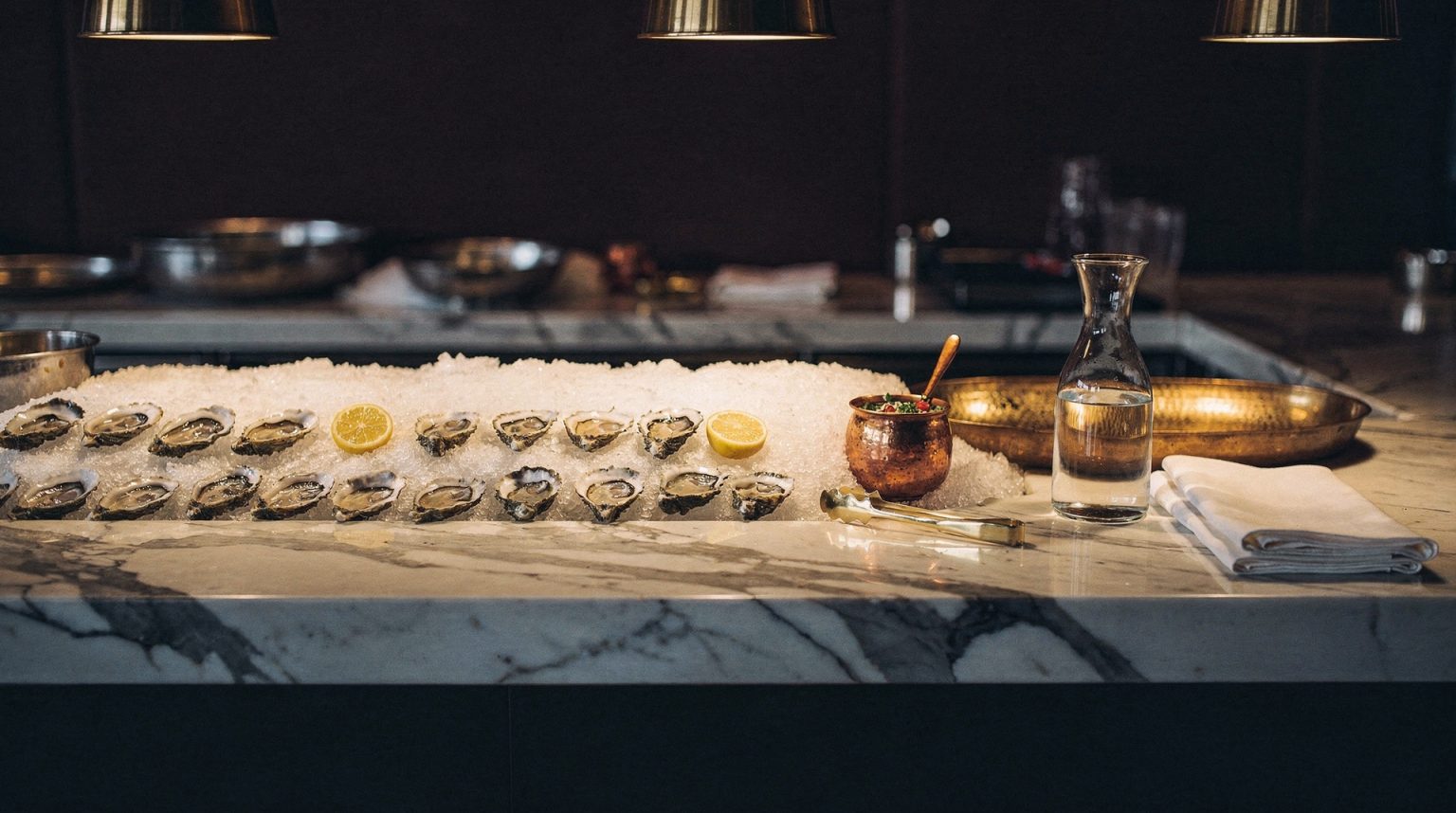
Interactive dinner is having a moment, which makes sense. People want something to do besides sit down, eat three courses, and discover who has been quietly reading messages under the table.
Experiential dining is up sharply in OpenTable’s 2026 report, and current entertaining coverage is leaning into open-fire cooking, hand-roll nights, mixology moments, and food that asks guests to participate.
The useful version gives people one satisfying thing to do.
The bad version turns dinner into a group project.
Guests get the fun part. The host keeps the infrastructure.
Rolling the hand roll, finishing the flatbread, spooning on the sauce, stirring one drink.
Those are activities.
Chopping herbs, portioning raw seafood, hunting for clean knives, managing heat, labeling allergens, washing cutting boards, and discovering halfway through dinner that somebody forgot the sesame seeds are not activities. They are prep.
Do them before people arrive.
Interactive service works when the station looks obvious, generous, and already under control. If guests need a tutorial, a cutting board, and emotional resilience, the design has wandered off.
More choices are not more hospitality
Three excellent sauces can feel abundant. Six garnishes can feel generous. Fifteen toppings create a line where everybody pauses to make private philosophical decisions while holding up dinner. A food station is a queue you designed on purpose or by accident.
Put ingredients in the order they are used. Duplicate the popular ones. Plates at the beginning, waste at the end, drinks somewhere else. The table should explain itself, the same way a well-arranged room tells people where to go without a single sign.
And choose an activity that survives mixed skill levels. Not everyone wants to perform competence in public. Prepared dough portions, simple hand rolls, finishing sauces, or one clear cocktail build all give beginners a graceful way in.
If participation becomes the price of admission to dinner, it is no longer hospitable.
Keep the safety part extremely boring
Raw seafood, open flame, sharp tools, hot pans, dietary restrictions, and cross-contact do not become whimsical because there are candles.
Keep raw and ready-to-eat ingredients separate. Keep the raw seafood cold, on ice, and back in the refrigerator well inside two hours. Control the heat. Label every major allergen on the table, including the ones nobody mentioned in advance. If something requires technical skill, let the person with the skill handle it.
Fun does not require pretending risk is part of the atmosphere.
Then make the activity optional after the first round. Some guests will build five hand rolls. Some will make one and retire from the craft with dignity.
Have finished food available. Let people sit down. Let the station become background.
I like extra. I like a dinner with a point of view. I do not need a chef station, cocktail class, tableside flame, and dessert assembly in one night unless the concept is unpaid internship. One gesture done properly beats four done at speed.
The station needs an exit, not just an entrance
Most interactive-food ideas are designed from the flattering side of the table. Here are the ingredients. Here are the tiny bowls. Here is the guest making something charming. Nobody photographs the other side, where used spoons, empty trays, sticky napkins, discarded picks and the person trying to replace the avocado have formed a small municipal problem.
Design that side too. Decide where finished plates go, where waste goes, where a hot or cold refill can arrive without crossing the guest line, and who is allowed to reset the station. If the host has to squeeze between guests every seven minutes carrying another tray, the interaction has assigned them a job.
Choose the moment by what it does to the evening
An activity at arrival should be fast and forgiving because people are entering at different times. Something at dinner can be slower because the room has already settled. A dessert interaction can be playful because nobody is depending on it for the main meal. Those are different design conditions even if the internet files all three under interactive food.
This is why I would rather put one good participatory move in the right part of the night than scatter stations everywhere. A build-your-own first drink may solve arrival. A shared finishing gesture at the table may make dinner feel communal. A late-night sandwich press may mark the point where everybody has stopped pretending they are leaving soon. Give the interaction a job beyond being photographable.
Make opting out look normal
The easiest way to make participation genuinely optional is to provide a complete version beside the interactive one. Put finished hand rolls on the tray. Have a bartender make the drink for anyone who does not want to build it. Offer the composed dessert as well as the toppings. Then nobody has to announce that they would prefer not to perform dinner.
This matters for children, older guests, people managing mobility or sensory needs, people in formal clothes, people with dietary restrictions, and people who simply came to eat. Nobody has to do the same thing. Everybody should have a reasonable way through the thing you designed.
Rehearse the messy five minutes
Before guests arrive, run the station once at the speed it will actually operate. Open the containers. Pick up the utensil. Make the portion. Carry it away. Replace what ran out. Wipe the surface. If one person doing that calmly produces a traffic jam, eight guests will not improve it through enthusiasm.
The pretty arrangement is only the opening state. The real design is what the station looks like after twelve people have used it and whether the thirteenth person still understands what to do.
Pick one participatory moment and make it easy and beautiful. Then feed people properly, because nobody ever went home raving about the station where they did their own chopping.
Atmosphere OS · Moodboard-to-Plan
Turn the reference images into something buildable.
Moodboard-to-Plan reads the direction and returns layered plans in vendor language, with the material and lighting consequences attached. Every judgment runs against a written rule rather than a fresh guess.
The rulebook is public. Every formula it runs on is written down where you can disagree with it.
Field notes and corrections
When a number here turns out to be wrong, you hear about it.
Three things arrive and nothing else. The new field note — bar rates, cover widths, service clearances, the arithmetic worked through on one real evening. A line when a new World or Mini Occasion opens, because a night only goes up once it can actually be thrown. And a correction whenever a rule in the published rulebook changes, or a number the tools rely on turns out to have been wrong. There is no weekly slot, because there is nothing weekly to put in it.
One email per field note or opening, plus corrections when a published figure moves. Unsubscribe from any of them.
Continue through the system
Pretty is still not a plan.
A party gets planned in roughly this order. Pick the chapter where your next problem lives.
What you have to decide next
One decision constrains the next. This is the order they actually happen in.
More in this chapter
See the complete five-chapter Event Design Intelligence map →