Budget & Trade-Offs
Nonprofit Gala for Two Hundred: The Programme Is Eating the Dinner
Two hundred is the headcount where the programme and the dinner stop being able to share an hour. One of them has to give way, and it should be a decision.
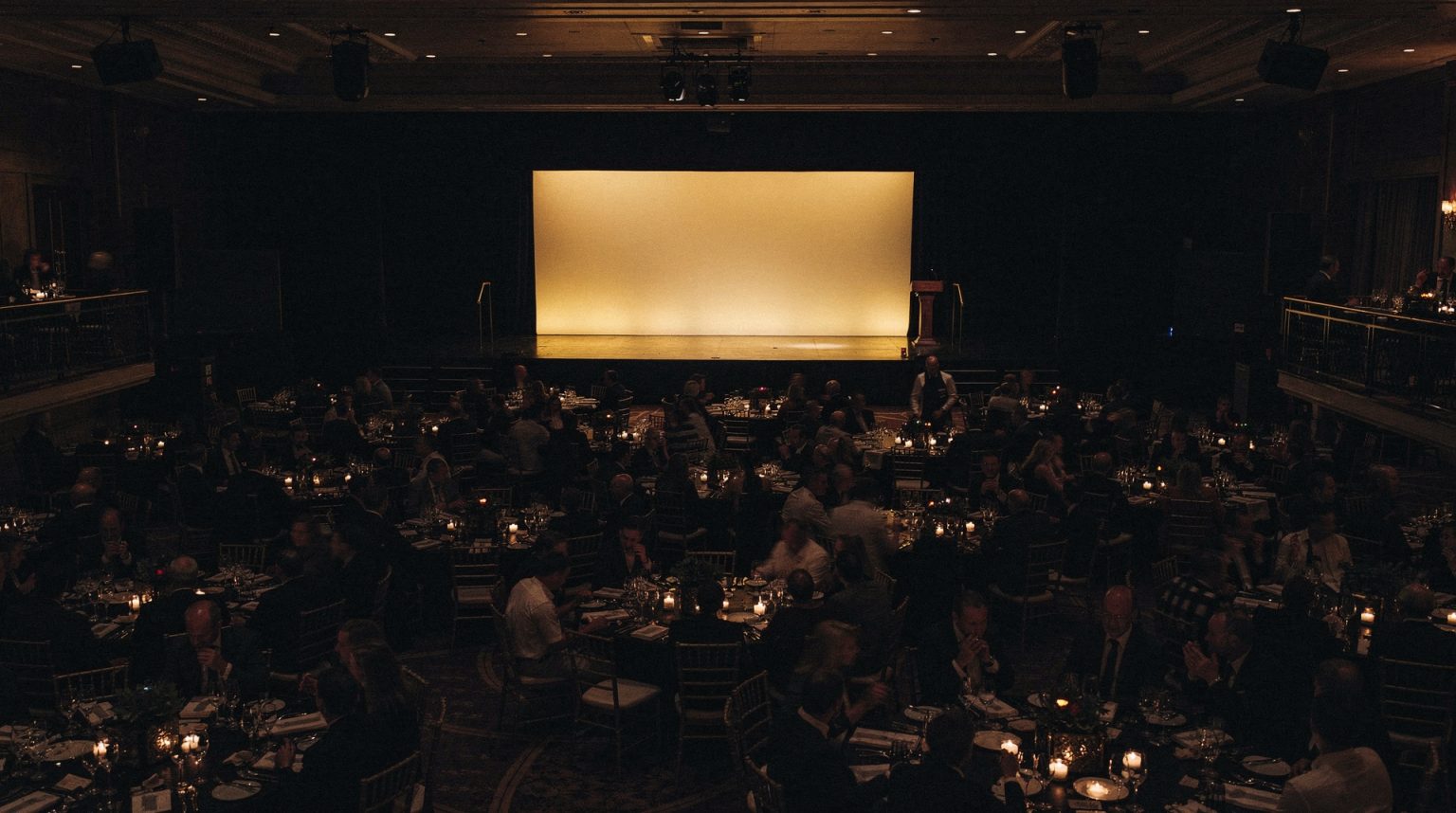
Generated image Made with flux-2-pro via ElevenLabs to show what this article describes. Nothing in it was photographed at an event.
Two hundred is the headcount at which the programme and the dinner stop being able to share an hour.
Below it, you can hold service for ten minutes while somebody speaks, and the kitchen absorbs it. At two hundred covers a plated course takes twenty-five to thirty minutes to land across the room even with adequate staff, which means that at any given moment during service the kitchen has something like two hundred and fifty plates in various states of committed. Stop that machine for a fifteen-minute video and you have not lost fifteen minutes. You have lost fifteen minutes plus a restart, and the tables at the back are now eating a main course that has spent twenty-five minutes waiting to be relevant.
Every gala at this size discovers the collision. Most discover it on the night, at about half past eight, when the auctioneer is doing well and the chef is standing in the doorway with a face.
The evening has to be sequenced, not layered
The instinct is to layer: a little programme through each course, so the room stays engaged and the fundraising is spread out. At a hundred guests that works. At two hundred it produces an evening in which nothing has a clean start and the service never recovers its rhythm.
Sequence instead. Give dinner a block and give the programme a block, and put a visible edge between them. It costs some pacing variety and it buys a kitchen that can plan, a room that knows what it is doing, and an ask that arrives when people are listening rather than while a server is reaching between two guests for a plate.
| Block | Duration | Kitchen state | The failure it prevents |
|---|---|---|---|
| Reception and silent auction | 60 min | Starters plated cold, mains prepping | Guests arriving into a seated room |
| Seating call | 10 min | Starters going out on the call | Twenty minutes of shepherding |
| Starter and main | 55 min | Two synchronised passes, 25 min each | Cold mains at the back of the room |
| Programme block | 25 min | Dessert held, coffee staged, no service | Speeches over the clatter of plates |
| The ask | 8 min | Nothing moves | An ask delivered to people mid-mouthful |
| Dessert, coffee, live auction | 35 min | Dessert served under the auction | A room that has run out of evening |
| Release | — | Bar restaffed | Two hundred people leaving simultaneously |
The block that must not move is the ask. Everything else can be trimmed on the night; that one is why the room exists. The gala has three jobs and the centrepiece is not one of them covers the strategic version. This is the timing version.
Where the ask goes, and why
The conventional placement is after the main course and before dessert, and the convention is right for unromantic reasons. The room is fed, so nobody is distracted by hunger. Nobody has left, because dessert has not arrived. The wine has been working for ninety minutes. And service has a natural pause there that costs the kitchen the least.
Put the ask after dessert and you are asking a room that has started checking taxis. Put it before the main and you are asking people who are hungry, which is a measurable disadvantage that fundraising professionals will describe to you at length if invited.
The video costs a course, so make it earn one
A well-made three-minute film will do more for the ask than nine minutes of anybody speaking. A nine-minute film will do less than the three-minute version, and it will cost the kitchen a course of momentum.
Test it in the room, at level, with the house lights at the setting they will actually be. Test the captions. Then watch it from the worst table, which is the one behind the pillar next to the service door, and decide whether the person sitting there is receiving the same evening as the board. If they are not, the ask will underperform in a way the totals will never explain.
The live auction has a throughput and it is slower than anyone remembers
A competent auctioneer takes two to three minutes a lot including the introduction, the bidding and the settle. Twelve lots is thirty-five minutes on a good night, and a good night is one where two lots go quickly. Nobody plans for the lot that stalls at four thousand and takes six minutes to die.
Cut the lot list before the evening rather than during it. Six well-described lots outperform fourteen, because the room only has so much bidding energy and spreading it thinner does not create more. Put the paddle raise inside the same block, not as a separate event twenty minutes later, and give the totals a visible display so the room can see itself succeed.
Silent auction closing needs its own choreography: a hard close, announced twice, with staff at the tables, or the last ten minutes of your programme block will be conducted over a hundred people crowding the bid sheets.
A metre of clear exit width, all night
Clear exit width is commonly planned at around five millimetres per person, subject to local code. Two hundred people is a metre. That is not a large number and it is easy to satisfy on a floor plan.
The problem is that a gala fills its own routes. Silent auction tables are long, they attract standing crowds on both sides, and they are placed in corridors because corridors are the space nobody else wanted. The step-and-repeat draws a queue across the lobby. The registration desks stay up all evening because checkout happens at them. By nine o clock the metre exists in the drawing and not in the building.
Walk it at nine. Then walk it again after the auction closes, when the crowd is at its densest and everyone is holding a paddle and a glass. The floor plan is a traffic system, and at a gala the traffic is generated by the fundraising itself.
Registration and checkout are two queues, not one
Two hundred guests arriving inside a forty-minute window need enough check-in positions that nobody stands in the cold, which usually means one position per fifty to sixty arrivals if names are pre-sorted and rather more if they are not. Pre-swipe cards at registration and checkout stops being a queue at all; leave it to the end and three hundred transactions happen in the twelve minutes when everyone wants their coat.
Sponsors and board members should be checked in by name by someone who knows the name. That is not deference; it is the cheapest relationship management available all evening.
Where the design fights the guest
- Centrepieces tall enough to hide the stage. At two hundred covers a third of the room is looking through flowers at a screen.
- Uplit tables and an unlit lectern. Speakers need a face light. Rooms designed for photographs frequently have none.
- The programme scoped by counting items rather than timing them. Four speakers at four minutes is sixteen minutes on paper and twenty-eight in the room.
- One bar for a sixty-minute reception. A hundred and fifty of your two hundred want a drink in the first half hour; that is three positions, not one.
- Toilets sized to the building code rather than the evening. A rule of thumb is one fixture per fifty guests over four hours with alcohol, and the demand arrives in two spikes. The restroom plan is part of the guest journey.
- The table with the worst sightline sold at the same price as the best. Somebody at that table is a prospect.
Measure the evening against the ask, not the applause
Record the clock time the ask began and the clock time the room was seated, and compare them to the plan. Track average gift by table position relative to the stage; if the back of the room gives less, ask whether it heard less. Note the length of the coat queue and the checkout queue, because a donor whose last twelve minutes were spent queueing has a different memory of your organisation than the one who left at the same moment through the other door.
Then ask the auctioneer what they would cut. They watched two hundred faces for thirty-five minutes and they will tell you exactly which lot lost the room. The published service and clearance figures are worth checking the run of show against before anybody prints it.
Run two hundred through the programme block (opens in a new tab)
Nearby on the ladder: the fundraiser house party at sixty-five, where the ask is still a conversation, and awards night at four hundred, where the programme has become a broadcast. Both sit in Occasion Formats; the money side lives in Budget and Trade-Offs.
Everything else in this evening scales. Buy more servers and service gets faster; buy more bar positions and the queue shortens; buy more room and the tables breathe. Attention does not behave that way. Two hundred people will give you something like twelve genuinely undivided minutes across a whole evening, and no production budget yet devised has purchased a thirteenth.
Sources: plated-service durations and server ratios follow standard banqueting practice and vary with menu and room; confirm with the caterer in writing. Exit-width planning at roughly 5 mm per person reflects common UK event guidance, with local building and licensing codes governing. Auction lot timings, registration ratios and bar rates are operational rules of thumb rather than measured standards.
Continue through the system
Pretty is still not a plan.
This field note belongs to a larger event-design system. Follow the chapter that explains the next pressure point instead of falling back into an undifferentiated archive.
What you have to decide next
One decision constrains the next. This is the order they actually happen in.
- Atmosphere What should the room feel like? Ask It Twice: Why the Same Evening Comes Back With Five Different Answers
- Venue Will this room hold it? When Prismm Goes Dark: The Deadline Is September, Not December
- Vendors Who owns each handoff? The Generator Was Late. The Washrooms Were Waiting.
- Contingency What happens if the weather turns? The Storm Wasn’t the First Failure
More in this chapter


See the complete five-chapter Event Design Intelligence map →