Budget & Trade-Offs
Overrated: More Decor. Underrated: Better Timing.
Better pacing, reveals, buffers, and realistic movement can create more luxury than another layer of decoration.
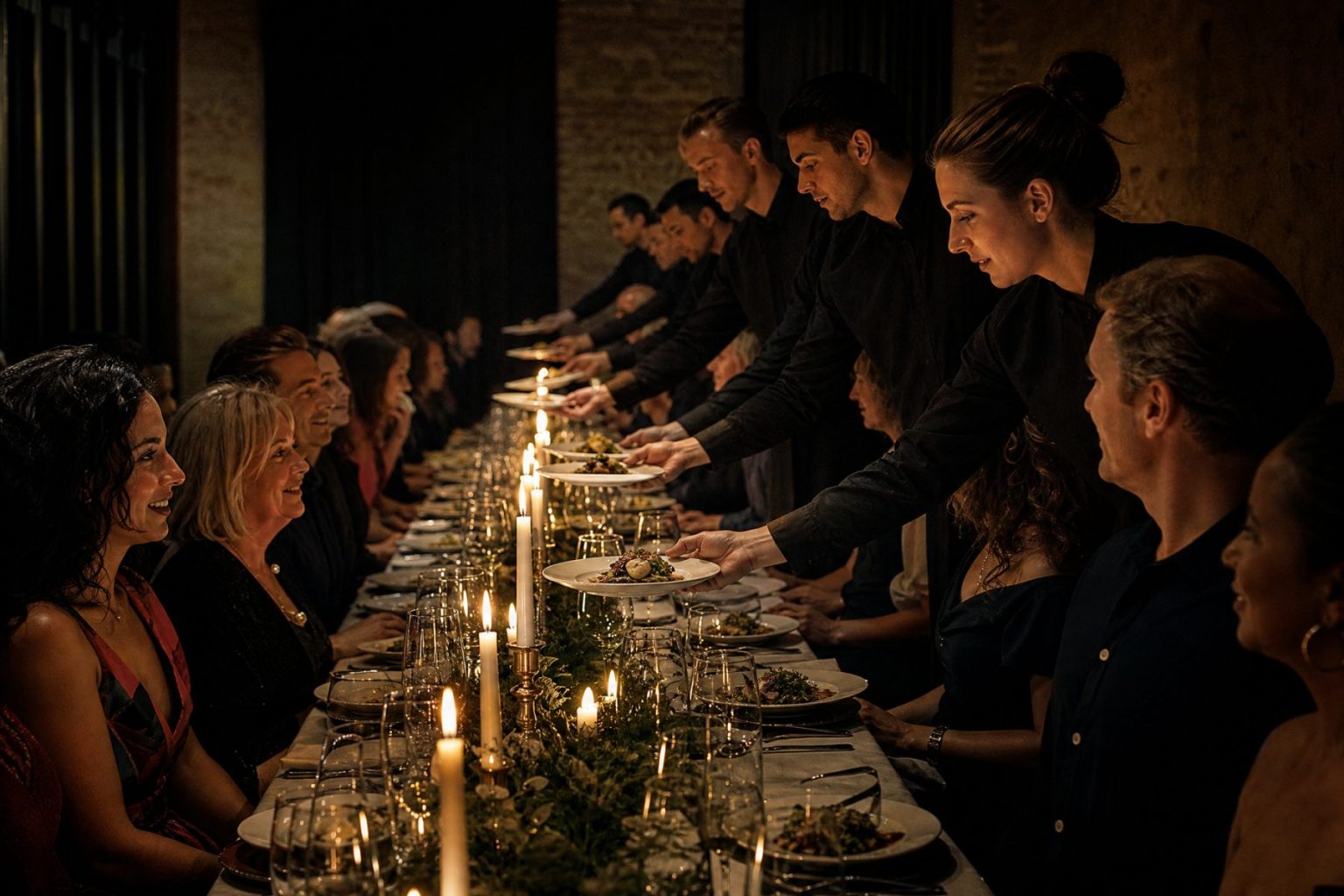
Guests live an event in time, not in square footage, and that is remarkably easy to forget.
Decoration can support the experience. It cannot rescue a sequence that’s rushed, stalled, or emotionally flat the whole way through. Better timing makes the architecture, the music, the food you already have feel intentional. More decor usually just makes an unstable schedule heavier to carry.
Overrated: filling every available surface
Equal decorative density flattens hierarchy, and it adds delivery, setup, and strike labor for very little payoff. One gesture people remember costs less to install than nine they will not. I’d rather leave visual silence around the moments that actually deserve the attention.
Underrated: opening the room at the right second
A door, a lighting change or a music cue is enough to make a familiar room feel newly revealed. The value comes from contrast and timing, not from hiding the feature forever like it’s a magic trick.
Overrated: the minute-by-minute fantasy timeline
Timelines fail the moment they ignore walking, applause, photos, elevators, and ordinary human hesitation. Use duration ranges and dependencies instead of pretending anyone knows exactly how long a toast will run.
Underrated: a buffer that actually has a job
A good buffer is time with a second purpose. Arrival variation gets a drink and seating. A room reset gets a hosted transition somewhere else that’s already prepared. Delayed service gets water, bread, and conversation instead of dead air. That is pacing, not padding.
Overrated: adding one more thing after the schedule’s already shaky
A late decorative idea drags approvals, delivery, and installation behind it. Before saying yes, ask what it actually adds to the schedule, and which existing task is going to absorb the hit.
Underrated: the rehearsal that actually changes the plan
Walk the route with doors, furniture and cues represented for real, and time the transitions from the slowest relevant guest, not the fastest staff shortcut. It is the same walk guests make from the car to their seat. That’s the walkthrough that tells you something true.
Try spending one decoration line on time instead
Move a modest amount out of low-impact decor and into access, rehearsal, or cue control. Then compare, honestly, which change guests are more likely to notice. I would bet on the time.
Protect the reveal, let the room change, give people enough time to actually understand each phase, and let the ending arrive on its own instead of the venue forcing it. That’s often the more luxurious move, and it doesn’t cost a single extra centerpiece.
Atmosphere OS · Budget-to-Atmosphere
Find out what the money is actually buying.
Budget-to-Atmosphere runs spend scenarios against the feeling you are trying to produce and shows what each trade-off costs the room. The numbers are indicative bands and it never calls them quotes.
Costs come back as indicative bands rather than quotes, and seasonal notes are filters rather than promises.
Field notes and corrections
When a number here turns out to be wrong, you hear about it.
Three things arrive and nothing else. The new field note — bar rates, cover widths, service clearances, the arithmetic worked through on one real evening. A line when a new World or Mini Occasion opens, because a night only goes up once it can actually be thrown. And a correction whenever a rule in the published rulebook changes, or a number the tools rely on turns out to have been wrong. There is no weekly slot, because there is nothing weekly to put in it.
One email per field note or opening, plus corrections when a published figure moves. Unsubscribe from any of them.
Continue through the system
Pretty is still not a plan.
A party gets planned in roughly this order. Pick the chapter where your next problem lives.
What you have to decide next
One decision constrains the next. This is the order they actually happen in.
- Occasion What are you actually hosting? Exhibit A: Your Host
- Atmosphere What should the room feel like? Marigold Veil Masquerade
- Venue Will this room hold it? The Serpentine Table Is Eleven Percent Longer Than the Spec Sheet Says
- Guest experience How will guests move through it? The Place Setting Fits. The Person Does Not.
More in this chapter

See the complete five-chapter Event Design Intelligence map →