Design Atelier
Design Note: Vinyl Record Event Design Without Turning the Room Into a Record Store
Use vinyl, turntables and record culture as an event-design language without leaning on literal props or compromising sound, programming and guest flow.
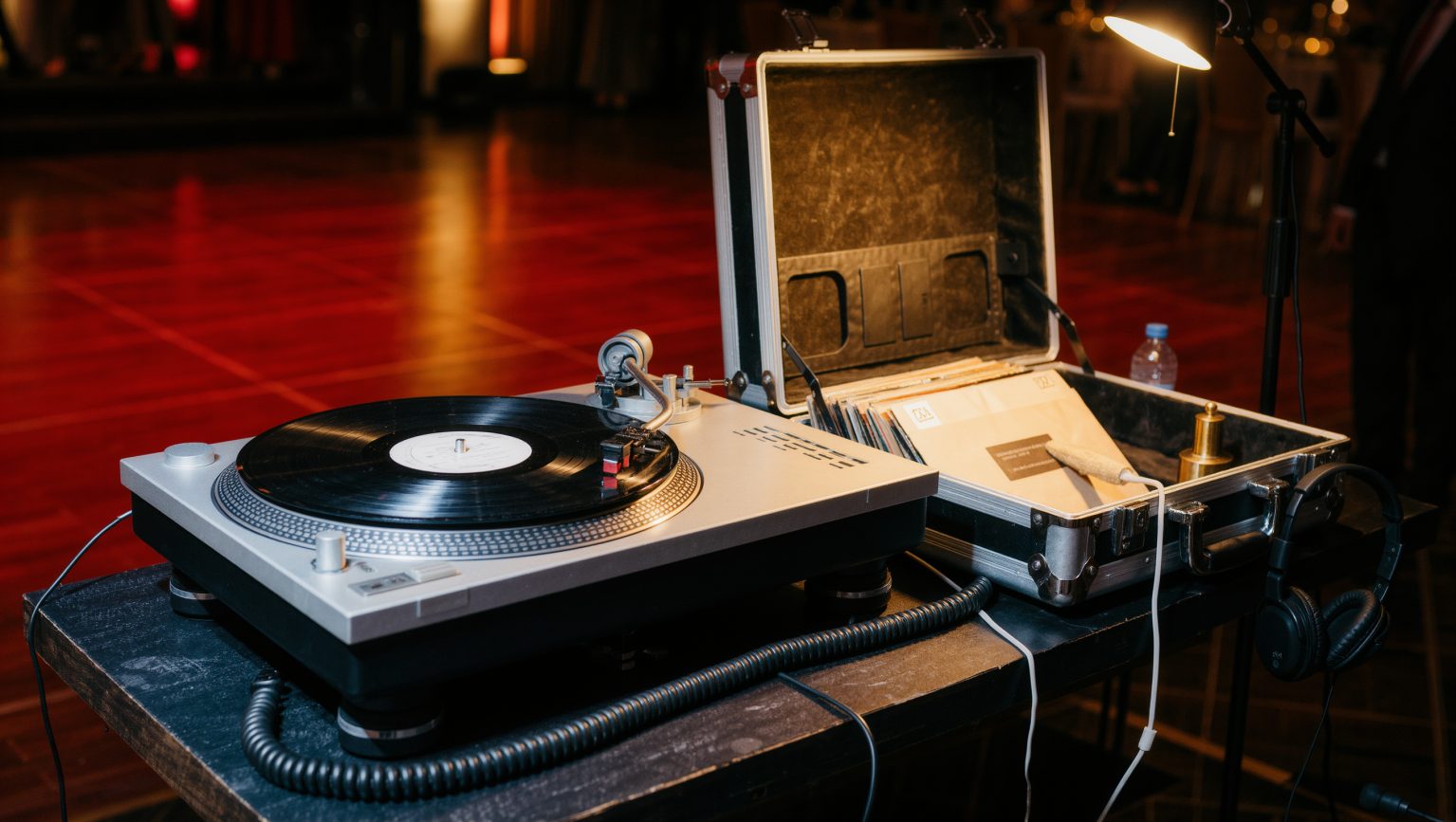
Generated image Made to show what this article describes. Nothing in it was photographed at an event.
Vinyl has real emotional appeal: ritual, tactility, the visible act of choosing what plays next. It can belong at a birthday, anniversary, dinner, launch, listening party, wedding or fundraiser without turning the room into a record shop with catering.
The lazy version is equally obvious: records glued to signs, table numbers cut from old sleeves, circles repeated until everybody understands that music exists. Record culture is strongest as an actual behavior system, not a pile of circular props.
Decide honestly whether vinyl is visual or functional
If records will really be played, sound quality and programming matter. If it is purely visual, use the graphic language, typography and sleeve logic without pretending the records are doing something they are not. That is the difference between a concept and a costume.
Protect the actual sound system
Turntables need stable surfaces and real vibration isolation. Do not put a working record player on a lightweight cocktail table beside a speaker stack. If vinyl is central, an experienced operator manages playback rather than whoever happens to be nearest.
Create listening moments instead of continuous nostalgia
One specific record for guest arrival, a dinner transition or the final song can mean more than an all-vinyl rule that complicates the entire night. Use the format where its ritual is visible and actually useful. One gesture the room actually notices does more work than forty that nobody registers.
Borrow the album design, not the album clutter
Menus can borrow liner-note typography. Seating can use track-list logic. A program can behave like an album sequence. Keep the reference disciplined, and do not damage collectible records for decoration when a printed replica does the job better.
Give guests a way to contribute without becoming DJs
A request card, favorite-song prompt or one curated voting moment invites participation without letting ten people interrupt the music sequence.
Watch music licensing and venue rules carefully
Music licensing and public-performance responsibilities vary by venue and jurisdiction. Confirm responsibilities with the venue, DJ, production team or appropriate professionals rather than assuming personal ownership of a record covers event use. It belongs on the same list as every other house rule that quietly rewrites the design and the budget.
Build real storage into the design
Records and equipment need protection from drinks, heat and direct sun. Working collections stay in controlled cases, not scattered across a decorative table.
The vinyl test
If the event would still feel coherent after removing every decorative record from the room, the concept has probably been translated into design rather than reduced to props.
Signal note: wedding search data helped push vinyl-event aesthetics back into view in 2026. The stronger idea is format-neutral: use the behavior and visual language of records where music genuinely matters to the gathering.
Atmosphere OS · Theme Atelier
A palette is not yet a decision.
Atmosphere OS holds the colour, the material, the light and the room in one object, so moving any of them shows you what it does to the rest. Costs come back as indicative bands and never as quotes, which is the difference between planning and pretending.
The rulebook is public. Every formula it runs on is written down where you can disagree with it.
Continue through the system
Pretty is still not a plan.
This field note belongs to a larger event-design system. Follow the chapter that explains the next pressure point instead of falling back into an undifferentiated archive.
What you have to decide next
One decision constrains the next. This is the order they actually happen in.
- Venue Will this room hold it? When Prismm Goes Dark: The Deadline Is September, Not December
- Guest experience How will guests move through it? Why the Cake Still Matters
- Production How does it get built and run? Ask It Twice: Why the Same Evening Comes Back With Five Different Answers
- Vendors Who owns each handoff? The Generator Was Late. The Washrooms Were Waiting.
More in this chapter


See the complete five-chapter Event Design Intelligence map →