Atmosphere
‘Just Make It Cozy’ Is the Least Useful Hosting Advice Ever Given
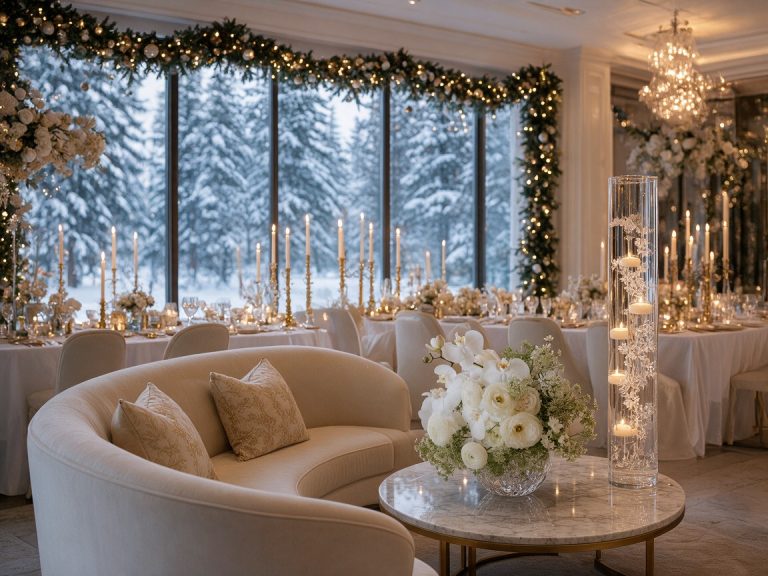
Cozy is not a pillow count. For an event, it is a set of physical decisions about scale, light, sound, seating, temperature and how exposed a guest feels in the room.

‘Cozy’ is one of those words that arrives at the design meeting wearing no identification.
Everyone agrees they want it. Nobody has yet explained what it is supposed to make the room do.
So out come the blankets. Then candles. Then pillows. Maybe a basket. Something knitted. By the end, the room has acquired a seasonal retail display and the guests are still sitting twelve feet apart under a bright ceiling fixture.
That is not cozy. That is merchandise.
For hosting, cozy is better understood as reduced social exposure. The room feels contained enough that guests do not have to project their voice, cross open territory for everything they need or wonder where they are supposed to settle.
Once you define it that way, the decorating gets much easier.
Start by shrinking the social distance
A large room can feel cold even when the thermostat is perfect because the seating is spread around its perimeter.
Bring people inward.
Not into a tight ring where knees collide. Just close enough that conversation does not require broadcasting. Turn chairs toward one another. Pull a small table into reach. Let one part of a large room become the room for the evening instead of trying to activate every corner.
This is one reason rugs, furniture groupings and lower light work: they define territory.
The useful question is not ‘does this look warm?’ It is ‘does a guest know where to land?’
Bright everywhere is the opposite of intimate
Cozy rooms usually have light hierarchy.
Some areas are brighter because they need to be: the food, the steps, the bathroom route, the surface where someone is pouring a drink. Other areas can be softer. The edges do not need the same intensity as the center of activity.
One overhead light trying to serve the entire room tends to flatten everything into equal importance.
Use lamps and other appropriate low sources if you have them. Let the light fall where people are. If candles are safe and suitable for the space, use them as atmosphere rather than as the only reason guests can locate their glass.
And do not confuse dark with cozy. A guest squinting at the step down into the living room is not participating in your mood.
Softness is partly an acoustics problem
You can hear an overexposed room.
Conversation bounces. Music feels harder than expected. Every glass set on a table announces itself.
Rooms with upholstered furniture, rugs, curtains and other soft mass often feel easier because there is less hard reflection competing with speech. You do not need to conduct an acoustic retrofit before dinner. You do need to notice when the room sounds sharp and stop trying to fix it by turning the playlist up.
Sometimes the most useful ‘cozy’ object is the rug already in the hallway.
Sometimes it is six fewer people in the loudest room.
Temperature should not become a costume requirement
Cold rooms produce blankets because people are cold. That is not atmosphere. It is evidence.
If you are hosting outside or in a room that runs cool, make the temperature strategy part of the plan. If you are indoors, remember that a room full of people may warm up quickly. The setting that felt pleasant during setup can be unpleasant after an hour.
Offer blankets where they make sense because they are useful and pleasant, not because ‘cozy’ apparently has a textile quota.
Comfort is doing the job. The blanket is one possible tool.
A drink needs to be closer than the coffee table photograph suggests
There is a practical intimacy to having what you need within reach.
A side table, a low stool, a ledge: somewhere to set a glass without standing up and leaving the conversation.
This sounds almost too ordinary to count as design, which is why it gets missed. We style the center of the room and leave the person in the side chair holding a drink like they are waiting for boarding.
Cozy is partly the absence of unnecessary small effort.
Do not make guests excavate their own comfort
If there are throws, put them where they can be taken. If there is a better chair for someone who needs back support, make it available instead of treating the prettiest low lounge seat as mandatory. If shoes come off in the house, give shoes a place to go. If coats stay nearby, do not pile them onto the only extra chair.
Hospitality gets much less mysterious when the body is allowed to have opinions.
A guest can love the look of a room and still spend the whole night uncomfortable. Those are separate conclusions.
The room does not need to perform rusticity
Cozy is often translated into a specific visual language: wood, cream, plaid, firelight, something described as ‘chunky.’
That is one aesthetic, and only one.
A dark lacquered room can be cozy. A jewel-toned maximalist room can be cozy. A small apartment with modern furniture can be cozy. A summer patio can feel intimate without pretending it is October.
The visual style can stay yours.
What changes is the human scale: closer seating, gentler sound, useful light, comfortable temperature, fewer exposed transitions, enough landing surfaces.
Then stop
This may be the most important instruction because ‘cozy’ has a tendency to keep shopping.
Once people can sit comfortably, see each other, hear each other, put down a drink and understand the room, the job is largely done.
You can add the beautiful blanket because you love it. You can light the candle because it smells good and is appropriate for the setting. You can put flowers on the table because flowers are wonderful.
Just do not credit them with solving a problem the furniture and light created.
Cozy is not a pile of soft objects.
It is what happens when the room stops making guests work so hard to be together.
Related reading: Lighting That Still Works After the Room Fills · Open Seating Is Relaxed Until Everybody Needs a Chair · Staff as Atmosphere
Atmosphere OS · Theme Atelier
Where the feeling stops being a photograph.
Theme Atelier converts a direction into a documented design system with the lighting and material consequences attached. It runs in your browser and stays there until you decide the project is worth saving.
The rulebook is public. Every formula it runs on is written down where you can disagree with it.
If this is your mood
More candlelit
 ArticleLighting That Still Works After the Room Fills
 ArticleMoody Dinner Parties Without the Funeral-Parlor Problem
 ArticleNine Days Out, Somebody Asks About the Lighting
 ArticleHow to Host a Beautiful Event in a Venue with Terrible Lighting
 ArticleThe Tiny Rituals That Make a Tuesday Dinner Feel Like an Occasion
 ArticleYour Backyard Lighting Is Feeding the Bugs
 ArticleAnniversary Dinner at Home: Do Not Turn Your House Into a Restaurant
 Mini OccasionCurtain Call
Field notes and corrections
When a number here turns out to be wrong, you hear about it.
Two things arrive and nothing else. The new field note — bar rates, cover widths, service clearances, the arithmetic worked through on one real evening. And a correction whenever a rule in the published rulebook changes, or a number the tools rely on turns out to have been wrong. There is no weekly slot, because there is nothing weekly to put in it.
One email per field note, plus corrections when a published figure moves. Unsubscribe from any of them.
Continue through the system
Pretty is still not a plan.
This field note belongs to a larger event-design system. Follow the chapter that explains the next pressure point instead of falling back into an undifferentiated archive.
What you have to decide next
One decision constrains the next. This is the order they actually happen in.
More in this chapter
See the complete five-chapter Event Design Intelligence map →