Occasions & Formats
Anniversary Dinner at Home: Do Not Turn Your House Into a Restaurant
An anniversary dinner at home should feel more personal than a restaurant, not imitate one. Use memory, pacing, light and one deliberate change to make the evening specific.
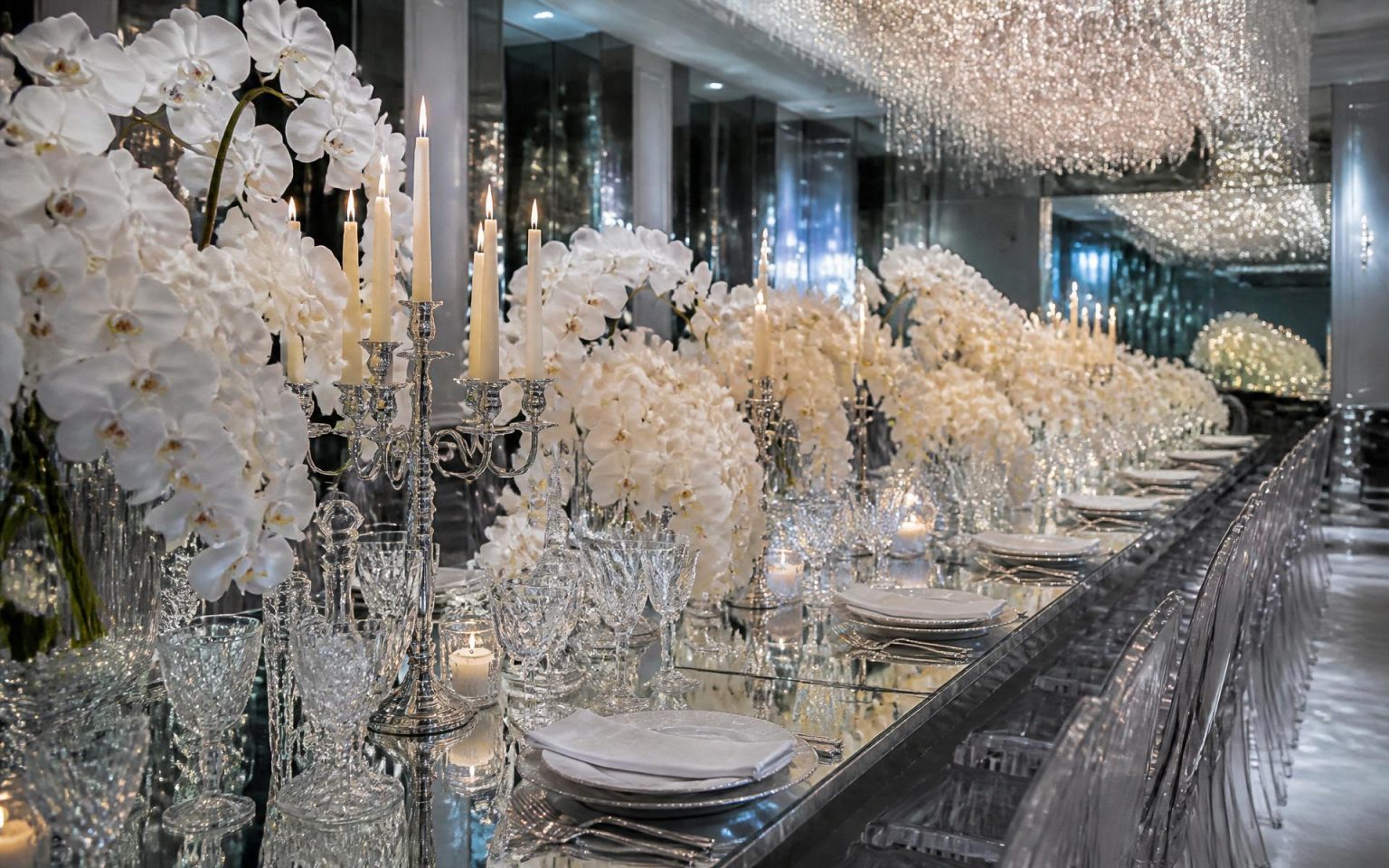
An anniversary dinner at home does not need a printed menu, a fake reservation time or a waiter costume for the person who already lives there.
Celebrating at home was never a cheaper way to reproduce a restaurant. Its advantage is that the room already contains history. The chair, the record, the ridiculous glass, the view out the window, the recipe somebody ruined once and eventually learned to make: these are materials a restaurant cannot buy.
All you are really doing is editing ordinary home life for one evening, long enough for that history to become visible again.
Start with what the anniversary is actually marking
Not every anniversary needs nostalgia. Some years want a look backward. Some want relief. Some want proof that two people survived a particularly stupid season. Some want a very good dinner and no speech longer than thirty seconds.
Choose the emotional job before choosing the food. Are you remembering? Resetting? Celebrating a hard-won year? Making up for the fact that last year involved an airport sandwich?
That answer should govern the evening more than the number of candles on the table.
Use one piece of shared history as the authority
A specific anniversary dinner becomes obvious when one detail belongs unmistakably to the people involved. Serve the wine from the trip. Rebuild the first meal you cooked together, but better. Put on the album that lived in the car during a particular year. Use a photograph as a small place marker, not a slideshow with emotional hostage-taking privileges.
The detail does not have to be sentimental. Humor is memory too.
If the story is that you once ate spectacular noodles in a hotel room because every restaurant was closed, recreate that. If the story is a failed camping trip and a very successful bottle of wine, the wine may have earned another appearance.
Personalization works when it has a job, and here the job is recognition. Nobody else’s anniversary could use this detail. That is the test, and it quietly disqualifies most of what gets sold as romantic.
Change the room without fighting the room
You do not need to clear every trace of ordinary life. You do need to remove the things that argue loudly with the occasion.
Laptop off the table. Mail elsewhere. Dish rack empty enough that it does not become the visual center of the kitchen. The bright overhead light can take the evening off.
Then choose one atmospheric intervention. Candles. Lamps. Flowers cut from the yard. A cloth on the table. Dinner in the room you usually ignore. If the weather cooperates, eat outside. If the dining table is where every weekday meal happens, start with a drink in another part of the house.
Transformation for its own sake is a waste of a Tuesday afternoon. You want enough difference to create attention, and no more than that. I would put that sentence on the door of every atmosphere piece on this site.
Do not schedule romance to death
An anniversary has a terrible tendency to acquire mandatory moments. Toast. Gift. Photo. Special song. Dessert reveal. Meaningful question. Suddenly two people are trapped in a privately produced awards ceremony.
Give the night shape, not choreography.
A good sequence may be: first drink somewhere relaxed, dinner at the table, one pause or toast, dessert somewhere else, then the evening stops being an event and becomes the rest of the night.
If the conversation is good, do not interrupt it because dessert has a lighting cue.
The menu should leave both people at the table
If one person is cooking, the menu needs to respect the scale. Two guests means there is no social buffer while somebody disappears to sear four separate components.
Choose food that holds. Braise something. Roast something. Assemble a cold first course. Make dessert ahead. Use the expensive takeout if that is the thing you both genuinely want.
Anniversary dinner is not a culinary exam.
There is a useful rule for two-person hosting: every final-minute task should compete for a place on the evening. If three dishes all need ten minutes of concentration at the same time, one of them loses. Occasion OS makes you pick the loser in advance, which is kinder than picking it at the stove.
Who loses the last ten minutes
Picking which dish loses the last ten minutes is a scheduling job, and it goes better on paper than at the stove.
Work out the last ten minutes for two (opens in a new tab)
Make the table easier, not more ceremonial
For two people, a table can look generous with very little: one arrangement, two candles, the good glasses, a low bowl of fruit, a cloth with some texture to it, and the plate that never gets used because it is apparently waiting for the Smithsonian.
Use it.
But leave enough room for the meal. The anniversary does not improve when the bread basket has to live on the floor because flowers have occupied the center third of the table.
If you want more atmosphere, add it vertically through light or around the room rather than continuing to pile objects between the two people who are supposed to see each other.
Gifts are not required to carry the whole emotional load
If there is a gift, give it a moment. A gift produced from beside the serving spoon, with a camera already raised, arrives as a task rather than a present, and the recipient spends the next thirty seconds arranging their face instead of looking at the thing.
And if there is no gift, the evening does not need to apologize. A letter can be enough. A plan for the next year can be enough. Making the other person their exact favorite dinner and sitting down on time can be enough.
The occasion is not measured by how many artifacts leave the table afterward.
End somewhere other than the sink
The least romantic transition in domestic hosting is the one where both people end up under the bright kitchen lights, scraping plates, roughly ninety seconds after dessert, while the evening they spent all week building quietly refiles itself under Wednesday.
Clear what has to be cleared. Leave the rest. Move to the sofa, porch or bedroom with coffee, a drink or nothing at all. The dishes are extremely patient.
Ritual cues still matter at a table for two. A change of room or light tells the evening that dinner is over without telling the occasion that it is finished.
It should not feel like a reservation
- Does at least one detail come from shared history rather than generic romance?
- Can the cook sit down on time?
- Has the room changed enough to feel intentional?
- Is there a beginning and an ending cue without a rigid program?
- Will both people spend more time together than managing the evening?
If yes, the evening has done the one thing a restaurant cannot, which is to happen in a room that already knows both of you.
For the larger scale framework, use Occasion Design. The same event intelligence applies here; the production department just happens to be two people and a dishwasher that can wait until morning.
Built out at full size, the same instinct becomes Every Cloth Has Initials, an evening that opens on a linen stain with a date on it and gets considerably more interesting from there.
If this is your mood
More candlelit
 Article‘Just Make It Cozy’ Is the Least Useful Hosting Advice Ever Given
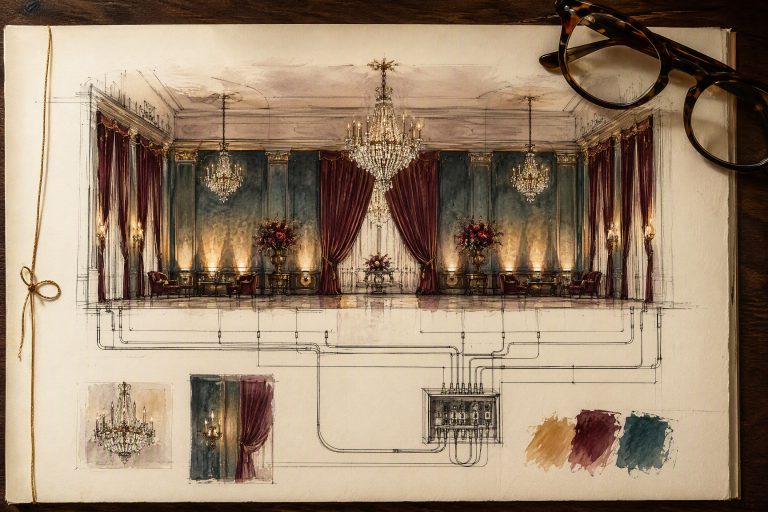 ArticleHow Much Connected Load Does This Lighting Brief Actually Represent?
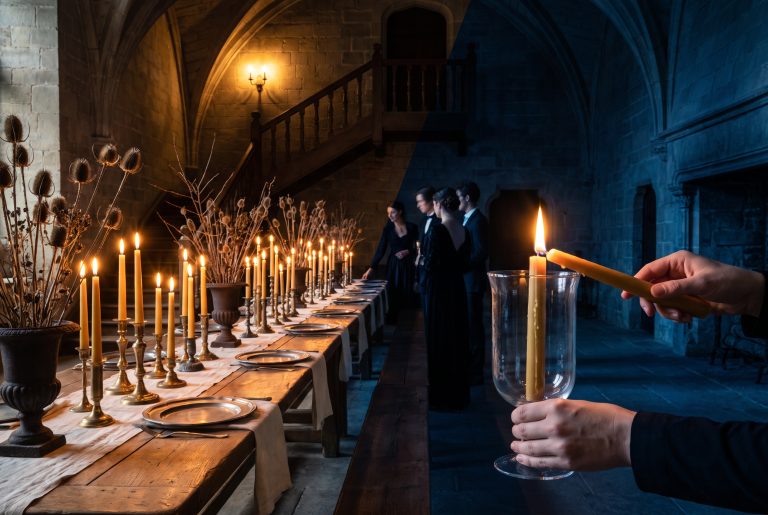 ArticleLit From the Table Up
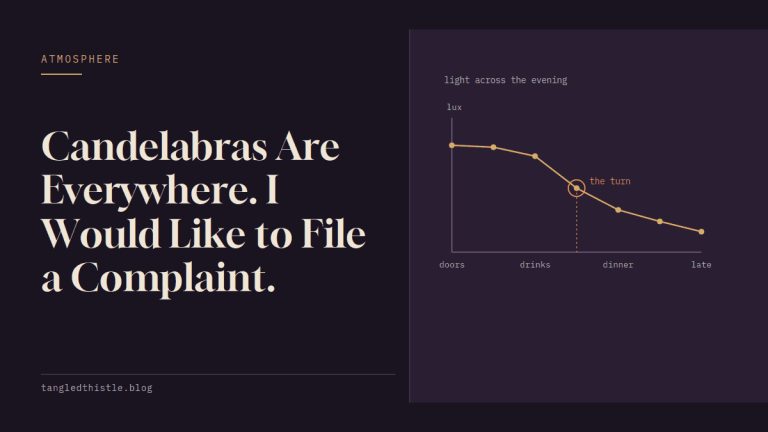 ArticleCandelabras Are Everywhere. I Would Like to File a Complaint.
 ArticleYour Formal Dining Room Isn’t Dead. It Just Needs a Job.
 ArticleNine Days Out, Somebody Asks About the Lighting
 ArticleYour Backyard Lighting Is Feeding the Bugs
 ArticleLighting That Still Works After the Room Fills
Field notes and corrections
When a number here turns out to be wrong, you hear about it.
Two things arrive and nothing else. The new field note — bar rates, cover widths, service clearances, the arithmetic worked through on one real evening. And a correction whenever a rule in the published rulebook changes, or a number the tools rely on turns out to have been wrong. There is no weekly slot, because there is nothing weekly to put in it.
One email per field note, plus corrections when a published figure moves. Unsubscribe from any of them.
Continue through the system
Pretty is still not a plan.
This field note belongs to a larger event-design system. Follow the chapter that explains the next pressure point instead of falling back into an undifferentiated archive.
What you have to decide next
One decision constrains the next. This is the order they actually happen in.
More in this chapter
See the complete five-chapter Event Design Intelligence map →