Space & Venue Reality
A Fire Pit Is a Room. Build the Room, Not Just the Fire.
A fire pit becomes a good gathering space only when seating, smoke, wind, light, drinks and the safe perimeter are planned around the people—not just the flame.
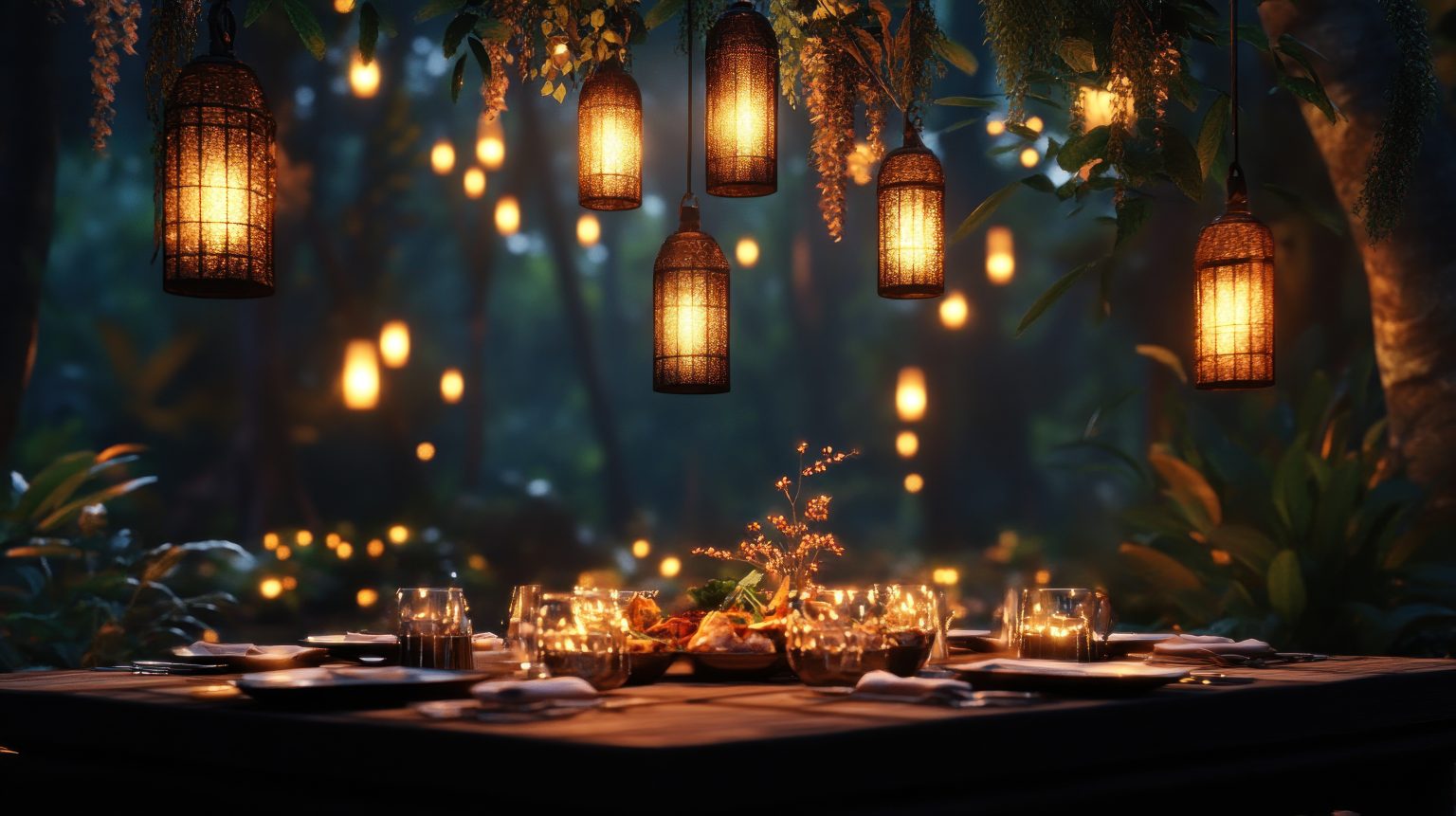
A fire is very good at convincing us the design work is finished.
Put flame in the middle of a yard and people will gather around it. True. They will also shift chairs every six minutes, trade places with the person getting smoked out, balance drinks on the ground, step backward into darkness and discover that the one lovely throw blanket is currently serving the only person who dressed appropriately.
The fire is not the room.
It is the strongest object in the room, which is precisely why everything around it needs to be more deliberate.
Safety owns the first circle
Before seating, before blankets, before the beautiful tray of whatever is supposed to happen near the fire, the fire needs a safe location and clear space around it.
The U.S. Fire Administration advises using outdoor fireplaces and fire pits outdoors at least ten feet from a home or anything that can burn, keeping children closely supervised, using a metal screen over wood-burning fires, and fully extinguishing the fire before leaving the area. Local fire restrictions, burn bans, property rules and the manufacturer’s instructions can be more restrictive. They win.
This is not the place for atmospheric improvisation.
Do not squeeze a fire pit into a prettier location because the safe one feels less convenient. Move the party to the safe fire, not the fire toward the party.
The second circle belongs to bodies
Once the fire has the space it requires, sit in every chair.
Not theoretically. Sit down.
Is the heat comfortable? Can you get up without stepping toward the fire? Does the chair feel stable on the surface? Can someone pass behind it? If one person pulls their chair back because they are warm, does the path disappear?
Fire-pit seating tends to drift. That is normal. Build enough slack into the room that chairs can move a little without turning the whole layout into a collision.
And mix the seating if that suits the group. Deep lounge chairs are wonderful until someone needs to stand up with a full plate. Benches hold more people but can trap the person in the middle. One or two upright chairs can be far more hospitable than a perfectly matched ring.
The room is allowed to look collected. It needs to behave collected too.
Smoke is a moving wall
The prettiest seat can become unusable when the wind changes.
Do not pretend smoke is a minor inconvenience everyone should tolerate for the aesthetic. It changes where people can sit, what they can wear comfortably, whether food still tastes like food and whether somebody with respiratory sensitivity can participate at all.
Check the wind before lighting. Understand the usual direction on your property, but do not treat it as a guarantee. Keep a smoke-free social option nearby—a porch, patio table, another seating cluster—so the event does not require everyone to remain in the fire circle to remain part of the night.
A fire pit can be one chapter, not compulsory attendance.
Give every seat somewhere to put a drink
This is the unglamorous detail that changes the entire experience.
People near a fire have busy hands: a drink, a phone, a small plate, a blanket, maybe a roasting stick. If the only landing surface is a low coffee table three feet away, objects migrate to the ground.
Use stable side tables outside the safe fire area. They do not need to match. They do need to be visible and reachable without leaning toward the flame.
If food is part of the plan, decide whether it really belongs at the fire. Some things are fun to toast. An entire meal that requires plates, cutlery and repeated service may be much better at a nearby table, with the fire waiting afterward.
The flame does not have to host dinner simply because it is photogenic.
Light the route more than the fire
The fire will make itself visible.
The step behind the chair will not.
Light the path from the house. Light changes in grade. Make the route to the bathroom legible. If guests cross lawn, gravel or paving, let them see the transitions. Keep fixtures and cords out of walking paths and use equipment intended for the outdoor conditions.
Then leave enough darkness for the fire to matter.
This is one of those rare cases where better functional lighting around the perimeter can make the center feel more atmospheric, not less. Guests stop using phone flashlights. Nobody accidentally kicks a side table. The fire remains the visual event because the rest of the light knows its job.
Blankets need a dry, obvious home
A basket of blankets looks generous until the bottom half is damp from sitting outside all afternoon.
Keep them dry until the event. Put them where people can take one without asking. Have more than one style or weight if you already own them, because one person’s pleasantly cool evening is another person’s Arctic expedition.
Then give used blankets a separate return place if they are likely to smell like smoke or collect debris. Do not fold them ceremonially back into the clean basket at midnight because everybody is tired and optimism has returned.
The fire should not trap the whole evening in one circle
A ring of chairs is naturally democratic, but it can also force one large conversation. If you have a bigger group, let there be another place to be.
A small table behind the main circle, two chairs on the porch, or a drinks station far enough away lets people peel off without making an announcement. The strongest gatherings give guests permission to change volume.
Somebody will want to be close to the fire. Somebody will want to hear it but not smell like it. Somebody will stay for fifteen minutes and go inside. All of those are normal uses of the same event.
A fire pit is powerful atmosphere because it gives people a reason to gather without asking them to perform. Keep that part. If the question is whether the fire should own the yard in the first place, Room for Drama starts one decision earlier.
Then do the less romantic work: safe distance, stable chairs, a smoke escape, light on the path, a place for the glass.
The flame already knows how to be dramatic. The room around it needs to be useful.
Safety source: U.S. Fire Administration, Outdoor Fire Safety.
Related reading: The Patio Is Not the Overflow Room · A Tent Is a Venue You Have to Build · Lighting That Still Works After the Room Fills
Space Lab
Unknown is a useful answer.
A room record can hold measured, published, supplied, estimated and unknown facts without pretending they are equivalent. The unknowns become the questions worth carrying to the site visit.
Free to use, with one reusable room record shared across the spatial instruments.
If this is your mood
More candlelit
 Mini OccasionMoonlit Swim
 ArticleYour Formal Dining Room Isn’t Dead. It Just Needs a Job.
 ArticleThe Tiny Rituals That Make a Tuesday Dinner Feel Like an Occasion
 ArticleHow Much Connected Load Does This Lighting Brief Actually Represent?
 ArticleLit From the Table Up
 ArticleDinner for Your Partner: Two People Still Need an Arrival
 Article‘Just Make It Cozy’ Is the Least Useful Hosting Advice Ever Given
 ArticleTake the Venue Tour After Dark
Field notes and corrections
When a number here turns out to be wrong, you hear about it.
Two things arrive and nothing else. The new field note — bar rates, cover widths, service clearances, the arithmetic worked through on one real evening. And a correction whenever a rule in the published rulebook changes, or a number the tools rely on turns out to have been wrong. There is no weekly slot, because there is nothing weekly to put in it.
One email per field note, plus corrections when a published figure moves. Unsubscribe from any of them.
Continue through the system
Pretty is still not a plan.
This field note belongs to a larger event-design system. Follow the chapter that explains the next pressure point instead of falling back into an undifferentiated archive.
What you have to decide next
One decision constrains the next. This is the order they actually happen in.
More in this chapter


See the complete five-chapter Event Design Intelligence map →