Production & Hosting
Host the Person, Not the Performance
Plan a gathering around how guests arrive, settle, move, recover, and connect—not around decorative performance.
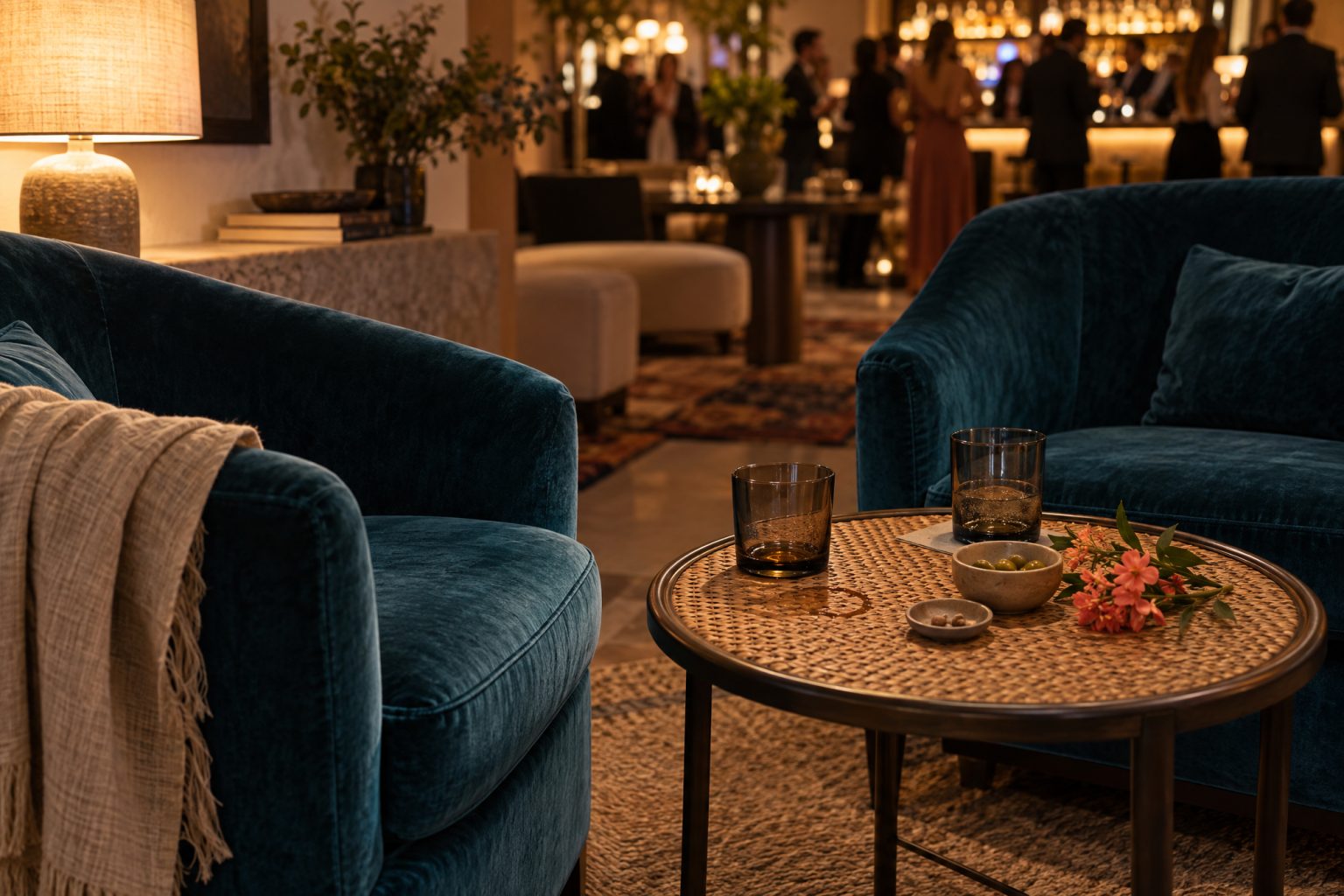
A gathering can be beautiful and still leave everyone slightly stranded. I know that party. I don’t recommend it.
The table’s polished, the candles are lit, food arrives on time, and the host is moving fast enough to qualify as weather. Guests admire the flowers, offer to help, and quietly start calculating whether opening the wrong cabinet would make things worse for everyone.
The problem isn’t effort. The problem is the event got designed as a performance before it got designed as an experience. Hosting the person means starting with how people arrive, settle, and eventually leave, not with what the room is supposed to prove.
Decide what the gathering is actually protecting
Every event needs a governing priority: conversation, ease, celebration, a long unhurried meal. Mine is usually some version of: this should make it easy for people to feel welcomed and stay present without waiting on me to manage every single moment. That sentence becomes the filter for everything else.
Design the arrival before you design the centerpiece
Guests decide whether the evening feels easy before they ever see the table. One clear instruction beforehand. One visible place for coats. One small welcome gesture that doesn’t require explaining. One person actually free enough to greet them. Nobody should have to solve the house before they’re allowed to join the party.
Build in recovery margin on purpose
Events get brittle the moment every minute depends on the previous minute behaving perfectly. I choose one dish that can wait gracefully, set the room earlier than feels necessary, and leave ten minutes of real buffer before guests arrive. The schedule should support the people. The people shouldn’t spend the whole evening quietly apologizing to the schedule.
Let the table actually serve the conversation
A table isn’t just a visual surface, it’s social infrastructure. Height, reach and sightlines across it decide who can talk to whom. A little formality can make an evening feel held. Too much of it makes guests feel observed instead.
Stop giving the host every invisible job
Greeting, pouring, watching the oven, tracking allergies, noticing who’s gone quiet. The host turns into the evening’s unpaid switchboard if nobody intervenes. Support doesn’t make the evening less personal. It’s what actually lets the host be a person there instead of unpaid staff.
Make room for guests who aren’t like you
Not everyone shows up with the same energy, mobility, or social ease. Accessibility and comfort belong in the plan from the start, not handled as a surprise exception once someone’s already uncomfortable.
Pick one moment actually worth remembering
A gathering doesn’t need constant programming. One toast, one shared course, music starting at exactly the right time, ten quiet minutes outside. One of those is usually plenty.
Where were you standing all night?
Where will I actually be during the first fifteen minutes? What part of this currently requires me to leave the room? Which task can get done earlier, or simplified, or handed to someone else? Where can a guest pause without it looking conspicuous? What’s the one thing I actually want to notice while it’s happening?
The work is allowed to show. What I care about is whether it bought enough ease for people to actually be present with each other. Host the person. That includes the person hosting.
Atmosphere OS · Arc Studio
Every event has a turn. Most plans do not know where theirs is.
Arc Studio places the peak, then arranges load-in, service and the close around it and hands you the run sheet. It is a planning document rather than a venue-compliance one, and it draws that line for you.
Free to use, local-first in your browser, and there is no account until you ask for one.
Field notes and corrections
When a number here turns out to be wrong, you hear about it.
Three things arrive and nothing else. The new field note — bar rates, cover widths, service clearances, the arithmetic worked through on one real evening. A line when a World opens, because a night only goes up once it can actually be thrown. And a correction whenever a rule in the published rulebook changes, or a number the tools rely on turns out to have been wrong. There is no weekly slot, because there is nothing weekly to put in it.
One email per field note or opening, plus corrections when a published figure moves. Unsubscribe from any of them.
Continue through the system
Pretty is still not a plan.
A party gets planned in roughly this order. Pick the chapter where your next problem lives.
What you have to decide next
One decision constrains the next. This is the order they actually happen in.
More in this chapter

See the complete five-chapter Event Design Intelligence map →