Occasions & Formats
A Smaller Wedding Should Feel More Specific, Not More Precious
At a small wedding there is nowhere for bad flow to hide and a dead cocktail hour feels deader. Do not miniaturize the 200-person formula. Change the rhythm.

A smaller guest count is a boring number until you look at what it unlocks: more time with actual people, venues that cannot hold 250 chairs, better food, bolder layouts, longer dinners, stranger ideas and fewer decisions made solely because they scale cheaply.
Spend the intimacy on experience
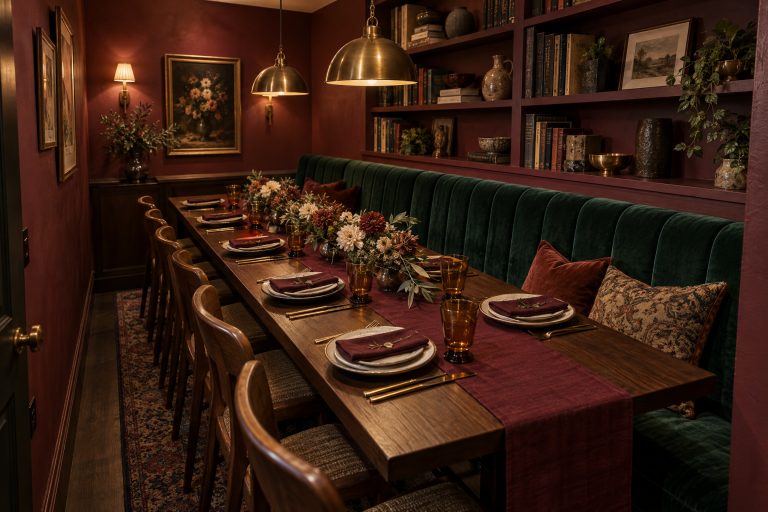
If there are forty guests, you can seat everyone at one connected table, move dinner into a restaurant, write meaningful notes, build a ceremony with closer geometry, or create a late-night room that would be impossible at ballroom scale. Those are structural advantages. Use them. A smaller count is really more usable room per guest, which is the thing capacity numbers never tell you.
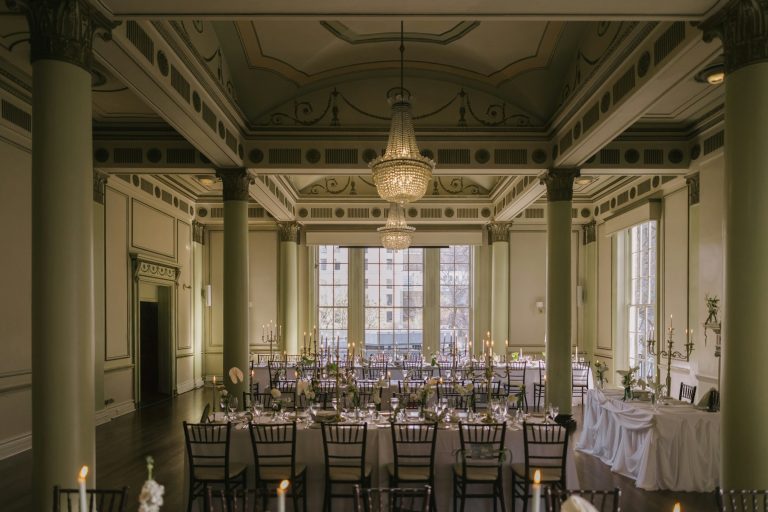
Do not miniaturize a 200-person wedding
A smaller celebration does not need a reduced ballroom formula: tiny ceremony, tiny cocktail hour, tiny reception, tiny cake. It can have a completely different rhythm. Dinner might be the main event. The ceremony might happen in the same room. The after-party might be a walk to a bar everyone already loves.
Fewer guests make awkwardness more visible
At a small wedding, there is nowhere for bad flow to hide. Seating dynamics matter more. A dead cocktail hour feels deader. One inaccessible route affects a larger percentage of the room. Build the social plan with the same care as the visual plan. Small rooms expose every collision and dead corner a floor plan creates.
Choose one or two luxuries that change the night
Maybe it is extraordinary lighting, a live musician in a small room, a long dinner, better transportation, a dramatic floral ceiling, or a venue that would never work for a large crowd. Concentrated spending feels far more intentional than distributing the budget across twenty traditional categories simply because weddings are apparently issued with categories. Deciding what gets protected and what gets cut is the whole exercise.
Use the guest list as a design material
Forty people are not a smaller version of two hundred people. They are a room in which almost every relationship is visible. That changes seating, speeches, arrivals and the amount of social camouflage available to anyone who would rather not spend three hours beside an uncle they have successfully avoided since 2019.
Use that visibility. Seat people because the conversation will work, not because the chart needs symmetrical branches. If six friends have not seen each other in years, let them actually sit together. If two sides of a family barely know one another, create a reason for those groups to mix before asking dinner to solve the entire relationship. A small guest list gives you enough information to design around real humans instead of demographic categories.
Let the venue get more specific
Lower capacity opens rooms that are usually eliminated before anyone gets attached to them: a private dining room with excellent food, a house with an extraordinary garden, a gallery that would feel empty with 160 people and electric with 42, a tiny inn where everyone can stay, a restaurant you would never try to turn into a ballroom.
That freedom comes with a catch. A place that fits forty bodies may still fail forty guests. There has to be a real arrival, a usable restroom route, enough weather protection, somewhere for coats, somewhere for vendors to work, and enough space for dinner to happen without service becoming a contact sport. Small is not permission to stop interrogating the room. It is permission to interrogate more interesting rooms.
Stop producing transitions nobody needs
Large weddings often need formal transitions because a lot of people have to be moved, fed, seated and redirected. Smaller ones can shift gears with much less fuss. The ceremony can end and drinks can appear in the same garden. Dinner can finish and everyone can walk into the room next door. Dessert can arrive at the bar instead of requiring a formal cake-cutting pause that exists mostly because the schedule inherited it.
The evening still needs a shape. It just gets to be felt instead of announced. Give the arrival a clear place to land. Give dinner enough time to become the center of the night if that is what you want. Give the late part of the evening a reason to feel different. A smaller event becomes more luxurious when the transitions get easier, not when every large-event convention survives at half scale.
Spend less energy proving it counts as a wedding
This is the trap underneath a lot of small-event overdesign. Once the guest list drops, people start compensating with more signage, more personalized objects, more ceremony furniture, and more evidence that this is still sufficiently wedding-shaped.
You do not need the evidence. You need the evening.
If forty people can hear every word, eat something excellent, move through a room that feels considered, and spend actual time with the people they came to celebrate, nothing is missing. The scale went into specificity instead, and I would not give that back to rebuild a ballroom in miniature.
Atmosphere OS · Moodboard-to-Plan
A board full of beautiful rooms is not a plan for yours.
Moodboard-to-Plan works out which quality is doing the emotional labor in the reference and what that quality costs to run in a real room on an ordinary night. The rulebook names the parts it deliberately leaves to taste.
Costs come back as indicative bands rather than quotes, and seasonal notes are filters rather than promises.
Field notes and corrections
When a number here turns out to be wrong, you hear about it.
Two things arrive and nothing else. The new field note — bar rates, cover widths, service clearances, the arithmetic worked through on one real evening. And a correction whenever a rule in the published rulebook changes, or a number the tools rely on turns out to have been wrong. There is no weekly slot, because there is nothing weekly to put in it.
One email per field note, plus corrections when a published figure moves. Unsubscribe from any of them.
Continue through the system
Pretty is still not a plan.
This field note belongs to a larger event-design system. Follow the chapter that explains the next pressure point instead of falling back into an undifferentiated archive.
What you have to decide next
One decision constrains the next. This is the order they actually happen in.
More in this chapter

See the complete five-chapter Event Design Intelligence map →