Production & Hosting
The Party Looked Effortless Because Someone Hid the Evidence
The party looked effortless because the effort had somewhere else to stand. Effortless is what a smaller plan, clear owners, and a well-hidden box pile look like from the front.
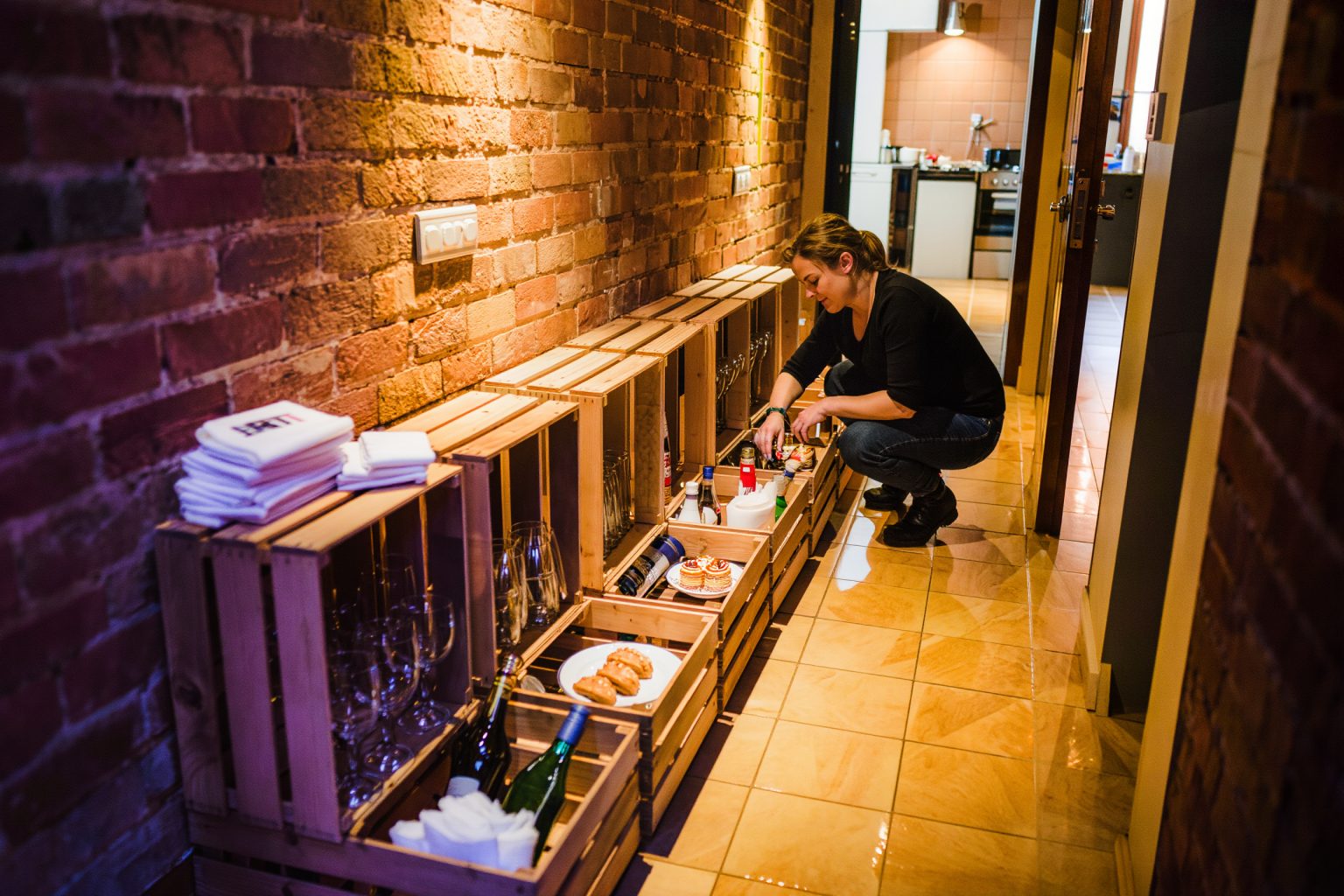
The party looked effortless because the effort had somewhere else to stand.
Boxes were removed before guests arrived. The bar had enough ice. A second set of napkins waited out of view. Someone watched the weather. Someone else knew where the extension cords ended. The host did not disappear for forty minutes because the room had assigned its problems to people other than the person giving the party.
Effortless is not a design style. It is what a smaller plan, good preparation, a clear answer to “whose job is this,” and a well-timed box removal look like from the front.
Reduce the number of live decisions
Every unresolved choice becomes event-day labor.
Lock the guest count and arrival window, the floor plan, the menu and how it is served, and the drinks, including the zero-proof ones. Decide the rain layout now. Settle the flowers, lighting, sound, and the few big visual moments, then how people get there and home, and who sets up, who tears down, and who takes the borrowed platters back.
Keep a small number of flexible decisions with named owners. Do not preserve ten optional ideas until the final hour because choosing later feels emotionally generous.
The easiest party is usually the one that declined several interesting opportunities in advance.
Give every outcome one owner
“We have people helping” is a mood, not a plan.
Put one name next to each thing that can go wrong: letting vendors in, greeting guests, coats and gifts, food and dietary meals, the bar and water, music, the lights, flowers, the weather, the kids and the relatives and anyone who needs a quieter spot, the rides home, and packing up at the end.
Each person should know when, where, what they are allowed to decide, who takes over after them, and who covers if they vanish. One person may own several compatible jobs. Nobody should vaguely own everything because they are “good at events.”
Protect the host’s visible role
The host should receive guests, connect people, notice the room, and participate.
Take the vendor calls off their phone. Take away the hunt for the extra napkins, the drink-by-drink bartending, the oven babysitting, the parking directions, the bathroom restock, the furniture shuffling, the playlist crisis, and the leftover packing that somehow starts at nine o’clock while guests are still eating.
The host may cook, mix drinks, or lead a ritual when that is part of the intended experience. They should not become the only person capable of keeping the party operating.
Pre-stage by moment
Organize supplies according to when and where they are used.
Create contained kits for:
- arrival and coats;
- bar opening;
- dinner service;
- cake or dessert;
- speeches or program;
- weather changes;
- bathroom and spill response;
- departure and leftovers;
- strike and lost property.
Label the containers for staff, not guests. Keep them close enough to use and outside the visible room.
A supply is not prepared if the person who needs it must call the host to learn which closet contains it.

Finish the guest route before the decorative details
Guests need a clear sequence:
- find the property or venue;
- enter safely;
- place coats, bags, gifts, or tickets;
- find water, drinks, seating, and restrooms;
- understand the next event moment;
- move between spaces;
- leave with belongings and transportation.
Walk the route under event lighting and weather. Protect accessible and emergency circulation. Remove boxes, tools, deliveries, carts, and furniture waiting for later.
A supply is not prepared if the person who needs it must call the host to learn which closet contains it.
One visible extension cord can reveal more production than several flower arrangements can conceal. Walk it as a guest would, from the curb forward, and the offenders announce themselves.
Design the bar for speed and self-recovery
Use a concise menu matched to the staff and guest count.
Provide water and zero-proof service without requiring the main alcohol queue. Prepare ice, glassware, garnish, towels, waste, backups, and refill inventory before opening.
Keep tools and stock in predictable locations. Define who replenishes, clears, and changes the menu if the bar becomes congested or an ingredient runs out.
An effortless bar still runs out of limes. The bartender just never has to leave the station to fix it.
Use food that allows the room to keep moving
Choose service compatible with the kitchen, venue, timing, staff, and guest behavior.
Limit last-minute components. Identify holding, plating, serving, clearing, dietary meals, leftovers, and backup food. Keep one clean landing zone and one route between food support and guests.
Do not design a menu requiring the host to finish several fragile dishes at the exact moment every guest wants to speak to them.
The most impressive food is often the food that reaches everyone in good condition while the cook remains visible as a human being.
Give flowers an hour-four plan
Use materials suited to heat, air, duration, contact, and transport.
Place fragile flowers where they remain protected and sturdy material where the room is active. Keep vessels stable, water contained, scent controlled, and edges out of food and service.
Prepare appropriate snips, towels, spare water, backup vessels, and a person authorized to remove a failing stem or relocate a piece.
The floral design looks effortless when nobody watches three people rebuild it beside the bar. Most of that is decided at ordering, by choosing material for how it holds up under heat, hands, and time.
Hide packaging by giving it a destination
Boxes, sleeves, plastic, cases, bags, carts, labels, spare inventory, cleaning supplies, staff belongings, and vendor meals need a screened, accessible backstage zone.
Do not merely move them into the nearest room and block the restroom or accessible route. Plan the storage capacity, light, security, power, and path. Whether a building has that space at all is knowable on the first visit, if you look at the back of the house before the pretty room.
Break down and remove empty packaging before guest arrival when possible. Keep only the containers required for returns and strike.
Schedule the final reset
Set a hard guest-ready time before the official arrival.
That last stretch is for hiding the evidence, sweeping, and wiping down the big surfaces. Turn on the lights along the paths, start the music, and get the temperature right. Stock the water, the bar, and the bathrooms, put out the food when it should go out, check every flower and flame, walk the route once more, and tell staff what changed. Then the host stops setting up, puts down the tape, and gets dressed.
Do not schedule physical installation until the invitation time and call the final inspection a luxury.
Maintain the room through small resets
Assign recurring checks for:
- water, ice, glasses, and bar waste;
- food levels, labels, and utensils;
- bathrooms and handwashing;
- spills, broken glass, and route obstructions;
- candles or approved alternatives;
- flowers, table surfaces, and discarded objects;
- temperature and ventilation;
- coats, bags, gifts, and lost property;
- transportation and weather.
Short, quiet corrections keep small problems from becoming the kind guests notice.
The party should not wait until the bar is empty, the restroom is out of supplies, and the centerpiece has entered the bread before anyone intervenes.
Use one central communication path
Staff and vendors need one current timeline, contact structure, floor plan, and method for reporting issues.
Keep radio or message communication concise and protect private guest information. Name the person who can change timing, move guests, approve cost, or activate the contingency.
The host should not receive the same problem from four people in four different corners.
Prepare for the first likely failures
Every event has predictable weak points.
Guests will arrive early. The weather will change its mind, the bar line will back up, and dinner will run late. A dietary meal will go missing, the microphone will squeal or die, a glass will break, something decorative will lean, a ride will be late, and a guest will need somewhere quieter or easier to reach. None of that is bad luck. Decide the answer to each before the party starts.
Keep the response proportionate. Not every small failure needs a production meeting. Every consequential failure needs a named authority.
Design departure before people become tired
Confirm coats, bags, gifts, leftovers, rideshare, valet, shuttles, parking, lighting, weather, and accessible transportation.
Keep departure routes clear and staffed. Stagger coat or shuttle demand where possible. Maintain restrooms, water, and seating for guests waiting.
Not every small failure needs a production meeting. Every consequential failure needs a named authority.
Do not begin strike across the path because the formal program has ended.
Write the strike before the party
Assign personal items, rental inventory, flowers, food, waste, donations, tools, furniture, water, and venue handback.
Schedule vehicles and crews. Label destination zones. Count before loading. Protect guests still departing and people working while tired.
The party looks effortless partly because the ending does not require the host to discover where 120 glasses came from.
Remove the tasks nobody experiences
Near final planning, ask which tasks create meaningful guest benefit, operational reliability, or emotional value.
Cut the details that require labor without changing what guests feel: duplicate signage, excessive packaging, complicated favors, unnecessary transfers, too many drink recipes, fragile garnish, redundant decor, and styling that must be repeatedly restored.
Effortlessness is often produced by the task that never enters the timeline.
Let the work disappear into hospitality
Guests see a host who is actually in the room, food that shows up, drinks within reach, and flowers still standing at midnight.
They never see the crates in the hallway, the ice count, the weather call at four, or the van already booked for the rentals. That is the whole trick. Somebody carried the boxes so the magic did not have to.
Atmosphere OS · Arc Studio
Write the order of the night before you book the band.
Arc Studio turns an intended feeling into a sequence with times against it and a production brief a crew can read on the day. Costs come back as bands and seasonal notes as filters, never as guarantees.
Costs come back as indicative bands rather than quotes, and seasonal notes are filters rather than promises.
Field notes and corrections
When a number here turns out to be wrong, you hear about it.
Three things arrive and nothing else. The new field note — bar rates, cover widths, service clearances, the arithmetic worked through on one real evening. A line when a World opens, because a night only goes up once it can actually be thrown. And a correction whenever a rule in the published rulebook changes, or a number the tools rely on turns out to have been wrong. There is no weekly slot, because there is nothing weekly to put in it.
One email per field note or opening, plus corrections when a published figure moves. Unsubscribe from any of them.
Continue through the system
Pretty is still not a plan.
A party gets planned in roughly this order. Pick the chapter where your next problem lives.
What you have to decide next
One decision constrains the next. This is the order they actually happen in.
More in this chapter
See the complete five-chapter Event Design Intelligence map →
You must be logged in to post a comment.