Atmosphere
The Arrival View Needs One Clear Sentence
Give the first guest view one clear visual promise and a separate, legible orientation layer so arrival feels intentional rather than decorative and confusing.
Guests should not need to read four signs, circle a floral pedestal, and question a parking attendant to determine whether they have arrived.
The first view has two jobs. It must orient the body and introduce the world. Where do I go? What kind of occasion is beginning?
When those jobs are unresolved, the entrance collects details in self-defense: flowers, candles, arrows, welcome copy, monograms, lanterns, menus, and one decorative object nobody can explain. The result says many things at once and none of them clearly.
Write the arrival sentence
Before choosing entrance objects, write one private design sentence describing what guests should understand and feel in the first view.
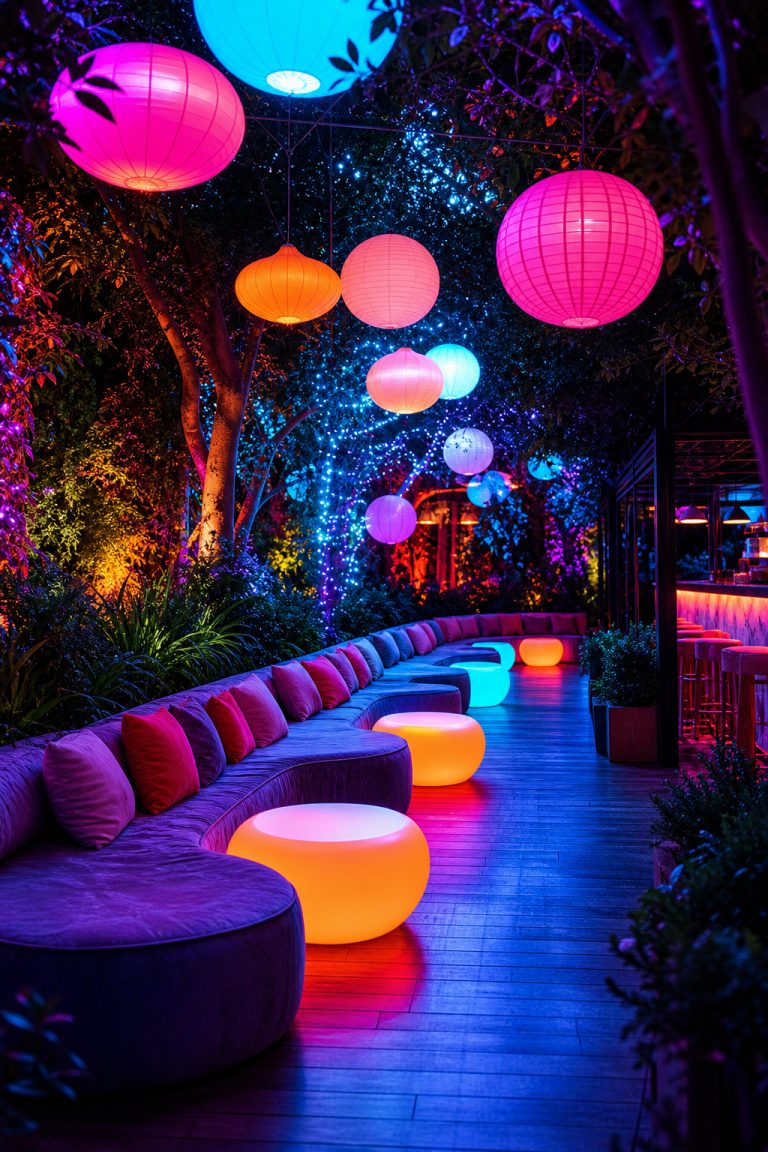
A dark garden opens into warm candlelight.
A formal house loosens into a bright summer supper.
The evening begins restrained, then reveals one long blue table beside the water.
This is not public copy. It is a filter. Light, flowers, sound, architecture, staff presence, signage, and the visible route should reinforce that sentence or step out of the way.
Stand where each guest actually arrives
The official front door may not be the operational entrance.
Walk the route from parking, rideshare drop-off, shuttle arrival, accessible parking, pedestrian approach, and any weather-protected entrance. Note the first thing visible at each decision point.
A service cone, trash enclosure, open loading door, temporary coat rack, restroom sign, or group of waiting guests may dominate the real arrival. The designed view begins before the styled threshold.
Photograph every route at guest eye level. The camera is useful here because it records the objects the planning brain has learned to ignore.
The official front door may not be the operational entrance.
Separate orientation from atmosphere
The floral installation should not be forced to explain parking, coat check, restrooms, ceremony direction, and the emotional thesis in six-point script.
Place directional information before the guest must choose. Use clear language, sufficient contrast, readable type, appropriate lighting, and a position that works for standing and seated sightlines. Confirm that signs remain visible when people gather around them.
Then allow the atmosphere to do its own work: a framed view, a wash of light, one floral gesture, music, a host, an architectural reveal, or a change in material underfoot.
Wayfinding should be legible. Beauty may be mysterious. The restroom arrow may not. Most of that work can be done by the space itself rather than by more signs.
Choose one visual lead
The first view needs hierarchy.
It may be the building itself, one extraordinary tree, a field of light, a long table in the distance, a canopy, a saturated color plane, or people welcoming guests. Supporting details should clarify the lead rather than compete for first place.
If flowers lead, let them carry enough scale or placement to be unmistakable. If architecture leads, avoid covering it with decor that anxiously proves an event is happening. If the view leads, frame it and keep the route clear.
Design the first thirty seconds
Arrival is a short sequence, not a single photograph.
- Recognition: Guests identify the correct place.
- Transition: They leave the vehicle or public route and enter the event environment.
- Orientation: They know where to go and what to do with coats, gifts, tickets, or belongings.
- Reception: A person, drink, sound, view, or clear next step confirms they are expected.
Check for hesitation between each stage. A beautiful door with no visible handle, a welcome table that blocks the route, or a drink offered before guests can put down wet coats creates friction immediately. These first thirty seconds are the opening of a sequence that runs all the way to the table.
Let every arrival route receive the same occasion
An accessible entrance, elevator route, side door, or weather alternative should not feel like backstage.
Confirm that it is unlocked, signed, lit, protected, and connected to the same welcome sequence. It may require a different view, but it should carry the same arrival sentence and lead guests to the same quality of reception.
Equal experience does not require identical architecture. It requires equivalent dignity, clarity, and atmosphere.
Test weather as part of the composition
Rain changes where guests look, where they pause, and how quickly they move. Wind can turn signs, extinguish flame, scatter paper, and make a floral threshold behave like an argument. Heat and cold change whether people are willing to linger.
Plan the umbrella path, matting, drainage, door operation, shelter, coat intake, and backup entrance before weather arrives. The first view may need to move inward while keeping the visual promise intact. That indoor version is a second event that has to be designed, not a tent ordered late.
Return after dark
An entrance that reads clearly at noon may disappear at night. Check the road approach, address marker, parking path, steps, ramps, door, signage, staff position, and transition between bright and dark areas.
Equal experience does not require identical architecture. It requires equivalent dignity, clarity, and atmosphere.
Look for glare and reflection as well as insufficient light. Glass can become a mirror. Pale signs can vanish under warm illumination. Decorative pools of darkness may be lovely until they contain a curb.
Listen to the arrival
Sound begins the experience before the room is visible. Traffic, generators, neighboring events, water, music, staff radios, and crowd noise can support or contradict the visual introduction.
A hushed garden threshold cannot remain hushed if the first audible cue is a loading cart crossing metal plates. Move the route, adjust timing, mask the sound appropriately, or let the arrival sentence acknowledge the energy that actually exists.
The promise and the next step
The entrance is allowed to keep most of the occasion to itself. It owes guests one clear promise and one obvious next step.
When the visual lead, the wayfinding, the welcome, the weather plan, and the accessible routes all agree, nobody has to admire the design yet. They simply feel that the event knew they were coming.
Atmosphere OS · Theme Atelier
Turn the mood into something a florist can quote.
Theme Atelier builds palette, materials, lighting and spatial mood into one system, then writes it in language a vendor can price. Every number it produces comes from a published rule, and the rulebook names the judgments it deliberately refuses to call rules.
Costs come back as indicative bands rather than quotes, and seasonal notes are filters rather than promises.
Field notes and corrections
When a number here turns out to be wrong, you hear about it.
Three things arrive and nothing else. The new field note — bar rates, cover widths, service clearances, the arithmetic worked through on one real evening. A line when a World opens, because a night only goes up once it can actually be thrown. And a correction whenever a rule in the published rulebook changes, or a number the tools rely on turns out to have been wrong. There is no weekly slot, because there is nothing weekly to put in it.
One email per field note or opening, plus corrections when a published figure moves. Unsubscribe from any of them.
Continue through the system
Pretty is still not a plan.
A party gets planned in roughly this order. Pick the chapter where your next problem lives.
What you have to decide next
One decision constrains the next. This is the order they actually happen in.
More in this chapter

See the complete five-chapter Event Design Intelligence map →