Occasions & Formats
Collaborative Art: One Work, Many Hands
Create a collaborative mural or art installation for 20 to 400 guests with modular participation, accessible workstations, finishing control, budgets, timing, installation planning, and a reveal worth keeping.
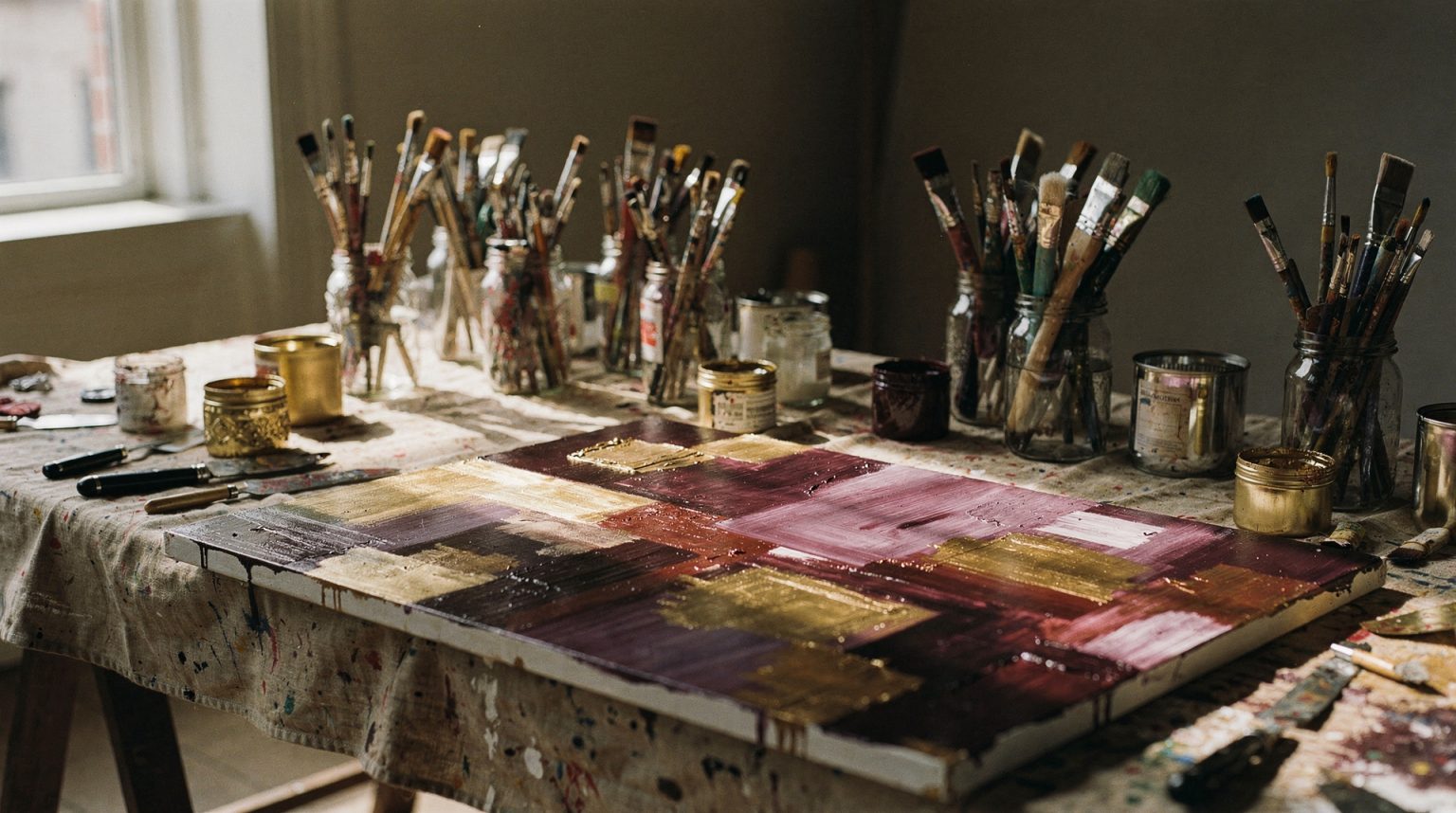
Interactive Events · Contribute
Collaborative art solves a different event problem from a take-home workshop. The reward is collective. A mural, mosaic, sculptural installation, print wall, textile piece or modular artwork becomes complete because the room contributed to it—and because the design was strong enough to survive hundreds of different hands. Most of the work hides in that second clause.
A collaborative piece should not require four hundred confident artists. It should create a coherent final result while allowing wildly different levels of participation. One guest may add a single shape in two minutes. Another may stay for twenty. Both should be visible in the finished work without the object looking like a supply closet became emotional.
Commercial collaborative-art programs already use modular mural and panel systems for large teams. That model is useful because it separates the guest experience from the final assembly: people can work in parallel, while the artist retains control over composition, finishing and installation.
Decide what happens to the artwork before anyone touches it
The permanent destination changes the design. A piece for an office atrium has different material, scale and durability requirements than a one-night event wall. A fundraiser installation may be auctioned. A community piece may need weather resistance. A conference artwork might travel to another city before it is installed.
A collaborative piece should not require four hundred confident artists.
Confirm ownership, finished dimensions, hanging method, weight, freight, storage and installation route before producing the guest modules. A 12-foot finished piece is a design triumph right up until someone discovers the freight elevator is seven feet tall. Space Lab measures the elevator before the artist measures the canvas.
Capacity: modularity is what makes the idea scale
| Guests | Work structure | Participation mode |
|---|---|---|
| 20–50 | 1 large canvas / 4 panels | Open studio |
| 50–120 | 6–12 panels | Team rotation |
| 120–250 | 12–24 modules | Zoned stations |
| 250–400 | 20–40 modules | Continuous activation + final assembly |
The modules do not need to be literal rectangles. They can be tiles, printed fragments, textile pieces, paper forms, painted panels, sculptural components or individual marks assembled into a larger field. What matters is that the artist can absorb variation without losing the governing idea.
Module count, panel size and how many hands each station can take are all set by the headcount, and the finished piece has to survive every one of them.
Divide the work across four hundred hands (opens in a new tab)
Production flow
The guest instructions should be generous, not precious
People are much more willing to contribute when the task is clear and the outcome does not seem fragile. Show what to do. Show what not to worry about. If color needs to stay inside a defined palette, pre-mix it. If the master piece needs certain negative space, mask it. If one section must remain untouched, do not rely on a tiny card that says “please leave blank.”
The artist should design the variability on purpose. A guest should not feel that one imperfect brushstroke can ruin the work. That defeats the point of inviting hundreds of hands.
Accessibility belongs at the making table
Provide seated and standing workstations, reachable surfaces and multiple tool or grip options. If the medium is paint, consider brushes with different handle sizes, sponges, stamps or mark-making tools. If the work depends on color, make pattern, texture or shape meaningful too.
Instructions should be visible rather than spoken only. Some guests may want to contribute without waiting for a demo. Others may prefer to watch the artist and return later. Both should be valid.
Protect the room from the art—and the art from the room
Floor protection, drying racks, water access, waste, ventilation and material cleanup are part of the event design. Keep wet work away from food service and narrow circulation. Use low-risk materials appropriate to the venue. If paint, adhesive, fibers or particulate materials have special handling requirements, confirm those with the artist and venue before load-in.
Photograph modules before final assembly if damage would be difficult to reconstruct. Label the back of every panel or component so the install team does not solve a giant puzzle during strike.
Run of show
| Time | Action |
|---|---|
| 0:00–0:20 | Arrival + concept wall |
| 0:20–0:28 | Artist explanation / demo |
| 0:28–1:45 | Continuous contribution |
| 1:00 | First finished modules move to assembly |
| 1:45–2:00 | Final assembly |
| 2:00–2:10 | Reveal |
| 2:10–2:30 | Photography / artist finishing |
The reveal can be live or partially staged. If final assembly takes longer than the event allows, reveal a strong completed section and document the final installed piece later. Do not force the artist to pretend wet paint obeys the schedule.
Budget and staffing
| Production level | Planning allowance | Model |
|---|---|---|
| Lean | $1,500–$4,000 | Local artist, simple modular piece, basic materials |
| Professional | $5,000–$12,000 | Custom design, multiple workstations, assistants |
| Installation scale | $12,000–$30,000 | Large custom work, fabrication, finishing, freight and installation |
The budget should include the part after the applause. Freight, framing, sealing, mounting, installation hardware and the artist’s finishing time can cost as much as the event activation itself. Scope it with the artist before the contract, alongside the rest of your vendor operations. If the organization has no plan to install the piece, consider a temporary or digital outcome instead of creating a permanent object that spends the next two years leaning against a storage-room wall.
What should the art actually depict?
A giant logo is technically an answer. It is not automatically an interesting one.
Do not force the artist to pretend wet paint obeys the schedule.
Use the gathering’s place, purpose, season, material language or community as the source. An anniversary can use archival fragments. A botanical event can use repeated plant forms. A conference can map ideas or local geography. A wedding can build around pattern, color or a shared symbolic object without turning the piece into oversized monogram merchandise.
Where one artwork becomes a bottleneck
- No one planned the destination. The art is finished and homeless.
- The instructions require confidence. Design for contribution, not art-school critique.
- Wet materials collide with traffic. Drying is a production zone.
- The artist has no finishing authority. Collaborative does not mean unmanaged.
- The piece is too large to move. Measure doors, elevators and vehicles before the reveal.
- The finished object is generic branding. Make the participation worthy of the guests’ time.
Decide where the finished piece lives before anybody picks up a brush. Homeless art is just wet furniture.
Measure what survives the evening
Track participation rate, dwell time, module completion, rework and accessibility-station use. But the most important metric is embarrassingly practical: was the finished work actually installed, displayed, gifted, auctioned or otherwise used afterward?
Participation can be temporary. Waste should not be.
Make the piece part of the event world
Use Interactive Events for the participation structure, Design Atelier for the visual concept and Event Sightlines & Visual Sequence to place the making and reveal where the room can actually experience them.
Sources: My Art Box collaborative mural format; Paintillio modular collaborative art examples.
If this is your mood
More playful


Field notes and corrections
When a number here turns out to be wrong, you hear about it.
Three things arrive and nothing else. The new field note — bar rates, cover widths, service clearances, the arithmetic worked through on one real evening. And a correction whenever a rule in the published rulebook changes, or a number the tools rely on turns out to have been wrong. There is no weekly slot, because there is nothing weekly to put in it.
One email per field note, plus corrections when a published figure moves. Unsubscribe from any of them.
Continue through the system
Pretty is still not a plan.
A party gets planned in roughly this order. Pick the chapter where your next problem lives.
What you have to decide next
One decision constrains the next. This is the order they actually happen in.
More in this chapter


See the complete five-chapter Event Design Intelligence map →