Space & Venue Reality
A Room Can Feel Like an Enchanted Palace With No Crowns in It
Enchanted palace searches are up 545%, and the trap is fake royalty. A room can feel palatial without a single crown or scrap of crest clip art.
“Enchanted palace” searches are up 545% in Pinterest’s 2026 Wedding Trends Report. The phrase is doing a lot of work. It promises transport, old stone, monumental rooms, the feeling of walking into somewhere with a history you did not have to pay for.
It also comes with a trap you could drive a carriage through. Fake royalty.
A room can feel palatial without a single crown in it. What it cannot do is feel palatial because somebody bought crowns.
The building is the concept. Stop covering it.
If the venue already has scale, symmetry, columns, a staircase, use those before adding anything at all. The first question is what should stay visible.
Then comes the discipline of not putting a floral wall in front of the most interesting wall in the building, which happens more often than you would think.
Grandeur is a sequence, not an object count
Palatial rooms work through movement. Arrival court to hall, hall to ceremony. Thresholds and sightlines placed on purpose, so the evening unfolds instead of merely occurring.
Which is why this is a guest-journey problem before it is a decorating one. You are designing the order in which someone sees things.
Scale, but only where the room asks for it
Small centerpieces vanish in monumental architecture. The instinct is to inflate every arrangement on every table. The better move is a few gestures that actually meet the building: a staircase treatment, one long line of candles. One strong gesture usually beats gilded detail on every chair.
Metals, edited
Antique brass, aged silver, iron, a little gold. Those carry historic atmosphere. Every metallic finish at once carries a ballroom-supply catalog. Look at what the venue already has and agree with it.
Candlelight is architecture
Candles along a staircase or down a long table do structural work, within whatever the building allows on open flame. Historic venues take that seriously and they are right to. If real flame is out, good alternatives still give you the repetition and the glow. Placement matters far more than proving the flame is real.
Somewhere to belong inside all that ceiling
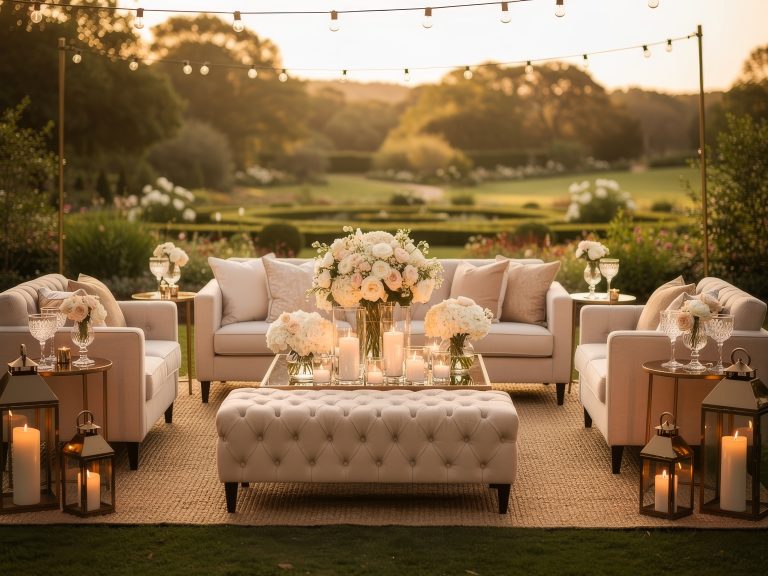
Palace-like venues swallow conversation whole. Build smaller rooms inside the large one: seating clusters, lamps, a corner with a low light in it. Guests need a place to stand that feels like theirs, not just a ceiling to admire.
Read the restrictions before the moodboard
Historic buildings have rules about attachment, flame and load-in, and none of them become negotiable at nine in the morning on the day. Read them first. Those rules are design decisions with a budget attached.
The enchanted part should never be the discovery that nothing on the moodboard is allowed in the building.
No crests. No thrones. No indiscriminate gold.
Grandeur comes from proportion, rhythm and a controlled sense of ceremony. If guests spend the evening surrounded by decorative proof that the event is royal, the room has stopped enchanting and started campaigning.
What I would want, walking in: people noticing the architecture and the light, and still sitting down like they live there. A palace nobody can relax in is a large cold building with flowers in it.
Space Lab
Unknown is a useful answer.
A room record can hold measured, published, supplied, estimated and unknown facts without pretending they are equivalent. The unknowns become the questions worth carrying to the site visit.
It shows planning estimates as estimates and keeps legal occupancy, venue approval and other authority decisions outside the calculator.
If this is your mood
More crystal & gold

Field notes and corrections
When a number here turns out to be wrong, you hear about it.
Three things arrive and nothing else. The new field note — bar rates, cover widths, service clearances, the arithmetic worked through on one real evening. And a correction whenever a rule in the published rulebook changes, or a number the tools rely on turns out to have been wrong. There is no weekly slot, because there is nothing weekly to put in it.
One email per field note, plus corrections when a published figure moves. Unsubscribe from any of them.
Continue through the system
Pretty is still not a plan.
A party gets planned in roughly this order. Pick the chapter where your next problem lives.
What you have to decide next
One decision constrains the next. This is the order they actually happen in.
More in this chapter
See the complete five-chapter Event Design Intelligence map →