Atmosphere
One Scented Candle Is Not an Atmosphere
One excellent candle cannot rescue fluorescent light, a freezing room, and a speaker pointed at dinner. Atmosphere is the whole room agreeing with itself.
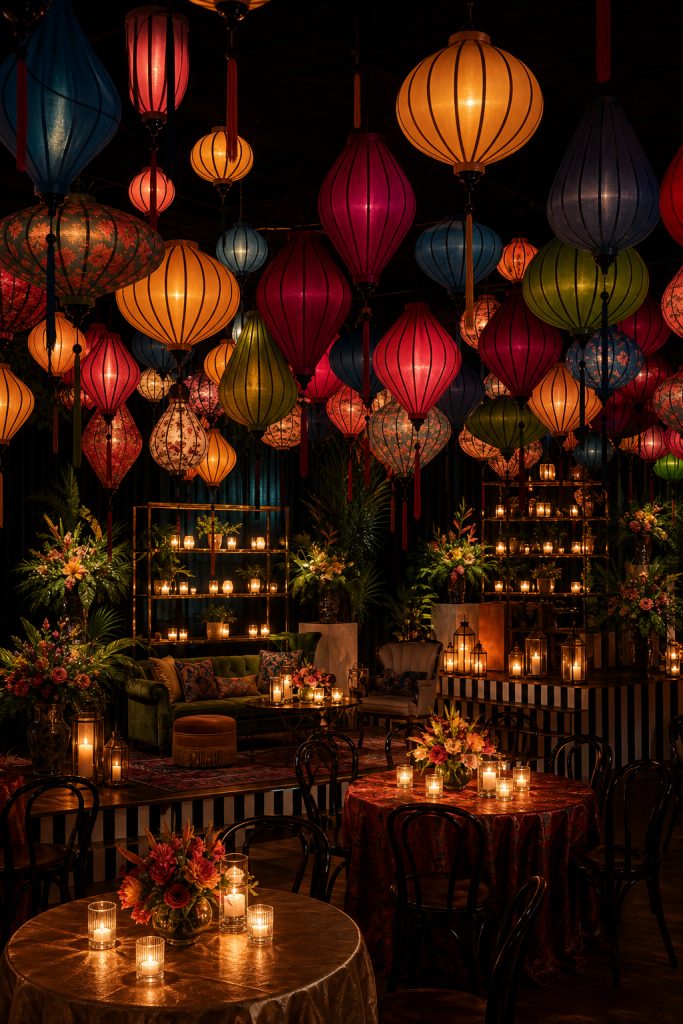
Atmosphere is what happens when the room finally starts agreeing with itself.
The light supports the pace. The music belongs to the moment. The temperature is comfortable enough that nobody’s thinking about it. Nothing in the room is shouting a separate idea from everything else.
That is why atmosphere has to be planned all at once. One excellent candle cannot rescue fluorescent ceiling light, a freezing room, and a speaker pointed directly at dinner, no matter how expensive the candle was.
Give the room one emotional job before you choose a single object
Intimate, electric, ceremonial, strange in a good way, something specific enough to actually guide decisions. A moody dinner and a high-energy cocktail party can use the exact same burgundy velvet and still need completely different light, sound, and timing.
Light is the fastest atmosphere change there is
What does the room need at arrival, during dinner, after dark? I use real layers: practical light for routes, flattering ambient light for faces, focused light for wherever the eye should land. Dim isn’t automatically atmospheric. If guests can’t read the menu or recognize the person across the table, the lighting has stopped doing its job. This is why light gets decided before anything else.
Sound changes the actual size of a space
Music can make a large room feel connected or make a small room feel impossible to escape. Volume, speaker placement, hard reflective surfaces, all of it changes once the room fills with people. A playlist is content. Sound design is how that content actually behaves in the real room.
Temperature is part of the mood whether anyone planned it or not
A room that looks warm and feels cold creates one very specific atmosphere: coats. Heat, cold, noise, and waiting are the comfort audit nobody runs. Candles and velvet can suggest warmth. They cannot produce enough of it for a drafty venue in November. Rent the heater.
Texture needs to be touched, not just photographed
Linens, chairs, glassware, all of it contributes to how the event feels in the hand and body. I use contrast deliberately, smooth with rough, crisp with soft, and I test the practical side too. A gorgeous napkin that sheds on black clothing has made its own editorial decision, and not a good one.
Use scent with real restraint
Scent is powerful, which is exactly the reason to use less of it. Food, flowers, candles already contribute plenty. If scent is part of the concept, I keep it localized and easy to remove. The goal is recognition, not olfactory custody.
Pacing is an atmosphere tool too
A room feels different when guests are rushing versus lingering versus being interrupted every twelve minutes. I build enough time for dinner to actually feel like dinner. Too many scheduled moments flatten atmosphere, because nobody gets long enough to actually inhabit it. Pacing and buffers do more for the mood than another decorative layer.
Make service part of the design, not an afterthought bolted on
Where drinks appear, when tables get cleared, all of it affects the mood. A romantic table stops feeling romantic fast if guests spend twenty minutes hunting for water.
Do the sensory walk-through yourself
Stand at the entrance. Sit at the table. Walk the darkest path. Listen from the quietest seat. Atmosphere isn’t an accessory. It’s dozens of small decisions all behaving like they belong to the same event.
Atmosphere OS · Theme Atelier
Turn the mood into something a florist can quote.
Theme Atelier builds palette, materials, lighting and spatial mood into one system, then writes it in language a vendor can price. Every number it produces comes from a published rule, and the rulebook names the judgments it deliberately refuses to call rules.
The rulebook is public. Every formula it runs on is written down where you can disagree with it.
Field notes and corrections
When a number here turns out to be wrong, you hear about it.
Three things arrive and nothing else. The new field note — bar rates, cover widths, service clearances, the arithmetic worked through on one real evening. A line when a World opens, because a night only goes up once it can actually be thrown. And a correction whenever a rule in the published rulebook changes, or a number the tools rely on turns out to have been wrong. There is no weekly slot, because there is nothing weekly to put in it.
One email per field note or opening, plus corrections when a published figure moves. Unsubscribe from any of them.
Continue through the system
Pretty is still not a plan.
A party gets planned in roughly this order. Pick the chapter where your next problem lives.
What you have to decide next
One decision constrains the next. This is the order they actually happen in.
- Venue Will this room hold it? The Serpentine Table Is Eleven Percent Longer Than the Spec Sheet Says
- Guest experience How will guests move through it? The Place Setting Fits. The Person Does Not.
- Production How does it get built and run? The Event Needs a Failure Mode That Still Looks Intentional
- Vendors Who owns each handoff?
More in this chapter

See the complete five-chapter Event Design Intelligence map →