Occasions & Formats
Holiday Dinner for Twelve: Protect the Oven, the Table and the Host
A twelve-person holiday dinner stops being casual the moment every dish needs the same oven and every guest needs the host. Protect heat, table space, drinks and the host before tradition becomes congestion.
Twelve people means one table, one kitchen, one oven and four traditions that all believe they are load-bearing.
Add a refrigerator with political boundaries, plus guests who know the house well enough to open drawers and not well enough to know where the serving spoon went, and you have a dinner that is still genuinely intimate and has also, without anyone voting on it, acquired a production plan.
Nobody needs a corporate run-of-show for this. What is needed is smaller: find the two or three things most likely to collapse under nostalgia, and shore those up before December arrives with opinions.
Plan the oven before you plan the menu
List every dish that needs heat, the temperature it wants and how long it can wait. On paper it looks like this.
| Dish | Wants | Will tolerate waiting |
|---|---|---|
| Roast | High heat, then a rest | Thirty minutes, happily |
| Casserole | Moderate, uncovered at the end | Twenty minutes, covered |
| Rolls | Hot oven, fifteen minutes | Almost none |
| Roast vegetables | Hot oven, twenty minutes | Almost none |
| Dessert | Whatever it wants, earlier | All day, if you let it |
Two of those rows are competing for the same fifteen minutes in the same box, which is worth knowing before you spend an evening choosing napkins. When the schedule collides like that, the menu has stopped being a menu and become a resource conflict. Occasion OS resolves that one before it reaches the oven door.
Move at least two jobs out of the oven. Use the stovetop. Serve something at room temperature. Bake dessert earlier. Let one dish be cold on purpose instead of lukewarm by accident.
Tradition gets a vote, not veto power
Holiday meals accumulate dishes the way a garage accumulates half-used tins of paint, because nobody wants to be the person who discontinued Aunt Somebody’s potatoes and then has to sit at a table where the absence of the potatoes becomes the only available topic.
Keep the traditions people genuinely care about. Retire the ones everyone politely takes one spoonful of before abandoning them beside the cranberry sauce.
A tradition that creates three hours of labor for one person and six ounces of collective enthusiasm may need renegotiation.
This is not disrespect. It is capacity planning with sentiment attached.
Set the table for the food that will actually arrive
Twelve place settings can consume an entire table before a single serving bowl appears.
Test it.
Put down the plates, glasses, water, bread, serving pieces and the largest platters. Now look at what remains for flowers, candles and the ceramic object you bought because it looked festive under excellent retail lighting.
Decorate the available space, not the fantasy version of the table.
Low arrangements and repeated candlelight can create abundance without claiming the landing zone required by dinner.
Move drinks out of the kitchen
At twelve, the kitchen becomes congested long before food service.
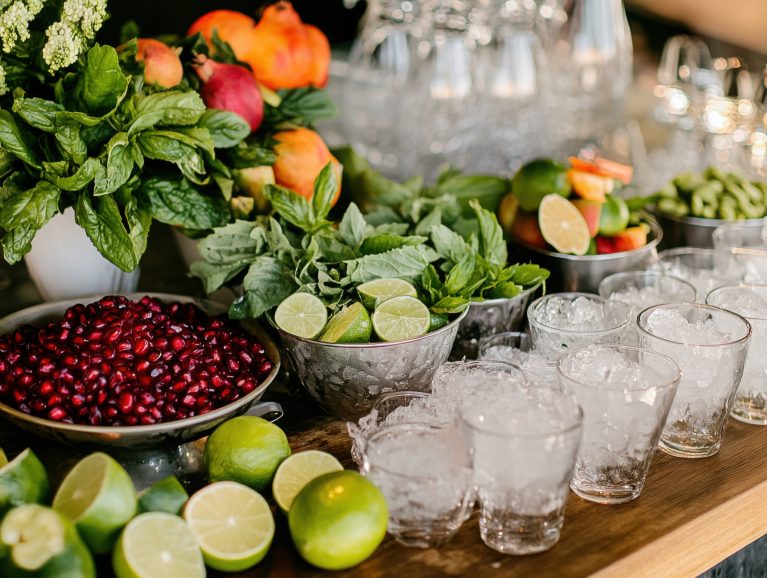
Create a drink station somewhere else. Water, wine, nonalcoholic options, ice, glasses and whatever opening tools people are likely to need. If cocktails require the host to shake each order individually while also finishing dinner, simplify.
The bar does not need to be elaborate. It needs to stop six people from standing in front of the refrigerator asking whether there is more ice.
Bar-line logic starts earlier than most hosts think. Twelve people can absolutely create one if the only refill point occupies a doorway.
One refill point, twelve people and a doorway is a throughput problem in miniature, and it behaves like every larger one.
Check the refill points for twelve (opens in a new tab)
Give coats and brought food somewhere to go
Holiday guests tend to arrive with outerwear, gifts, pie, containers that need refrigeration and one dish that absolutely must be kept warm.
Make destinations before arrival.
Clear one refrigerator shelf. Clear one counter. Choose a coat room. Put gifts somewhere that is not the chair required by Guest Eleven.
Nothing makes a host look calmer than already knowing where an object belongs.
Assign help by job, not by vague generosity
People will ask what they can do.
Give them a real answer.
Fill water glasses. Take coats. Put bread in the basket. Light candles. Bring the salad from the refrigerator. Clear first-course plates.
Do not say everything is handled while visibly carrying four hot pans and making eye contact with nobody.
At twelve people, one or two small delegated jobs can keep the host at the table. Nobody loses control by handing over the bread basket, and it puts the available help to work before it becomes a cluster of relatives asking whether they should do something.
The meal needs a release valve
Holiday dinners can pin everyone to the table long after comfort has expired because the event has nowhere else to go.
Plan the after-dinner destination, whether that is the living room, the porch, cards by the fireplace or a dessert buffet somewhere other than the dining table.
Moving lets the table be cleared without making cleanup the evening’s main visual.
A party in chapters is especially useful when the first chapter includes gravy.
Do not let cleanup erase the holiday
There is a difference between necessary food safety and aggressively ending the event with dishwashing.
Put perishables away. Stack plates. Soak what must be soaked. Leave the rest until guests are gone or until a few people genuinely want to help.
If the host spends dessert facing the sink, the evening has stumbled on the very last step.
Whether the host ever got to sit down
- Do the hot dishes fit the actual oven schedule?
- Have low-value traditions been allowed to retire?
- Can the table receive serving dishes after it is decorated?
- Can guests get drinks without entering the cooking zone?
- Do coats, gifts and brought food have destinations?
- Is there a second room or second act after dinner?
If yes, twelve people can feel abundant without turning one host into the entire staff. That is the ambition behind every hosting guide I keep writing down.
Do the oven list first, in November, on paper, while the menu can still be argued with.
Field notes and corrections
When a number here turns out to be wrong, you hear about it.
Three things arrive and nothing else. The new field note — bar rates, cover widths, service clearances, the arithmetic worked through on one real evening. And a correction whenever a rule in the published rulebook changes, or a number the tools rely on turns out to have been wrong. There is no weekly slot, because there is nothing weekly to put in it.
One email per field note, plus corrections when a published figure moves. Unsubscribe from any of them.
Continue through the system
Pretty is still not a plan.
A party gets planned in roughly this order. Pick the chapter where your next problem lives.
What you have to decide next
One decision constrains the next. This is the order they actually happen in.
More in this chapter

See the complete five-chapter Event Design Intelligence map →